
UN Geneva Forum Calls for Stronger South-South Cooperation to Rescue 2030 Development Goals
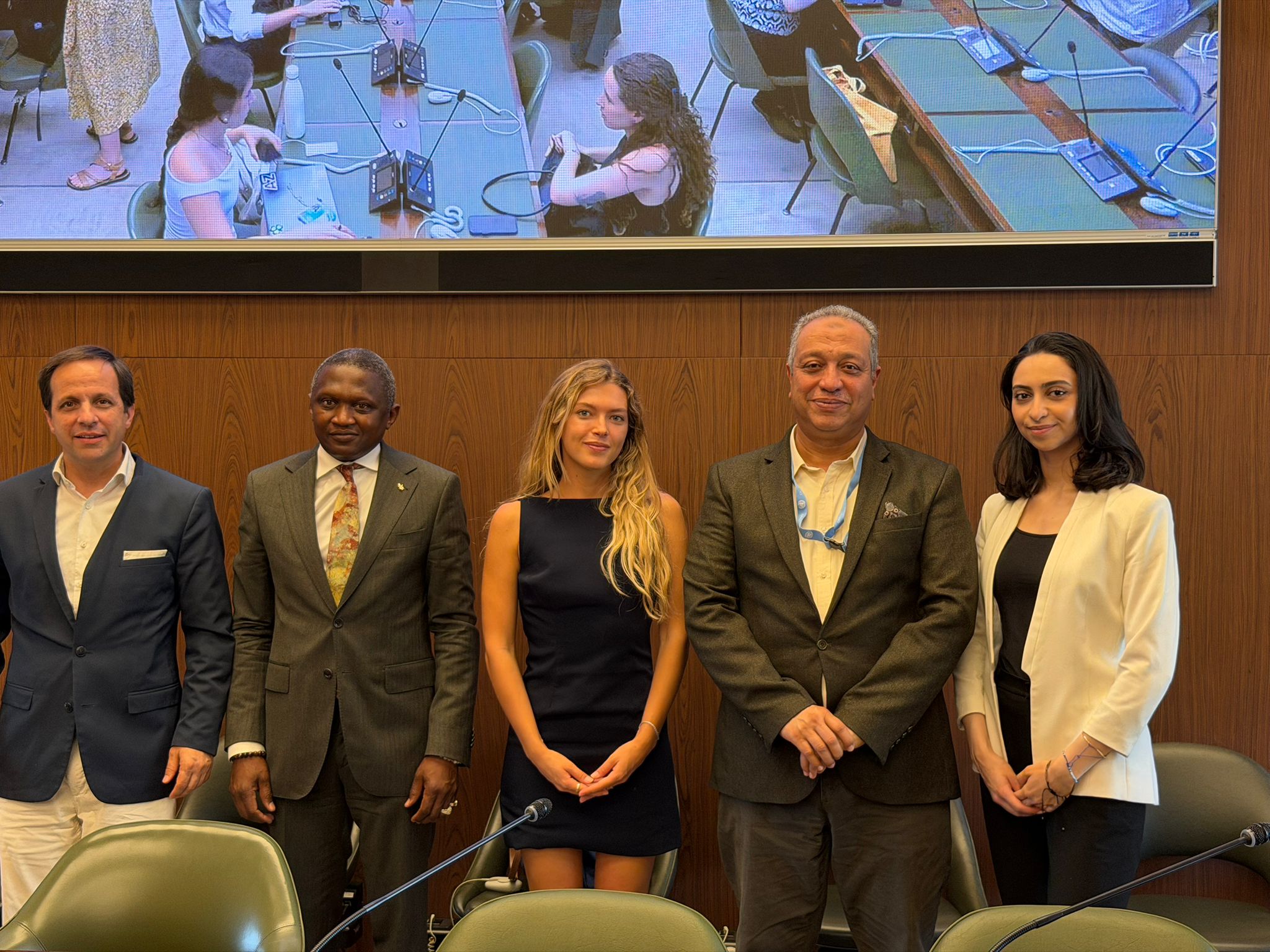
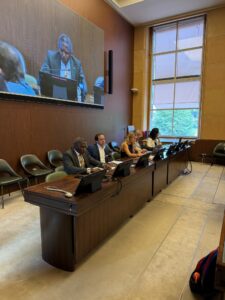
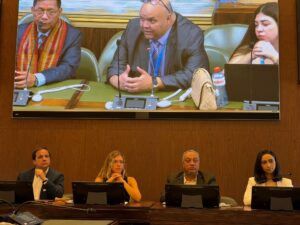
Geneva, 29 June 2026 — With less than five years remaining to achieve the 2030 Sustainable Development Goals (SDGs), policymakers, academics, youth representatives and civil society leaders gathered at a side event during the 62nd Session of the United Nations Human Rights Council (UNHRC) in Geneva to call for renewed South-South cooperation and a rights-based approach to sustainable development.
The high-level discussion, titled “Development in the Global South,” was jointly organized by the Youth Parliament for SDGs, the Global Institute for Water, Environment and Health (GIWEH), and RADDHO. Participants argued that developing countries are not merely recipients of international assistance but are increasingly becoming sources of innovation, practical policy solutions and development leadership.

Human Rights and Sustainable Development Must Go Hand in Hand
Speakers warned that despite progress in some areas, the world remains significantly off track in meeting the Sustainable Development Goals by 2030. They pointed to persistent inequalities, climate change, armed conflicts, debt burdens, food insecurity, technological divides and weak institutions as key obstacles slowing development, particularly across the Global South.
Participants stressed that sustainable development cannot be separated from the realization of human rights, emphasizing that development policies must place people at their centre and ensure that everyone can participate in and benefit from economic, social, cultural and political progress.
The discussion highlighted the importance of renewed multilateralism, stronger regional partnerships and increased cooperation among developing nations to accelerate implementation of the SDGs while reinforcing the internationally recognized Right to Development.
Global South as a Source of Innovation
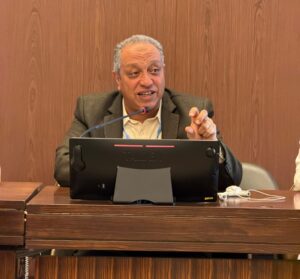
Opening the event, Dr. Nidal Salim, Director General of GIWEH, challenged traditional perceptions of the Global South as a region defined primarily by its challenges.
Instead, he argued that countries across Asia, Africa and Latin America are increasingly demonstrating successful development models built upon local innovation, community participation, digital transformation and sustainable resource management.
Dr. Salim presented the Global South Platform Partnership as a practical framework for expanding knowledge exchange, capacity building and technological cooperation among developing countries.
Drawing from international examples, he highlighted India’s progress in digital public infrastructure, universal healthcare, renewable energy, agricultural development and climate resilience while also referencing experiences from Bangladesh, Kenya, Rwanda, Brazil and Costa Rica as evidence that successful development strategies must reflect local realities rather than follow a single global model.
Historical Importance of South-South Cooperation
Representing Interfaith International and RADDHO, Mr. Biro Diawara traced the evolution of South-South cooperation to the political solidarity established among developing nations during the 1960s and 1970s.
He highlighted the enduring significance of the Buenos Aires Plan of Action (PABA) adopted in 1978, describing it as the foundation of modern technical cooperation among developing countries.
Mr. Diawara emphasized that development should be measured not solely by economic growth but by improvements in people’s quality of life.
Quoting renowned Burkinabé historian Professor Joseph Ki-Zerbo, he reminded participants that:
“One is not developed; rather, one develops.”
He argued that globalization has often widened inequalities rather than reduced them and advocated development models rooted in local knowledge, cultural identity, human capital and inclusive governance.
Mr. Diawara also stressed the growing value of triangular cooperation involving both South-South and North-South partnerships, highlighting contributions from India, China, Brazil, Europe, the United States and Russia across sectors including healthcare, education, infrastructure, governance and agriculture.
India Presented as a Rights-Based Development Model
One of the central discussions focused on India’s Ayushman Bharat programme, which participants described as a practical example of implementing the United Nations Declaration on the Right to Development through Universal Health Coverage.
Presenting the youth perspective, Ms. Meyssan Soliman, Youth Representative at GIWEH and Sorbonne University–Paris, explained how India’s healthcare reforms demonstrate that universal access to healthcare can be achieved even in countries with large populations and limited resources.
She described Ayushman Bharat as one of the world’s largest publicly funded health protection programmes, providing financial protection for vulnerable households while expanding access to hospitals, primary healthcare centres and affordable medicines.
Ms. Soliman also highlighted India’s investment in digital health through initiatives such as the Ayushman Bharat Digital Mission, telemedicine services and electronic health records, arguing that digital innovation can strengthen transparency, improve service delivery and reduce healthcare inequalities.
She further noted India’s global contribution through affordable generic medicines and vaccine production, describing it as an example of how South-South cooperation can strengthen health systems across developing countries.
Renewed Call for Global Partnership
Throughout the discussions, speakers recalled the principles established during the historic 1955 Bandung Conference, including sovereignty, equality, solidarity, peaceful coexistence and mutual respect, describing them as increasingly relevant in today’s fragmented geopolitical environment.
Participants concluded that achieving the Sustainable Development Goals will require stronger political commitment, greater investment in resilient public institutions, expanded knowledge sharing, locally driven innovation and more effective international cooperation.
They also urged governments and international organizations to begin discussions on the global development framework beyond 2030 while accelerating implementation of existing commitments.
The side event concluded with a clear message that the Global South should no longer be viewed solely as a beneficiary of development assistance but as an increasingly influential driver of sustainable development solutions and international cooperation.
Editor’s Note: The side event was held on the margins of the 62nd Session of the United Nations Human Rights Council at the Palais des Nations in Geneva and was jointly organized by the Youth Parliament for SDGs, the Global Institute for Water, Environment and Health (GIWEH) and RADDHO.