

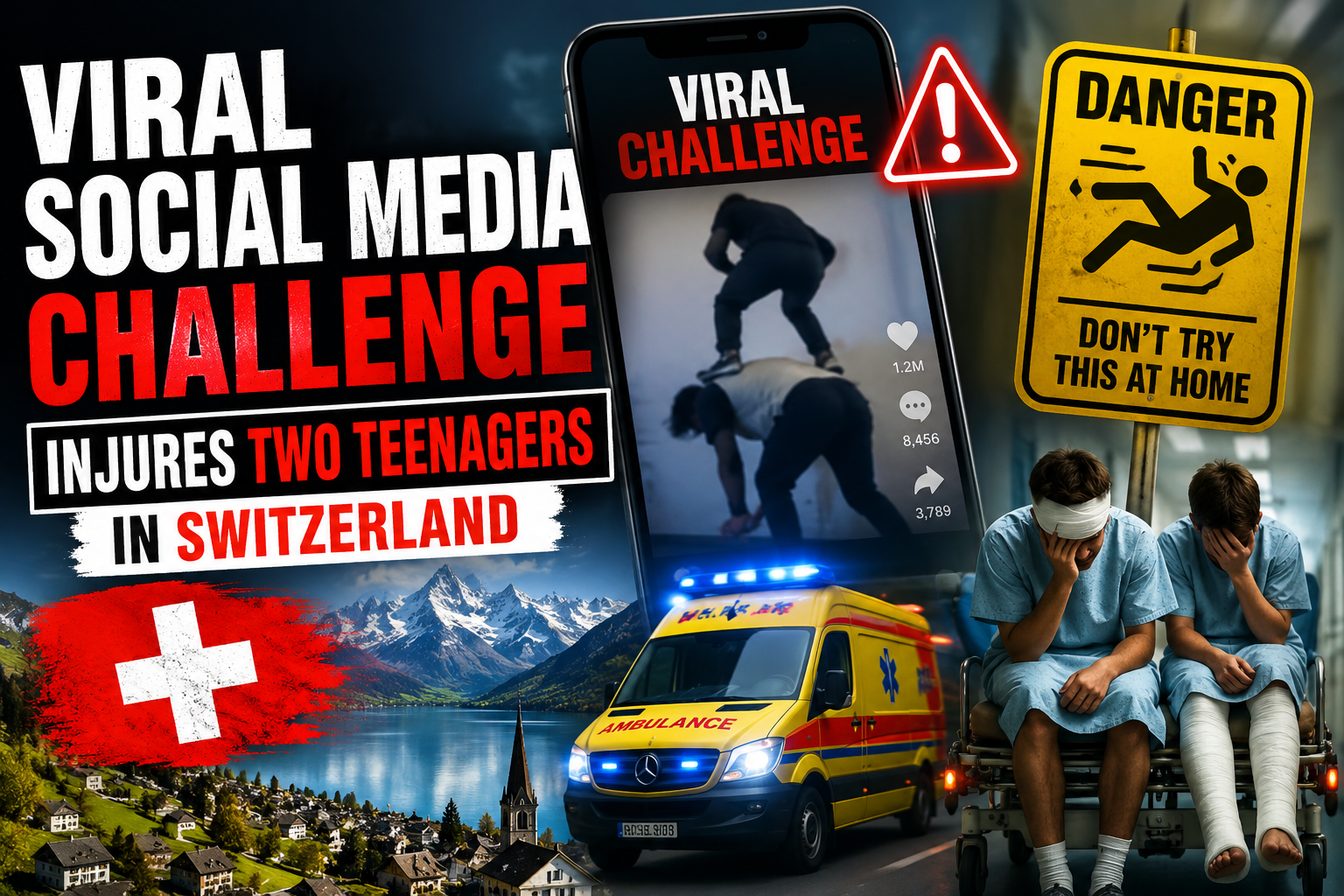
Viral Social Media Challenge Injures Two Teenagers in Switzerland

Swiss authorities are warning parents and schools worldwide about the dangers of viral social media trends after two teenagers were injured in separate incidents linked to risky online “challenge” games in the Canton of Bern.

According to police, the incidents are believed to be connected to dangerous internet challenges that encourage young people to restrict breathing or intentionally lose consciousness while being filmed or watched by friends. The trend, known internationally by names such as the “Blackout Challenge” or “Choking Challenge,” has circulated across multiple social media platforms in recent years.

One of the teenagers reportedly suffered serious injuries, prompting an official investigation by Swiss juvenile authorities. Due to the age of those involved, police have not released further personal details.

The cases have reignited global concerns over the growing influence of viral online content on children and teenagers. Safety experts warn that many young users imitate extreme challenges without fully understanding the physical and psychological risks involved.

Swiss authorities are now urging parents, teachers, and caregivers to speak openly with children about online peer pressure, dangerous internet trends, and digital safety. Officials stressed that social media challenges can escalate quickly from entertainment into life-threatening situations.

The incidents in Switzerland reflect a broader international debate over the role of social media algorithms in promoting sensational or risky content to younger audiences. Child safety advocates continue to call for stronger protections, better moderation systems, and increased awareness campaigns targeting both parents and students.

As viral trends spread instantly across borders, authorities say the latest cases are a reminder that online behavior can have serious real-world consequences.
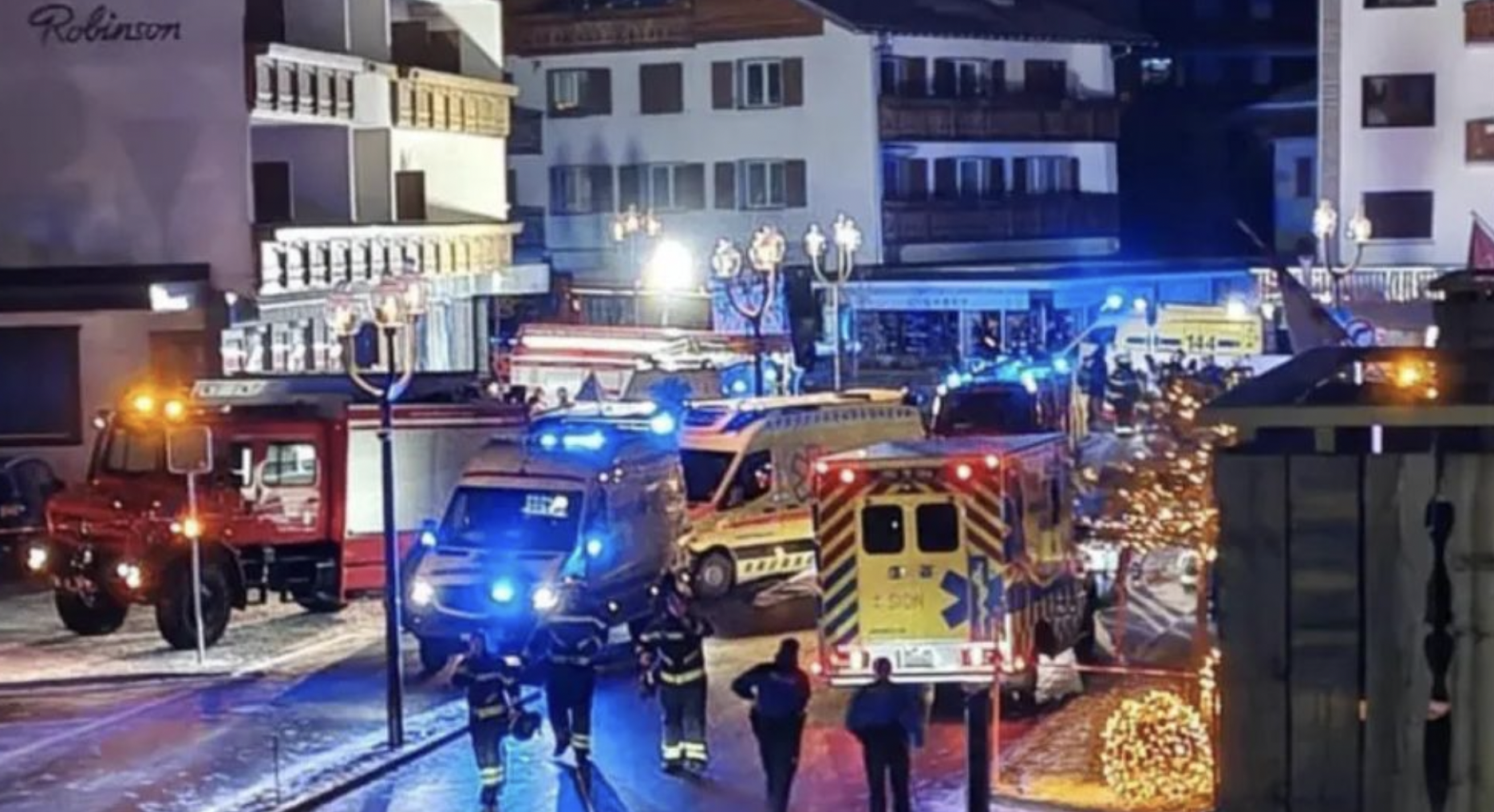

New Year’s Tragedy in the Alps: Deadly Blaze Rocks Crans-Montana

A devastating incident has occurred in the Swiss Alps in the ski resort town of Crans-Montana during New Year’s celebrations.

In the early hours of January 1, 2026, at approximately 1:30 a.m. local time, a fire followed by an explosion tore through the crowded bar Le Constellation in the centre of the resort as hundreds of people were celebrating the arrival of the new year.

Swiss officials and police describe the event as a major emergency with a tragic human toll. According to police statements and media reports:

  • Several dozen people are presumed dead, with some local outlets reporting around 40 fatalities, though authorities have not confirmed a final figure.

  • About 100 people have been injured, many with serious burns and critical injuries, and are being treated in hospitals throughout Switzerland.

Emergency services responded rapidly. Firefighters, police, rescue teams and multiple helicopters were deployed to the scene. The area around the bar has been sealed off, and a no-fly zone has been imposed over Crans-Montana to facilitate rescue operations.

Authorities say the origin of the explosion and fire is still unclear, and investigators are actively working to determine how the blaze began. At this stage, officials do not believe this was a deliberate attack.

Police spokespersons have emphasised the scale of the tragedy, describing it as a serious incident affecting both locals and international visitors, and have appealed for calm as rescue efforts continue.

Hospitals in the Valais region and beyond are treating victims, with some seriously injured patients transferred to larger burn centres due to the severity of their wounds.

Support is being offered to families with missing loved ones, and helplines have been established to assist those seeking information.

This tragedy has cast a sombre start to the new year in Switzerland, as authorities continue to piece together the full circumstances of the disaster.

Sri Lankan-Born Farah Rumy Elected 2nd Vice President of Swiss National Council

“Sri Lankan-Born Leader in Swiss Parliament”

In Switzerland, history was made today at the opening of the Federal Assembly’s 2025 winter session. Sri Lankan-born Swiss parliamentarian Farah Rumy has been officially elected Second Vice-President of the National Council, becoming the first Swiss federal parliament leader of Sri Lankan heritage. The vote took place this Monday, December 1st, as the National Council elected its new presidium for the 2025/26 term.

The new Presiding College of the National Council has now been confirmed: Pierre-André Page, of the Swiss People’s Party (UDC/SVP), becomes President of the National Council for 2025/26. Katja Christ, from the Green Liberal Party, has been elected First Vice-President. And Farah Rumy, of the Social Democratic Party, will serve as Second Vice-President of the chamber. These positions are among the highest in Switzerland’s political system. Each year, the National Council and Council of States elect new leaders who preside over debates, steer parliamentary agendas, and represent Switzerland in international parliamentary diplomacy.

WHO IS FARAH RUMY?

Farah Rumy was born in Sri Lanka and moved to Switzerland as a child. A trained nurse and medical specialist, she entered politics through her work during the COVID-19 pandemic — an experience that pushed her to join the Social Democratic Party in 2020. She was first elected to the Solothurn Cantonal Council in 2021, where she focused on social policy and public health. After the 2023 federal elections, she moved up to the National Council as the first alternate when MP Franziska Roth vacated her seat. Rumy is now a member of the Foreign Affairs Committee and an alternate member of the Immunity Committee. In parliament, she has championed healthcare reforms, social equality, foreign policy, peace initiatives, and human rights. She also serves as co-president of her regional nursing union and remains active in local politics in the city of Grenchen. Rumy is the first Swiss federal parliamentarian of Sri Lankan descent, and now becomes the first to hold a leadership position within the National Council’s presidium.

On the same day, the upper chamber — the Council of States — elected Stefan Engler as its new President for the 2025/26 term. For Farah Rumy, today’s election marks a major milestone in Swiss political history — one that reflects the country’s evolving diversity and the growing influence of younger leaders in national decision-making.

By: SARIFUDEEN M Zahran (Journalist)