
UN Human Rights Council to Hold Urgent Debate on Sudan Crisis as 500,000 Civilians Face Atrocity Risk

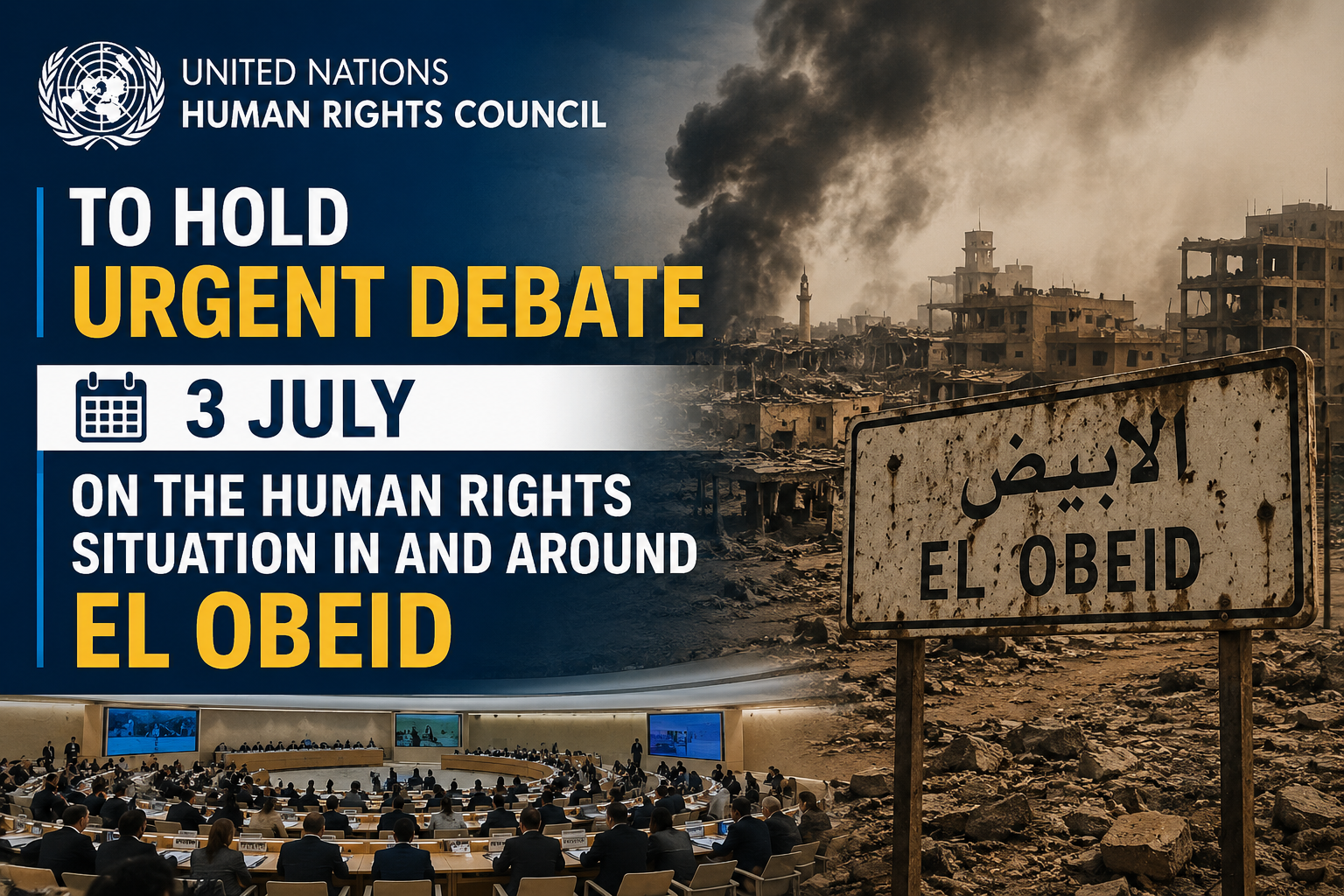
The United Nations Human Rights Council (UNHRC) will convene an urgent debate on Friday, 3 July, to address the rapidly deteriorating human rights situation in and around El Obeid, the capital of Sudan’s North Kordofan State, amid mounting concerns that hundreds of thousands of civilians face an imminent risk of large-scale atrocities.

The emergency discussion, scheduled to begin at 10:00 a.m. (CEST) at the Palais des Nations in Geneva, comes as international alarm grows over the humanitarian consequences of Sudan’s ongoing conflict. The session will be broadcast live on UN Web TV in all six official UN languages.

The debate was requested by a core group of countries—Germany, Ireland, the Netherlands, Norway, and the United Kingdom—which warned that the situation on the ground has reached a critical point.

According to the request submitted to the Human Rights Council, approximately 500,000 civilians are believed to be at risk as violence intensifies around El Obeid. The group highlighted reports of increasing drone attacks that have damaged essential civilian infrastructure, triggering severe shortages of fuel and clean water while leaving thousands of residents trapped under conditions resembling a siege.

“The threat of potential escalation on the ground requires urgent international attention,” the requesting countries stated, warning that civilians remain cut off from basic services and humanitarian assistance.

Draft Resolution Expected

As part of the urgent debate, the sponsoring countries are expected to introduce a draft resolution calling for action by the Human Rights Council. While the details of the resolution have not yet been released, it is anticipated to address civilian protection, humanitarian access, and accountability for alleged violations of international human rights and humanitarian law.

The Council adjusted the programme of work for its ongoing 62nd Regular Session to accommodate the emergency debate, underscoring the seriousness of the situation.

Unlike a Special Session, an urgent debate can be convened without requiring signatures from member states or formal notification procedures, allowing the Council to respond more rapidly to emerging crises.

Growing International Concern

Sudan has remained engulfed in conflict since fighting erupted in April 2023 between rival military factions, triggering one of the world’s largest displacement and humanitarian crises. Millions have been forced from their homes, while repeated attacks on civilians, healthcare facilities and critical infrastructure have drawn widespread condemnation from the international community.

The situation in El Obeid, a strategically important city linking western and central Sudan, has become increasingly precarious as fighting spreads across North Kordofan. Humanitarian agencies have warned that continued violence risks cutting off aid deliveries to large parts of the country.

Human Rights Council’s 13th Urgent Debate

Friday’s meeting will mark the 13th urgent debate convened by the Human Rights Council since the mechanism was established in 2006. Urgent debates are reserved for situations requiring immediate international attention and provide member states with an opportunity to examine rapidly evolving human rights crises and consider collective action.

Diplomats, UN officials, humanitarian organizations, and civil society representatives are expected to participate in the discussion, which is likely to focus on measures to protect civilians, ensure humanitarian access, and strengthen international monitoring of the conflict.

As the humanitarian crisis deepens, Friday’s debate is expected to place Sudan once again at the centre of international attention, with growing calls for stronger global action to prevent further civilian suffering and avert a wider catastrophe.

The urgent debate will be held on Friday, 3 July 2026, at 10:00 a.m. (CEST) in the Assembly Hall of the Palais des Nations, Geneva, and will be streamed live on UN Web TV.
‘Empty Rhetoric Is Not Enough’: Rights Experts Demand Action on Sudan

Millions Displaced: Human Rights Experts Sound Alarm Over Sudan Crisis at UN Geneva

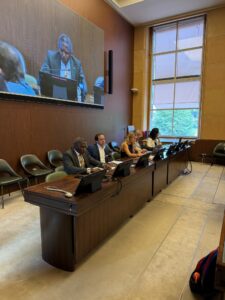
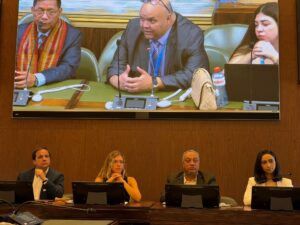
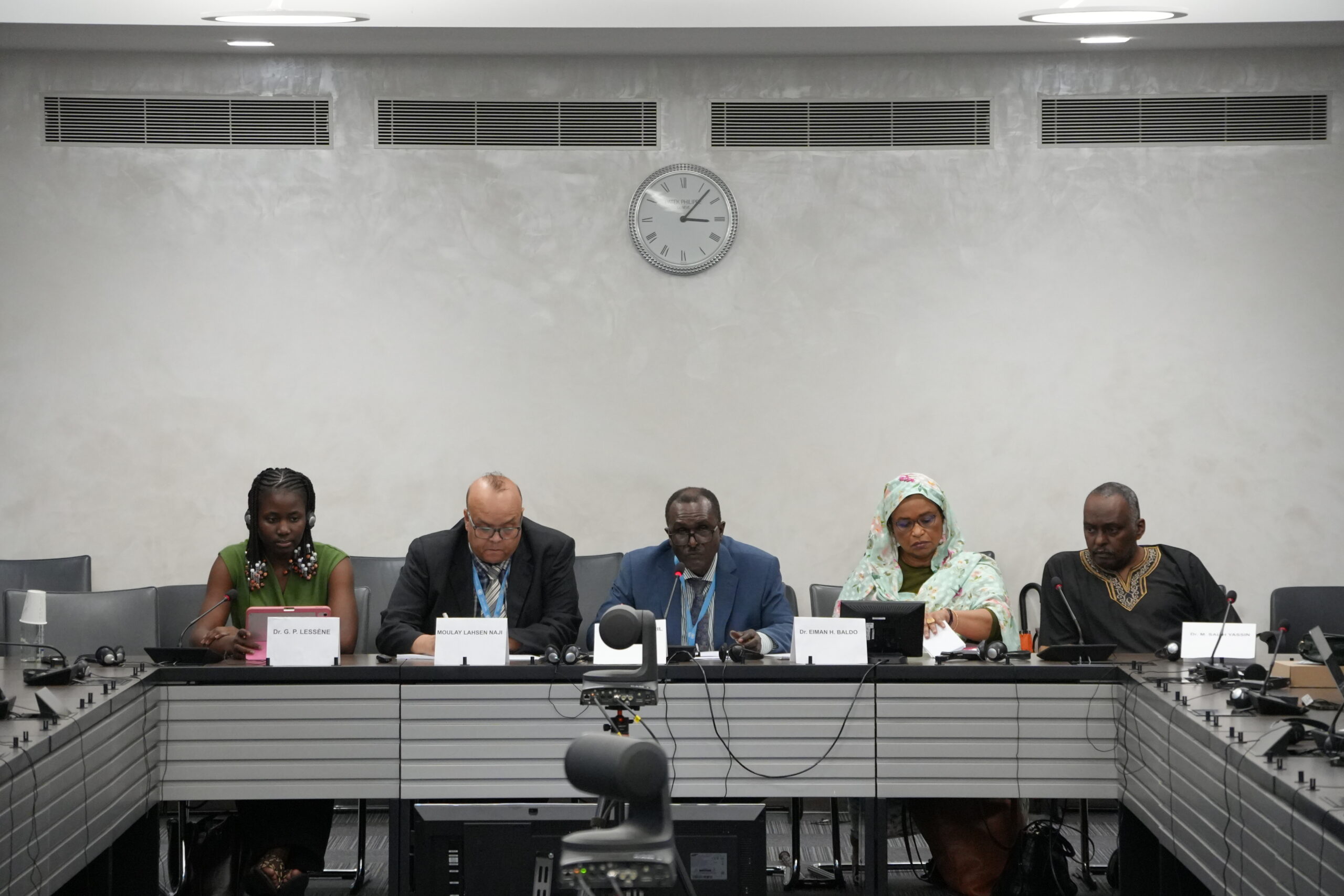
Geneva, 1 July 2026 — Human rights advocates, diplomats and civil society representatives gathered at the Palais des Nations in Geneva on Wednesday to draw renewed international attention to Sudan’s escalating humanitarian crisis, warning that millions of internally displaced people and refugees continue to face severe protection risks as conflict spreads across the country.

The NGO briefing, held alongside the 62nd Regular Session of the United Nations Human Rights Council (HRC), focused on the human rights situation in Africa, with particular attention to Sudanese internally displaced persons (IDPs) and refugees in Chad and the Central African Republic (CAR). The event was jointly organized by the Sudan Knowledge Centre (SKC), the African Centre for Democracy and Human Rights Studies (ACDHRS), the African Centre for Legal Studies, and partner organizations.

According to the organizers, Africa continues to face complex human rights challenges despite progress in some regions. Speakers cited armed conflicts, terrorism, and unconstitutional changes of government as major factors undermining the protection of fundamental rights across the continent.

The briefing highlighted Sudan as one of the world’s most severe humanitarian emergencies. Organizers stated that an estimated 16 million people have been forcibly displaced, both within Sudan and across its borders, amid ongoing violations of international human rights and humanitarian law. They also raised concerns over recent reports of forced evictions and demolitions of homes in Khartoum, describing them as a serious humanitarian issue with alleged ethnic implications.

Participants expressed particular concern over the deteriorating situation in El-Obeid, in Sudan’s Kordofan State, urging the international community to move beyond statements of concern and take more effective action to protect civilians.

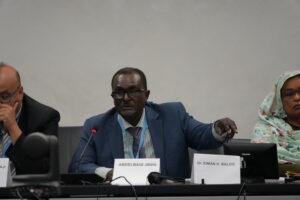
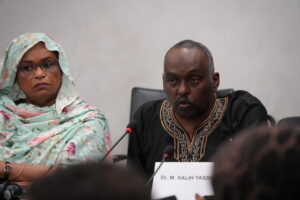
Mr. Abdelbagi Jibril, Main Representative to the UN Office and other International Organizations in Geneva (ACDHRS)

The discussion also emphasized the growing burden placed on neighboring countries. Chad and the Central African Republic were recognized for hosting large numbers of Sudanese refugees despite facing significant economic and humanitarian constraints of their own.

The event featured presentations from diplomats, human rights experts and researchers, including representatives from Chad, the African Centre for Democracy and Human Rights Studies, and Sudan Peace Tracker. Discussions examined emerging displacement trends and the wider implications for regional stability and humanitarian protection.

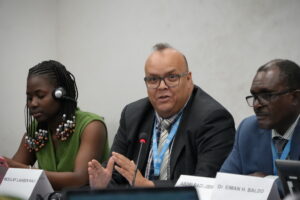
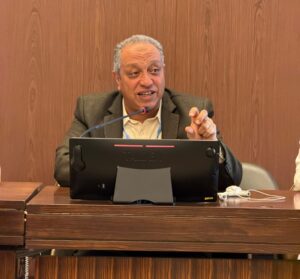
Mr. Moulay Lahsen Naji, Executive Director, Independent Commission for Human Rights in North Africa

The side event took place during the 62nd session of the UN Human Rights Council, which is being held in Geneva from 15 June to early July 2026, bringing together governments, UN experts and civil society organizations to address global human rights challenges.

Growing Regional Concern

The organizers stressed that the Sudan crisis is no longer solely a national emergency but a regional humanitarian challenge affecting neighboring countries and requiring sustained international cooperation. They called for stronger protection of civilians, greater humanitarian assistance for displaced populations, and increased international support for countries hosting Sudanese refugees.

As the Human Rights Council continues its current session in Geneva, Sudan remains one of the key country situations under discussion, reflecting mounting international concern over the conflict’s humanitarian consequences.


UN Geneva Forum Calls for Stronger South-South Cooperation to Rescue 2030 Development Goals

Geneva, 29 June 2026 — With less than five years remaining to achieve the 2030 Sustainable Development Goals (SDGs), policymakers, academics, youth representatives and civil society leaders gathered at a side event during the 62nd Session of the United Nations Human Rights Council (UNHRC) in Geneva to call for renewed South-South cooperation and a rights-based approach to sustainable development.

The high-level discussion, titled “Development in the Global South,” was jointly organized by the Youth Parliament for SDGs, the Global Institute for Water, Environment and Health (GIWEH), and RADDHO. Participants argued that developing countries are not merely recipients of international assistance but are increasingly becoming sources of innovation, practical policy solutions and development leadership.

Human Rights and Sustainable Development Must Go Hand in Hand

Speakers warned that despite progress in some areas, the world remains significantly off track in meeting the Sustainable Development Goals by 2030. They pointed to persistent inequalities, climate change, armed conflicts, debt burdens, food insecurity, technological divides and weak institutions as key obstacles slowing development, particularly across the Global South.

Participants stressed that sustainable development cannot be separated from the realization of human rights, emphasizing that development policies must place people at their centre and ensure that everyone can participate in and benefit from economic, social, cultural and political progress.

The discussion highlighted the importance of renewed multilateralism, stronger regional partnerships and increased cooperation among developing nations to accelerate implementation of the SDGs while reinforcing the internationally recognized Right to Development.

Global South as a Source of Innovation

Opening the event, Dr. Nidal Salim, Director General of GIWEH, challenged traditional perceptions of the Global South as a region defined primarily by its challenges.

Instead, he argued that countries across Asia, Africa and Latin America are increasingly demonstrating successful development models built upon local innovation, community participation, digital transformation and sustainable resource management.

Dr. Salim presented the Global South Platform Partnership as a practical framework for expanding knowledge exchange, capacity building and technological cooperation among developing countries.

Drawing from international examples, he highlighted India’s progress in digital public infrastructure, universal healthcare, renewable energy, agricultural development and climate resilience while also referencing experiences from Bangladesh, Kenya, Rwanda, Brazil and Costa Rica as evidence that successful development strategies must reflect local realities rather than follow a single global model.

Historical Importance of South-South Cooperation

Representing Interfaith International and RADDHO, Mr. Biro Diawara traced the evolution of South-South cooperation to the political solidarity established among developing nations during the 1960s and 1970s.

He highlighted the enduring significance of the Buenos Aires Plan of Action (PABA) adopted in 1978, describing it as the foundation of modern technical cooperation among developing countries.

Mr. Diawara emphasized that development should be measured not solely by economic growth but by improvements in people’s quality of life.

Quoting renowned Burkinabé historian Professor Joseph Ki-Zerbo, he reminded participants that:

“One is not developed; rather, one develops.”

He argued that globalization has often widened inequalities rather than reduced them and advocated development models rooted in local knowledge, cultural identity, human capital and inclusive governance.

Mr. Diawara also stressed the growing value of triangular cooperation involving both South-South and North-South partnerships, highlighting contributions from India, China, Brazil, Europe, the United States and Russia across sectors including healthcare, education, infrastructure, governance and agriculture.

India Presented as a Rights-Based Development Model

One of the central discussions focused on India’s Ayushman Bharat programme, which participants described as a practical example of implementing the United Nations Declaration on the Right to Development through Universal Health Coverage.

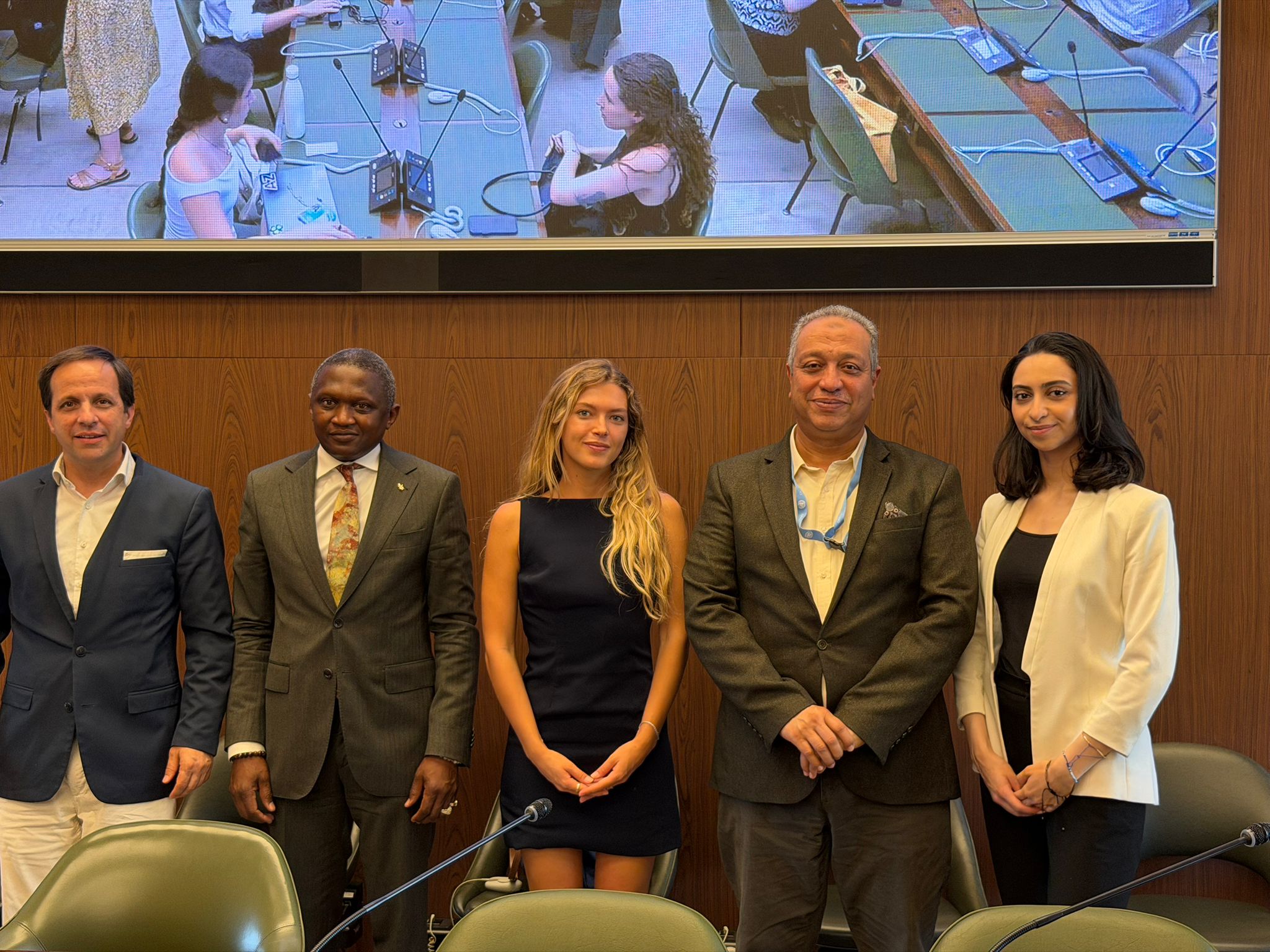
Presenting the youth perspective, Ms. Meyssan Soliman, Youth Representative at GIWEH and Sorbonne University–Paris, explained how India’s healthcare reforms demonstrate that universal access to healthcare can be achieved even in countries with large populations and limited resources.

She described Ayushman Bharat as one of the world’s largest publicly funded health protection programmes, providing financial protection for vulnerable households while expanding access to hospitals, primary healthcare centres and affordable medicines.

Ms. Soliman also highlighted India’s investment in digital health through initiatives such as the Ayushman Bharat Digital Mission, telemedicine services and electronic health records, arguing that digital innovation can strengthen transparency, improve service delivery and reduce healthcare inequalities.

She further noted India’s global contribution through affordable generic medicines and vaccine production, describing it as an example of how South-South cooperation can strengthen health systems across developing countries.

Renewed Call for Global Partnership

Throughout the discussions, speakers recalled the principles established during the historic 1955 Bandung Conference, including sovereignty, equality, solidarity, peaceful coexistence and mutual respect, describing them as increasingly relevant in today’s fragmented geopolitical environment.

Participants concluded that achieving the Sustainable Development Goals will require stronger political commitment, greater investment in resilient public institutions, expanded knowledge sharing, locally driven innovation and more effective international cooperation.

They also urged governments and international organizations to begin discussions on the global development framework beyond 2030 while accelerating implementation of existing commitments.

The side event concluded with a clear message that the Global South should no longer be viewed solely as a beneficiary of development assistance but as an increasingly influential driver of sustainable development solutions and international cooperation.


Editor’s Note: The side event was held on the margins of the 62nd Session of the United Nations Human Rights Council at the Palais des Nations in Geneva and was jointly organized by the Youth Parliament for SDGs, the Global Institute for Water, Environment and Health (GIWEH) and RADDHO.

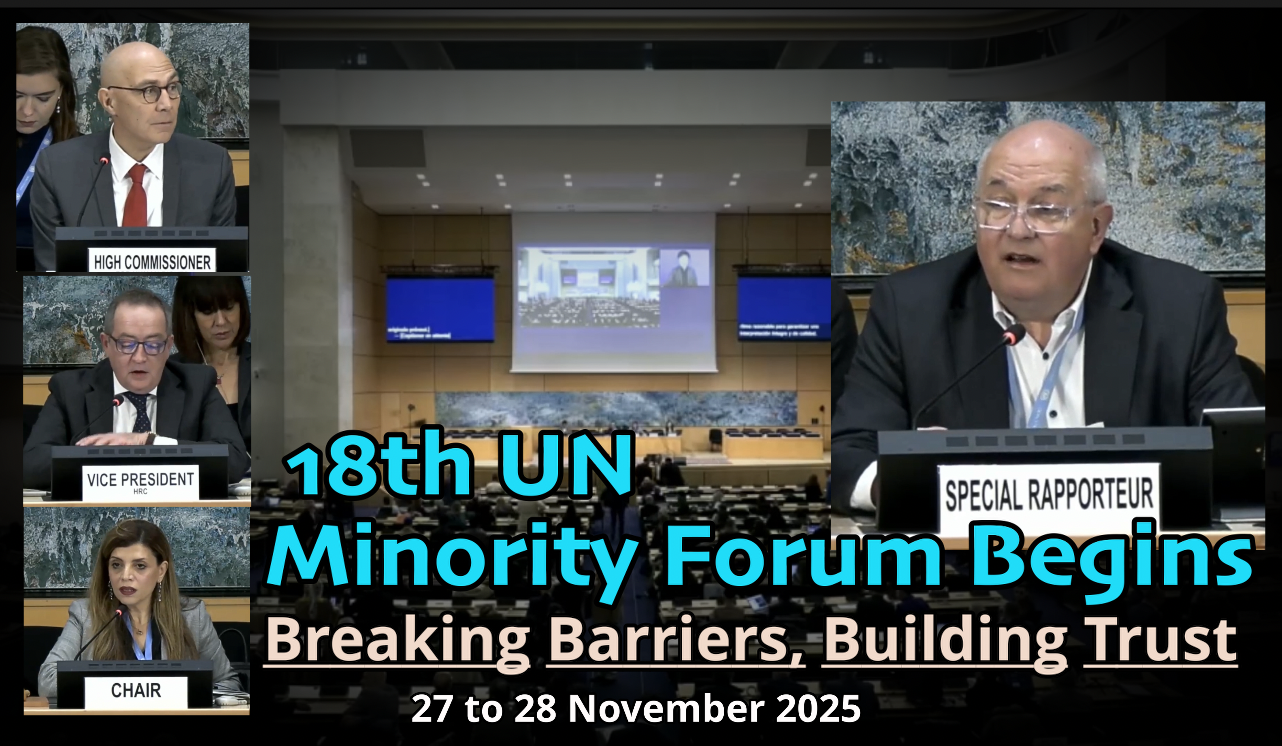
18th UN Minority Forum Begins

Geneva — The United Nations today opened the 18th Session of the UN Forum on Minority Issues, meeting here in the historic Assembly Hall in Geneva. This year’s theme — “The contribution of minorities to diverse, resilient, and peaceful societies” — sets the stage for two days of high-level dialogue, taking place from 27 to 28 November 2025.

The opening session began with remarks from senior UN officials. The Vice-President of the Human Rights Council, H.E. Ambassador Razvan Rusu, addressed the assembly, followed by a statement from the UN High Commissioner for Human Rights, Mr. Volker Türk. Also speaking was the UN Special Rapporteur on Minority Issues, Mr. Nicolas Levrat, along with the Chairperson of this year’s forum, who officially launched the 18th session.

The first agenda discussion — Item 1: Building trust and social cohesion — focused on barriers faced by minority communities around the world. Delegates and speakers highlighted challenges such as discrimination, structural inequality, marginalization, and social invisibility, which continue to fuel mistrust and conflict in many societies. Experts emphasized that peace and harmony depend on addressing the root causes of exclusion. They stressed the importance of education, intercultural dialogue, media responsibility, and creative expression in reducing stigma and building inclusive, unified communities. Among today’s panelists were: Mr. Christophe Kamp, OSCE High Commissioner on National Minorities Ms. Diane Ala’i, human rights and international affairs expert, and former UN representative of the Bahá’í International Community Mr. Rup Sunar, Chairperson of the Dignity Initiative and former OHCHR Senior Minority Fellow They shared examples of successful models — from mediation programs to multilingual education — showing how inclusion policies can resolve tension, empower minorities, and strengthen social cohesion.

A full summary of the discussions from this 18th session will be prepared by the Forum’s Chair, while the Special Rapporteur on Minority Issues will deliver an official recommendations report to the Human Rights Council at its 61st session.

By: SARIFUDEEN Zahran

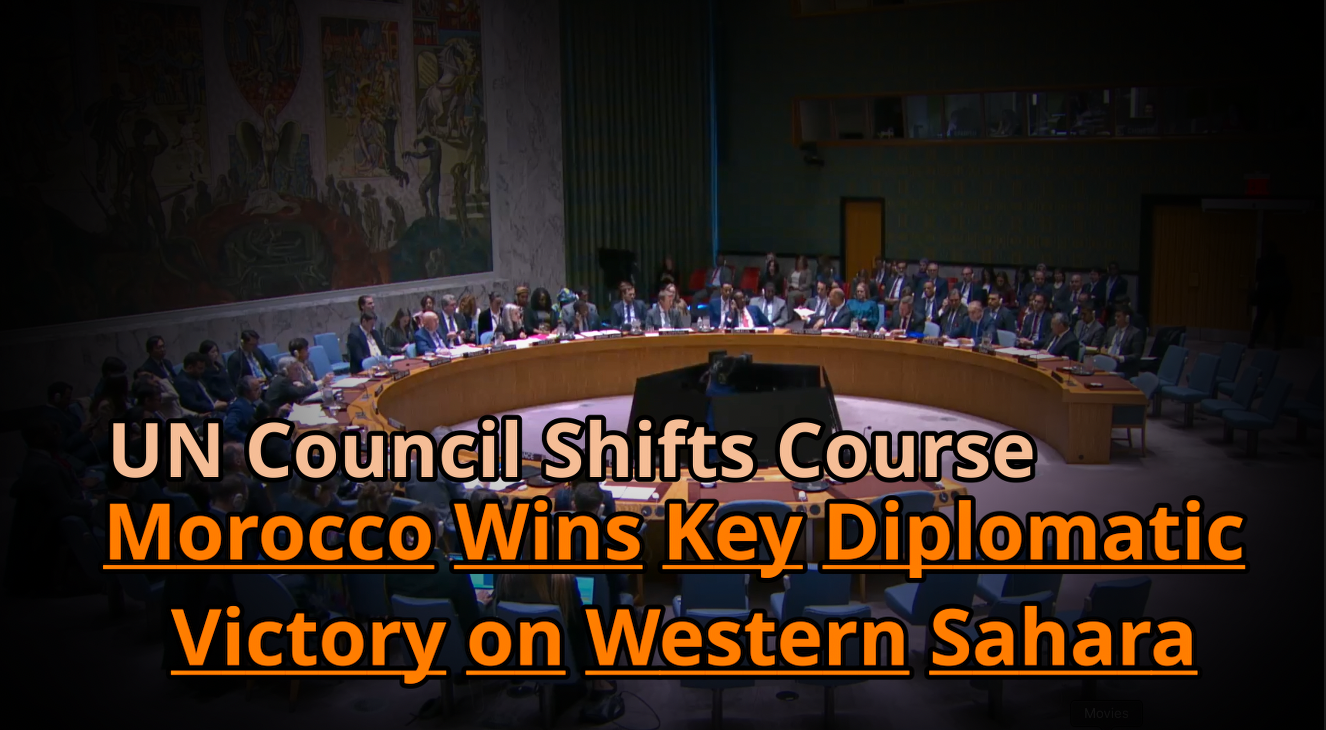
UN Council Shifts Course — Morocco Wins Key Diplomatic Victory on Western Sahara

In a significant shift in UN diplomacy, the Security Council has approved a resolution endorsing Morocco’s autonomy plan for the disputed territory of Western Sahara — a change that could redefine decades of negotiations.

On October 31, 2025, the Security Council passed a U.S.–drafted resolution with 11 votes in favor, and abstentions from Russia, China, and Pakistan — while Algeria declined to vote. The resolution affirms that Morocco’s 2007 autonomy proposal under its sovereignty may represent the “most feasible” basis for a final political solution. It also renews the mandate of the United Nations peacekeeping mission in the region, MINURSO, for another year.

Historically, the pro-independence Polisario Front has insisted on a referendum including independence as an option. But the new resolution notably omits that mention, signaling a tilt away from the referendum path. Algeria, which backs the Polisario Front, sharply criticized the move. Its ambassador argued that the text marginalizes Sahrawi proposals and compromises principles of decolonization. Meanwhile, Morocco hailed the resolution as a landmark diplomatic victory. In Rabat, the government called it a milestone toward integrating Western Sahara under its administrative framework. Supporters, including the U.S., France, and the U.K., say the resolution provides a realistic and durable foundation for negotiations, rather than open-ended referendums. The Council also instructed the UN Secretary-General to deliver a strategic review of MINURSO’s future next year, contingent on progress in dialogue.

This resolution could reshape long-standing divisions in North Africa. But as reactions from the Polisario Front and Algeria show, the road to peace remains fraught — especially when issues of sovereignty and self-determination remain on the table. We’ll continue to follow how UN diplomacy and regional politics respond to this pivotal moment.