
UN Human Rights Council to Hold Urgent Debate on Sudan Crisis as 500,000 Civilians Face Atrocity Risk

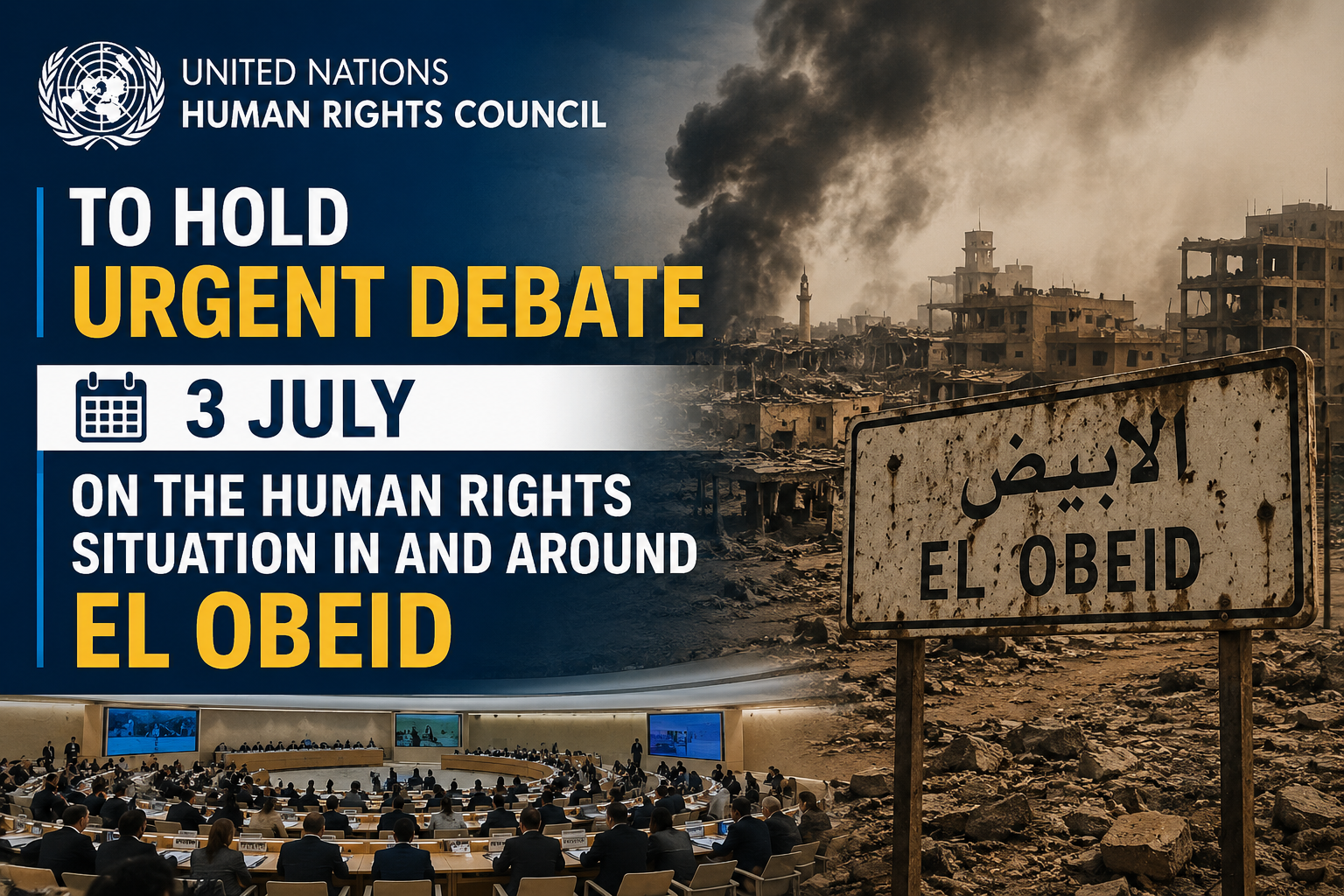
The United Nations Human Rights Council (UNHRC) will convene an urgent debate on Friday, 3 July, to address the rapidly deteriorating human rights situation in and around El Obeid, the capital of Sudan’s North Kordofan State, amid mounting concerns that hundreds of thousands of civilians face an imminent risk of large-scale atrocities.

The emergency discussion, scheduled to begin at 10:00 a.m. (CEST) at the Palais des Nations in Geneva, comes as international alarm grows over the humanitarian consequences of Sudan’s ongoing conflict. The session will be broadcast live on UN Web TV in all six official UN languages.

The debate was requested by a core group of countries—Germany, Ireland, the Netherlands, Norway, and the United Kingdom—which warned that the situation on the ground has reached a critical point.

According to the request submitted to the Human Rights Council, approximately 500,000 civilians are believed to be at risk as violence intensifies around El Obeid. The group highlighted reports of increasing drone attacks that have damaged essential civilian infrastructure, triggering severe shortages of fuel and clean water while leaving thousands of residents trapped under conditions resembling a siege.

“The threat of potential escalation on the ground requires urgent international attention,” the requesting countries stated, warning that civilians remain cut off from basic services and humanitarian assistance.

Draft Resolution Expected

As part of the urgent debate, the sponsoring countries are expected to introduce a draft resolution calling for action by the Human Rights Council. While the details of the resolution have not yet been released, it is anticipated to address civilian protection, humanitarian access, and accountability for alleged violations of international human rights and humanitarian law.

The Council adjusted the programme of work for its ongoing 62nd Regular Session to accommodate the emergency debate, underscoring the seriousness of the situation.

Unlike a Special Session, an urgent debate can be convened without requiring signatures from member states or formal notification procedures, allowing the Council to respond more rapidly to emerging crises.

Growing International Concern

Sudan has remained engulfed in conflict since fighting erupted in April 2023 between rival military factions, triggering one of the world’s largest displacement and humanitarian crises. Millions have been forced from their homes, while repeated attacks on civilians, healthcare facilities and critical infrastructure have drawn widespread condemnation from the international community.

The situation in El Obeid, a strategically important city linking western and central Sudan, has become increasingly precarious as fighting spreads across North Kordofan. Humanitarian agencies have warned that continued violence risks cutting off aid deliveries to large parts of the country.

Human Rights Council’s 13th Urgent Debate

Friday’s meeting will mark the 13th urgent debate convened by the Human Rights Council since the mechanism was established in 2006. Urgent debates are reserved for situations requiring immediate international attention and provide member states with an opportunity to examine rapidly evolving human rights crises and consider collective action.

Diplomats, UN officials, humanitarian organizations, and civil society representatives are expected to participate in the discussion, which is likely to focus on measures to protect civilians, ensure humanitarian access, and strengthen international monitoring of the conflict.

As the humanitarian crisis deepens, Friday’s debate is expected to place Sudan once again at the centre of international attention, with growing calls for stronger global action to prevent further civilian suffering and avert a wider catastrophe.

The urgent debate will be held on Friday, 3 July 2026, at 10:00 a.m. (CEST) in the Assembly Hall of the Palais des Nations, Geneva, and will be streamed live on UN Web TV.
‘Empty Rhetoric Is Not Enough’: Rights Experts Demand Action on Sudan

Millions Displaced: Human Rights Experts Sound Alarm Over Sudan Crisis at UN Geneva

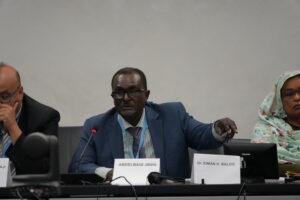
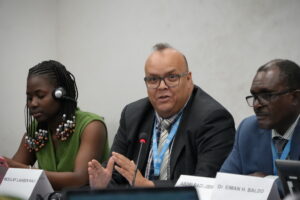
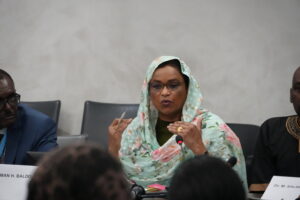
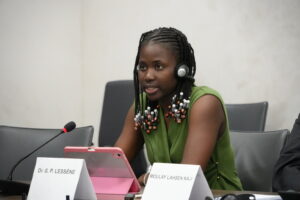
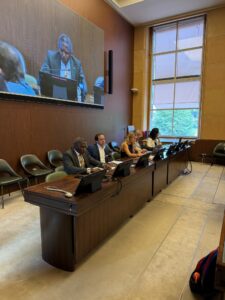
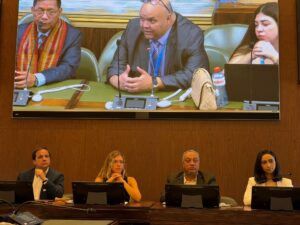
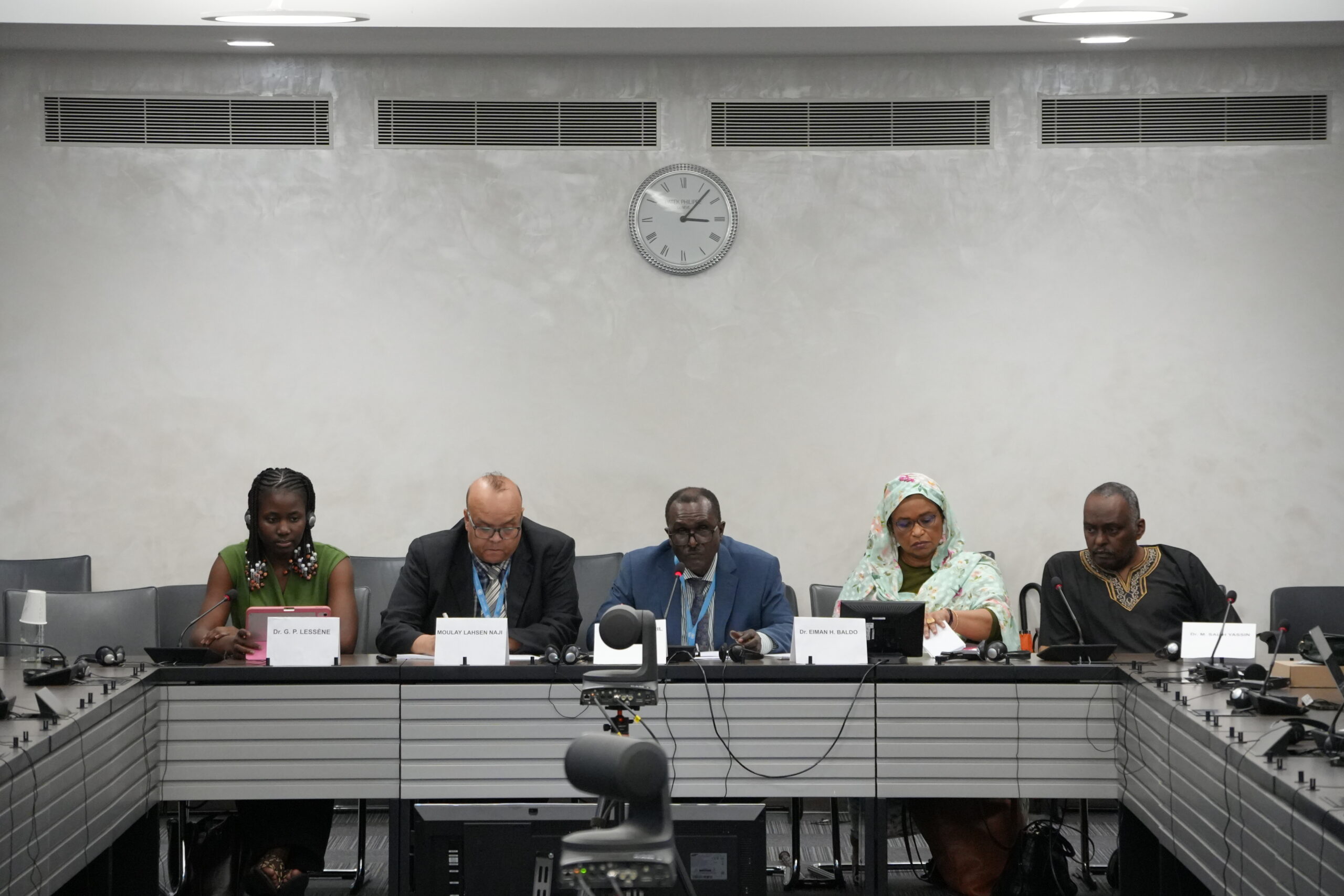
Geneva, 1 July 2026 — Human rights advocates, diplomats and civil society representatives gathered at the Palais des Nations in Geneva on Wednesday to draw renewed international attention to Sudan’s escalating humanitarian crisis, warning that millions of internally displaced people and refugees continue to face severe protection risks as conflict spreads across the country.

The NGO briefing, held alongside the 62nd Regular Session of the United Nations Human Rights Council (HRC), focused on the human rights situation in Africa, with particular attention to Sudanese internally displaced persons (IDPs) and refugees in Chad and the Central African Republic (CAR). The event was jointly organized by the Sudan Knowledge Centre (SKC), the African Centre for Democracy and Human Rights Studies (ACDHRS), the African Centre for Legal Studies, and partner organizations.

According to the organizers, Africa continues to face complex human rights challenges despite progress in some regions. Speakers cited armed conflicts, terrorism, and unconstitutional changes of government as major factors undermining the protection of fundamental rights across the continent.

The briefing highlighted Sudan as one of the world’s most severe humanitarian emergencies. Organizers stated that an estimated 16 million people have been forcibly displaced, both within Sudan and across its borders, amid ongoing violations of international human rights and humanitarian law. They also raised concerns over recent reports of forced evictions and demolitions of homes in Khartoum, describing them as a serious humanitarian issue with alleged ethnic implications.

Participants expressed particular concern over the deteriorating situation in El-Obeid, in Sudan’s Kordofan State, urging the international community to move beyond statements of concern and take more effective action to protect civilians.

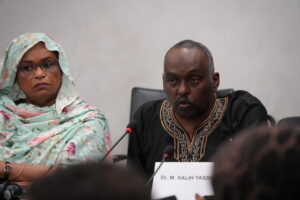
Mr. Abdelbagi Jibril, Main Representative to the UN Office and other International Organizations in Geneva (ACDHRS)

The discussion also emphasized the growing burden placed on neighboring countries. Chad and the Central African Republic were recognized for hosting large numbers of Sudanese refugees despite facing significant economic and humanitarian constraints of their own.

The event featured presentations from diplomats, human rights experts and researchers, including representatives from Chad, the African Centre for Democracy and Human Rights Studies, and Sudan Peace Tracker. Discussions examined emerging displacement trends and the wider implications for regional stability and humanitarian protection.

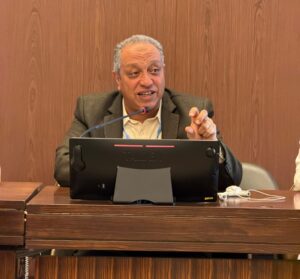
Mr. Moulay Lahsen Naji, Executive Director, Independent Commission for Human Rights in North Africa

The side event took place during the 62nd session of the UN Human Rights Council, which is being held in Geneva from 15 June to early July 2026, bringing together governments, UN experts and civil society organizations to address global human rights challenges.

Growing Regional Concern

The organizers stressed that the Sudan crisis is no longer solely a national emergency but a regional humanitarian challenge affecting neighboring countries and requiring sustained international cooperation. They called for stronger protection of civilians, greater humanitarian assistance for displaced populations, and increased international support for countries hosting Sudanese refugees.

As the Human Rights Council continues its current session in Geneva, Sudan remains one of the key country situations under discussion, reflecting mounting international concern over the conflict’s humanitarian consequences.


UN Geneva Forum Calls for Stronger South-South Cooperation to Rescue 2030 Development Goals

Geneva, 29 June 2026 — With less than five years remaining to achieve the 2030 Sustainable Development Goals (SDGs), policymakers, academics, youth representatives and civil society leaders gathered at a side event during the 62nd Session of the United Nations Human Rights Council (UNHRC) in Geneva to call for renewed South-South cooperation and a rights-based approach to sustainable development.

The high-level discussion, titled “Development in the Global South,” was jointly organized by the Youth Parliament for SDGs, the Global Institute for Water, Environment and Health (GIWEH), and RADDHO. Participants argued that developing countries are not merely recipients of international assistance but are increasingly becoming sources of innovation, practical policy solutions and development leadership.

Human Rights and Sustainable Development Must Go Hand in Hand

Speakers warned that despite progress in some areas, the world remains significantly off track in meeting the Sustainable Development Goals by 2030. They pointed to persistent inequalities, climate change, armed conflicts, debt burdens, food insecurity, technological divides and weak institutions as key obstacles slowing development, particularly across the Global South.

Participants stressed that sustainable development cannot be separated from the realization of human rights, emphasizing that development policies must place people at their centre and ensure that everyone can participate in and benefit from economic, social, cultural and political progress.

The discussion highlighted the importance of renewed multilateralism, stronger regional partnerships and increased cooperation among developing nations to accelerate implementation of the SDGs while reinforcing the internationally recognized Right to Development.

Global South as a Source of Innovation

Opening the event, Dr. Nidal Salim, Director General of GIWEH, challenged traditional perceptions of the Global South as a region defined primarily by its challenges.

Instead, he argued that countries across Asia, Africa and Latin America are increasingly demonstrating successful development models built upon local innovation, community participation, digital transformation and sustainable resource management.

Dr. Salim presented the Global South Platform Partnership as a practical framework for expanding knowledge exchange, capacity building and technological cooperation among developing countries.

Drawing from international examples, he highlighted India’s progress in digital public infrastructure, universal healthcare, renewable energy, agricultural development and climate resilience while also referencing experiences from Bangladesh, Kenya, Rwanda, Brazil and Costa Rica as evidence that successful development strategies must reflect local realities rather than follow a single global model.

Historical Importance of South-South Cooperation

Representing Interfaith International and RADDHO, Mr. Biro Diawara traced the evolution of South-South cooperation to the political solidarity established among developing nations during the 1960s and 1970s.

He highlighted the enduring significance of the Buenos Aires Plan of Action (PABA) adopted in 1978, describing it as the foundation of modern technical cooperation among developing countries.

Mr. Diawara emphasized that development should be measured not solely by economic growth but by improvements in people’s quality of life.

Quoting renowned Burkinabé historian Professor Joseph Ki-Zerbo, he reminded participants that:

“One is not developed; rather, one develops.”

He argued that globalization has often widened inequalities rather than reduced them and advocated development models rooted in local knowledge, cultural identity, human capital and inclusive governance.

Mr. Diawara also stressed the growing value of triangular cooperation involving both South-South and North-South partnerships, highlighting contributions from India, China, Brazil, Europe, the United States and Russia across sectors including healthcare, education, infrastructure, governance and agriculture.

India Presented as a Rights-Based Development Model

One of the central discussions focused on India’s Ayushman Bharat programme, which participants described as a practical example of implementing the United Nations Declaration on the Right to Development through Universal Health Coverage.

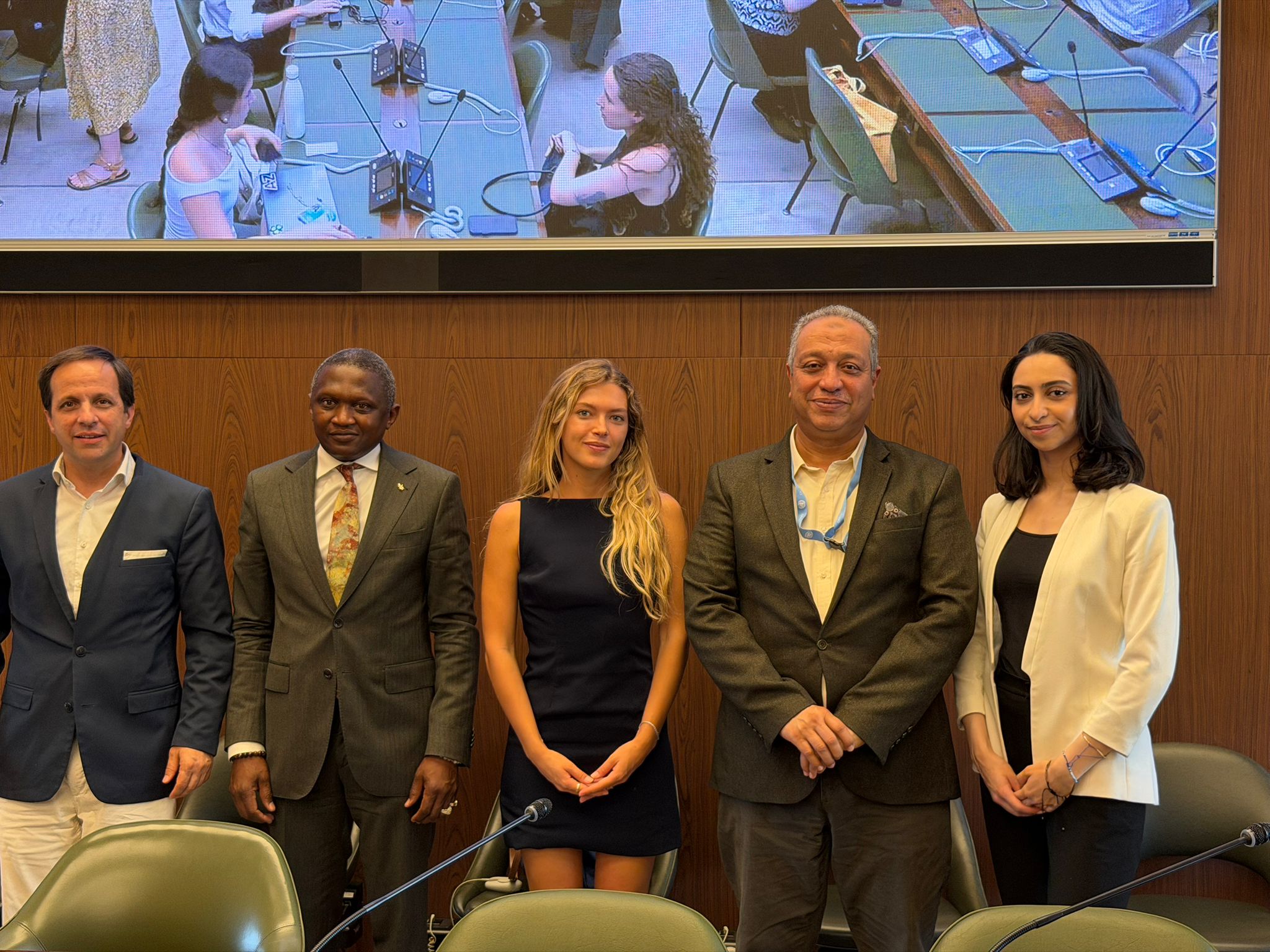
Presenting the youth perspective, Ms. Meyssan Soliman, Youth Representative at GIWEH and Sorbonne University–Paris, explained how India’s healthcare reforms demonstrate that universal access to healthcare can be achieved even in countries with large populations and limited resources.

She described Ayushman Bharat as one of the world’s largest publicly funded health protection programmes, providing financial protection for vulnerable households while expanding access to hospitals, primary healthcare centres and affordable medicines.

Ms. Soliman also highlighted India’s investment in digital health through initiatives such as the Ayushman Bharat Digital Mission, telemedicine services and electronic health records, arguing that digital innovation can strengthen transparency, improve service delivery and reduce healthcare inequalities.

She further noted India’s global contribution through affordable generic medicines and vaccine production, describing it as an example of how South-South cooperation can strengthen health systems across developing countries.

Renewed Call for Global Partnership

Throughout the discussions, speakers recalled the principles established during the historic 1955 Bandung Conference, including sovereignty, equality, solidarity, peaceful coexistence and mutual respect, describing them as increasingly relevant in today’s fragmented geopolitical environment.

Participants concluded that achieving the Sustainable Development Goals will require stronger political commitment, greater investment in resilient public institutions, expanded knowledge sharing, locally driven innovation and more effective international cooperation.

They also urged governments and international organizations to begin discussions on the global development framework beyond 2030 while accelerating implementation of existing commitments.

The side event concluded with a clear message that the Global South should no longer be viewed solely as a beneficiary of development assistance but as an increasingly influential driver of sustainable development solutions and international cooperation.


Editor’s Note: The side event was held on the margins of the 62nd Session of the United Nations Human Rights Council at the Palais des Nations in Geneva and was jointly organized by the Youth Parliament for SDGs, the Global Institute for Water, Environment and Health (GIWEH) and RADDHO.

G7 in Évian 2026: Can the World’s Democracies Shape a New Global Order?

From AI and critical minerals to Ukraine, migration and the Global South, France’s G7 presidency signals a new era of geopolitical diplomacy.

By Geneva24 News | Feature

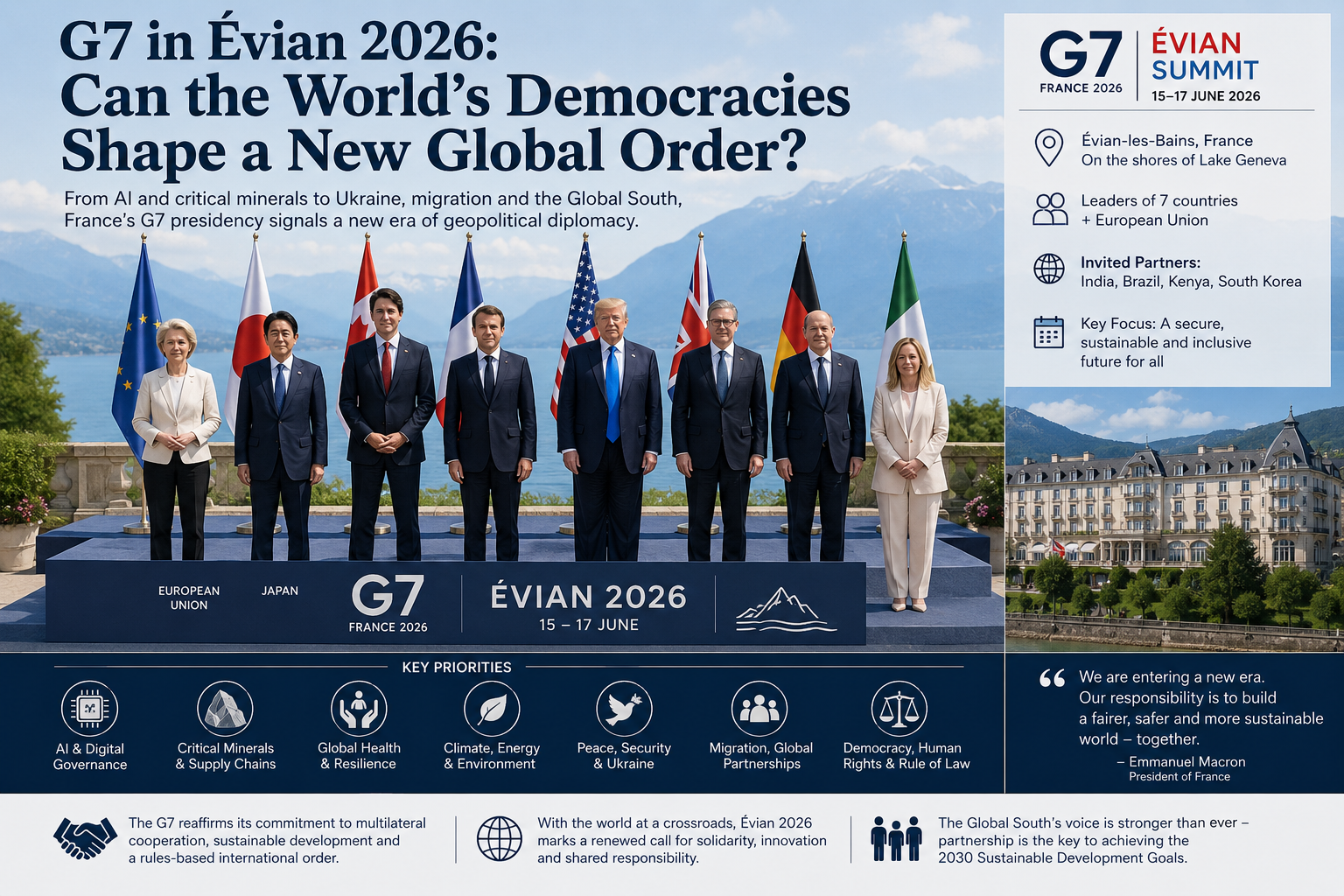
Nestled on the shores of Lake Geneva and framed by the French Alps, the spa town of Évian-les-Bains once again became the centre of global diplomacy as it hosted the 2026 G7 Summit from 15–17 June—23 years after welcoming the historic G8 Summit in 2003. Under France’s presidency, leaders of the world’s seven largest advanced democracies met at a time when international politics is being reshaped by war, economic fragmentation, artificial intelligence, and an increasingly influential Global South.

Unlike previous summits largely dominated by traditional security and economic issues, Évian 2026 reflected a world entering a different geopolitical era.

A Summit in a World of Uncertainty

The summit brought together leaders from France, the United States, Canada, the United Kingdom, Germany, Italy, Japan, alongside the European Union. France also invited leaders from India, Brazil, Kenya and South Korea, highlighting a growing recognition that today’s global challenges cannot be addressed without broader international partnerships.

President Emmanuel Macron described France’s presidency as an opportunity to return the G7 to its original purpose—finding coordinated responses to global economic instability while strengthening multilateral cooperation.

The “New Era” Agenda

Rather than focusing solely on traditional economic policy, leaders debated issues defining the coming decade.

Among the major outcomes were:

  • New commitments to secure critical mineral supply chains, seen as essential for electric vehicles, semiconductors and clean energy.
  • Joint initiatives promoting a safer digital environment for children amid growing concerns over AI-powered platforms and online harms.
  • Discussions on artificial intelligence governance, balancing innovation with regulation.
  • Continued coordination on Ukraine, Middle East security and broader geopolitical stability.
  • Stronger cooperation against drug trafficking, migrant smuggling, organized crime and violent extremism.
  • Renewed calls for balanced and resilient global economic growth.

The summit demonstrated that economic security, digital transformation and geopolitical stability are now inseparable.

Why Évian Matters

Évian is not just another summit venue.

It hosted the famous 2003 G8 Summit, remembered for debates over the Iraq War and the early rise of globalization protests.

Twenty-three years later, the challenges have changed dramatically.

Instead of debating globalization itself, leaders now confront:

  • Fragmented supply chains
  • Artificial intelligence
  • Climate resilience
  • Critical minerals
  • Cybersecurity
  • Strategic competition between major powers
  • Rising influence of emerging economies

The return to Évian symbolizes how global diplomacy has evolved from managing globalization to managing geopolitical fragmentation.

Security Like Never Before

Hosting one of the world’s most powerful political gatherings required an unprecedented security operation.

France deployed around 16,000 security personnel, including police, military units, cyber specialists, bomb disposal teams, helicopters and drone operators. Security measures extended across the French-Swiss border, affecting transport throughout the Lake Geneva region.

Swiss authorities also reinforced border controls and coordinated closely with France, reflecting the increasingly cross-border nature of modern security threats.

Beyond the G7: The Global South Steps Forward

One of the most noticeable changes in Évian was the growing role of emerging economies.

With invited leaders from India, Brazil, Kenya and South Korea, discussions acknowledged that solving global challenges—from health and energy to technology and climate—requires broader international cooperation.

This shift mirrors wider debates within the United Nations, where developing nations increasingly seek greater influence over global governance institutions.

AI Becomes a Diplomatic Issue

Artificial Intelligence emerged as one of the defining topics of the summit.

Unlike previous years, AI was no longer treated simply as a technology issue but as a geopolitical challenge involving economic competitiveness, cybersecurity, misinformation and child protection.

Leaders endorsed initiatives promoting safer online environments for minors while exploring international cooperation on AI governance and responsible innovation.

Challenges Remain

Despite the broad agenda, the summit also reflected growing questions about the G7’s future.

As economic power shifts toward Asia and the Global South, analysts increasingly debate whether the G7 can continue shaping global policy on its own.

Some observers argue that institutions such as the G20, BRICS and regional alliances are becoming increasingly influential, making broader partnerships essential rather than optional.

Geneva’s Diplomatic Moment

Although the summit took place in France, nearby Geneva played a supporting diplomatic role.

Swiss authorities coordinated closely on security, while Geneva hosted several bilateral meetings and diplomatic engagements linked to the summit, reinforcing the city’s position as one of the world’s leading centres for international dialogue.

Looking Ahead

The Évian Summit illustrated that today’s global agenda extends far beyond traditional economic coordination.

Artificial intelligence, climate resilience, critical minerals, migration, digital safety, geopolitical conflict and cooperation with emerging economies now define international diplomacy.

Whether the G7 can continue adapting to this rapidly changing world remains an open question. Yet Évian 2026 demonstrated that even in an era of geopolitical rivalry, dialogue among major democracies remains central to addressing shared global challenges.

From Cinema Icon to Chief Minister: Vijay Reshapes Tamil Nadu Politics

From Silver Screen to State Power: C. Joseph Vijay Becomes Tamil Nadu Chief Minister

The political landscape of southern India entered a historic new chapter this week as celebrated Tamil film superstar C. Joseph Vijay officially took oath as the Chief Minister of Tamil Nadu.

The actor-turned-politician, popularly known to millions of fans as “Thalapathy” Vijay, was sworn in during a high-profile ceremony in Chennai on Sunday, marking one of the most dramatic political transitions in modern Indian regional politics.

His party, Tamilaga Vettri Kazhagam, emerged as the single largest force in the 2026 Tamil Nadu Assembly elections, ending decades of dominance by the state’s traditional Dravidian political parties. Analysts describe the victory as a major political realignment in one of India’s most influential states.

In his first address as Chief Minister, Vijay promised what he called “a new era of secular and social justice governance,” pledging reforms focused on youth, welfare, employment, and public services.

The rise of Vijay reflects the long-standing intersection between cinema and politics in Tamil Nadu, a state where film stars have historically commanded massive public influence. However, observers note that Vijay’s ascent is particularly significant because it breaks the six-decade political grip of the DMK-AIADMK era that shaped Tamil Nadu politics since the late 1960s.

Thousands of supporters gathered across Chennai during the swearing-in ceremony, waving party flags, celebrating in the streets, and watching the event on giant public screens. The atmosphere resembled both a political rally and a cinematic celebration — highlighting Vijay’s unique crossover appeal from entertainment into governance.

International attention has also followed the development, with global media outlets describing Vijay’s victory as one of the most remarkable celebrity-to-politics transitions in recent Indian history.

Before entering politics, Vijay was among the highest-paid and most influential actors in South Indian cinema, starring in numerous blockbuster films with a strong youth following across India and the Tamil diaspora worldwide. C. Joseph Vijay formally launched his political movement in recent years, positioning himself as an anti-establishment alternative focused on governance reform and generational change.

His government now faces major challenges, including economic development, employment generation, welfare delivery, and balancing coalition support within a rapidly evolving political environment.

Still, for many supporters, Vijay’s victory represents more than an electoral result — it symbolizes the arrival of a new political generation in Tamil Nadu.

Viral Social Media Challenge Injures Two Teenagers in Switzerland

Swiss authorities are warning parents and schools worldwide about the dangers of viral social media trends after two teenagers were injured in separate incidents linked to risky online “challenge” games in the Canton of Bern.

According to police, the incidents are believed to be connected to dangerous internet challenges that encourage young people to restrict breathing or intentionally lose consciousness while being filmed or watched by friends. The trend, known internationally by names such as the “Blackout Challenge” or “Choking Challenge,” has circulated across multiple social media platforms in recent years.

One of the teenagers reportedly suffered serious injuries, prompting an official investigation by Swiss juvenile authorities. Due to the age of those involved, police have not released further personal details.

The cases have reignited global concerns over the growing influence of viral online content on children and teenagers. Safety experts warn that many young users imitate extreme challenges without fully understanding the physical and psychological risks involved.

Swiss authorities are now urging parents, teachers, and caregivers to speak openly with children about online peer pressure, dangerous internet trends, and digital safety. Officials stressed that social media challenges can escalate quickly from entertainment into life-threatening situations.

The incidents in Switzerland reflect a broader international debate over the role of social media algorithms in promoting sensational or risky content to younger audiences. Child safety advocates continue to call for stronger protections, better moderation systems, and increased awareness campaigns targeting both parents and students.

As viral trends spread instantly across borders, authorities say the latest cases are a reminder that online behavior can have serious real-world consequences.

Beyond Profit: Wealth & Family Office Forum Davos 2026 Champions Purpose-Driven Capital

As global markets grappled with volatility, rapid technological change, and declining institutional trust, investors in Davos turned their attention to a fundamental question — how capital should be deployed in an increasingly uncertain world. That question took center stage at the Wealth & Family Office Forum – Davos Edition 2026, held alongside the World Economic Forum.

Powered by the Basel Investor Forum, the one-day gathering brought together family offices, venture investors, and global decision-makers to examine how values-driven investment can support long-term growth, resilience, and trust.

The Forum focused on healthcare, deep technology, and impact investing — sectors viewed as critical to future economic stability. Speakers emphasized that conscious leadership in investment is no longer a philosophical choice, but a strategic necessity. Discussions explored how capital allocation can align with systemic challenges — from artificial intelligence and biotechnology to mental health, planetary resilience, and emerging quantum technologies.

The agenda featured panels on inclusive AI, systemic investing for planetary health, and the growing intersection of biotech and artificial intelligence. Founder mental health, the economic implications of quantum-AI convergence, and the role of foundations and institutions in mission-aligned capital were also key focus areas. A central feature of the Forum was curated investor matchmaking, designed to facilitate direct engagement between family offices, venture funds, and a select group of founders. Participants attended from Europe, the Americas, Asia, Africa, India, and the Middle East, reflecting the increasingly global nature of private capital flows.

Beyond traditional panels, the Forum incorporated art-led dialogue and mindfulness-based sessions — signaling a broader shift toward holistic leadership and long-term decision-making. As investors reassess risk, returns, and responsibility, the Wealth & Family Office Forum – Davos Edition 2026 highlighted a growing consensus: rebuilding trust and aligning capital with purpose may be essential to navigating the next phase of global growth. From Davos, this is a clear signal that the future of investment is being shaped not only by performance — but by principle.

(By: SARIFUDEEN M Zahran)


How to Become a Billionaire in 2026?

“Let me be brutally honest: you will NOT become a billionaire in 2026 by working harder — but you might if you think differently than 99.9% of people.”

“Here’s the truth no one on Geneva24 tells you.”

Becoming a billionaire in 2026 is not about motivation.
It’s about leverage, timing, and scale.

First — reality check.
There are fewer than 3,500 billionaires on Earth.
Most of them didn’t grind 9-to-5.
They built or controlled systems.
So how does it actually happen?

Rule Number One: Billionaires Don’t Sell Time
Employees sell hours.
Freelancers sell skills.
Billionaires build assets that work without them.

In 2026, the fastest-scaling assets are:

– Technology platforms
– AI-driven businesses
– Media and attention
– Ownership in scalable companies

Rule Number Two: Timing Beats Talent

Every generation has a wave:

– 2000s → Internet
– 2010s → Mobile & social media
– 2025–2026 → AI, automation, and digital infrastructure

AI is doing to white-collar work what machines did to factories.

The biggest money will go to people who:
– Build AI tools
– Control AI data
– Or own distribution — audience, platforms, media

Rule Number Three: Control Attention

Almost every new billionaire today either:

– Controls technology
– Controls capital
– Or controls attention

YouTube, TikTok, podcasts — attention is leverage.
Attention becomes:

– Products
– Influence
– Deals
– Equity

That’s why creators are becoming investors — and investors are becoming creators.

Final Truth

You don’t aim to be a billionaire.
You aim to:
– Build something that scales globally
– Own equity
– Ride a once-in-a-generation shift

We are in one right now.

“Most people will watch AI change the world.
A few will position themselves to own part of it.”

“Which one are you?”

Gig Economy Unpacked: Who Wins, Who Loses in 2026?

The Gig Economy’s Global Divide: Unpacking Regulation and Worker Rights Worldwide

By SARIFUDEEN M Zahran

The so-called gig economy — digital platforms that connect independent workers with short-term tasks — has reshaped labour markets across the globe. Promising flexibility, low barriers to entry and instant earnings, companies like Uber, Deliveroo, DoorDash and numerous task-based apps have become fixtures of modern life. Yet beneath the veneer of autonomy lies a fragmented global landscape where worker rights, protections and economic stability vary dramatically from one region to another.

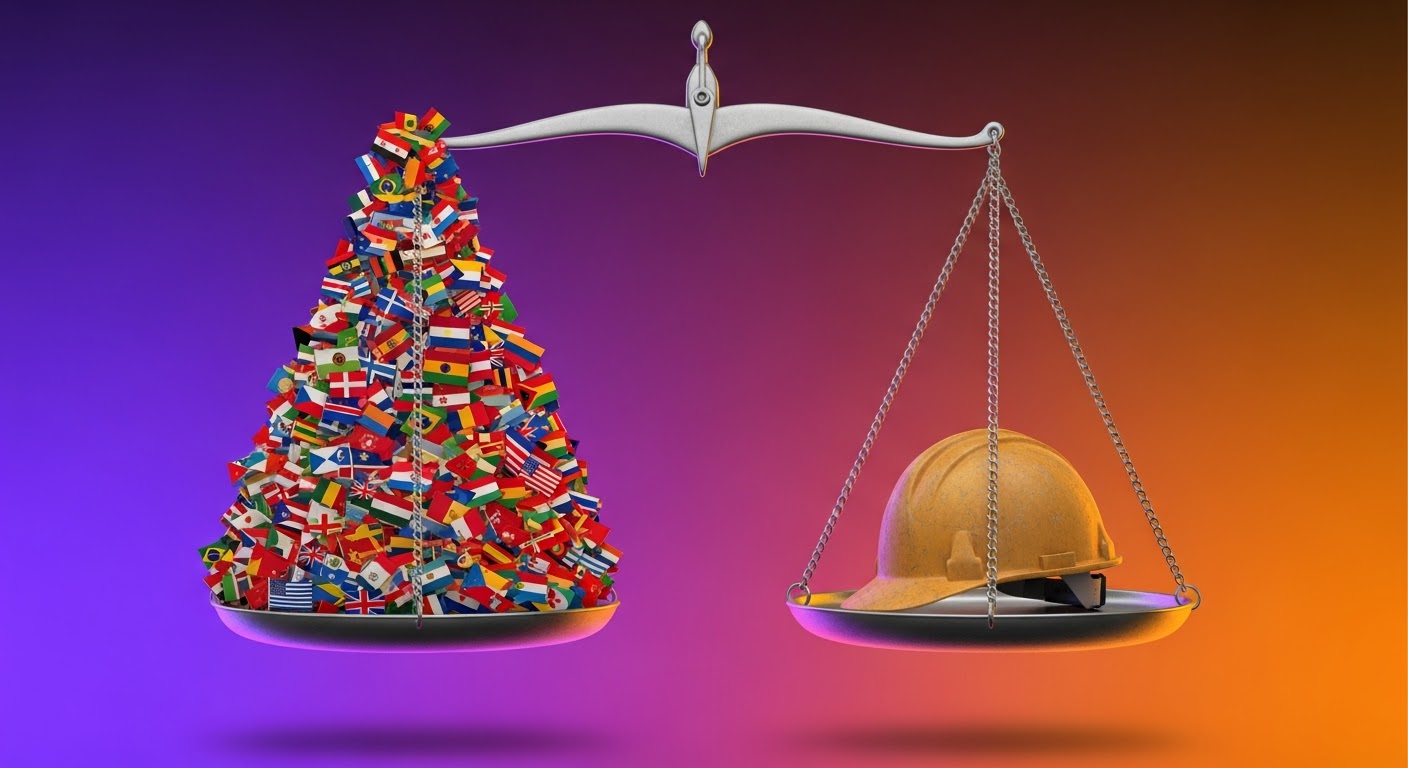
This divergence highlights a fundamental tension in today’s world of work: how to preserve flexibility without sacrificing basic labour protections.

A World of Contrasts: Regulatory Approaches Across Continents

In Europe, policymakers have taken one of the most ambitious legislative approaches to gig work. The European Union has moved to introduce a Platform Workers Directive designed to increase transparency, prevent misclassification of workers, and limit the unchecked use of algorithmic management. Under this framework, if a platform exercises de facto control over a worker’s hours or pay, that person could be presumed to have an employment relationship — opening the door to protections like sick pay, predictable wages and human oversight of automated decisions.

However, the road to reform hasn’t been smooth. Some member states have diluted draft rules, leaving significant discretion to national law and court interpretations that may preserve the status quo in many markets. Meanwhile, debates in national legislatures — such as in France — reflect deep divisions over how best to balance platform growth with worker security.

In stark contrast, the United States lacks a unified federal gig work standard. Although some cities and states have passed targeted measures — and California’s AB5 law aimed to reclassify many gig workers as employees — federal labour policy has remained fragmented. Human Rights Watch has documented how this regulatory patchwork can lead to workers earning as little as the effective equivalent of US$5.12 per hour once expenses are factored in.

Meanwhile, parts of Latin America and Asia are emerging as important case studies in blended regulatory innovation. In Mexico, a new regime grants platform workers access to social security benefits traditionally reserved for employees — from healthcare to retirement plans — while preserving some flexibility.Singapore’s Platform Workers Act, effective from January 2025, similarly requires platforms to contribute to national social security systems and extends workers’ compensation and medical insurance protections. Malaysia’s Gig Workers Bill 2025further signals the region’s growing appetite for ensuring minimum protections in this expanding labour sector.

The Human Cost of Fragmented Policy

These divergent regulatory paths have real consequences for gig workers. Across regions, companies often classify their workforce as independent contractors; a classification that limits access to benefits such as paid leave, minimum wage protections, health insurance and collective bargaining rights.

The International Labour Organization (ILO) — based in Geneva — has underscored the urgency of action. In 2025, the ILO advanced efforts to develop binding global labour standards for platform work, aiming to address misclassification, wage insecurity, safety risks and algorithmic control mechanisms that evade traditional employer accountability.

The economic realities underscored by these debates reveal a complex picture: while gig work can offer a crucial income stream for millions, it often does so without the social safety nets that protect traditional employees. The World Bank estimates that up to 400 million people worldwide now earn income through platform work, yet many remain vulnerable to market volatility, algorithmic surveillance and income uncertainty.

Balancing Flexibility with Fundamental Rights

Proponents of a robust regulatory framework argue that establishing clear worker classifications and protections will improve economic stability without undermining innovation. Strong rules on algorithmic transparency, worker representation and social benefits could help ensure that gig work isn’t a race to the bottom, but rather a viable, dignified form of employment in the digital age.

Critics, including some business groups, warn that too heavy a hand could stifle growth, increase costs and reduce opportunities — especially in markets where platforms provide essential services and supplemental income. The debate comes down to a central question: how can governments craft policies that protect workers while preserving the flexibility that makes the gig economy attractive?

Towards a Global Consensus?

As gig work continues its rapid expansion, the need for coherent global standards has never been more apparent. The contrasting regulatory frameworks — from Europe’s evolving protections to North America’s patchwork policies and Asia’s emerging legislative experiments — underscore the absence of a universal model.

The world stands at an inflection point: without coordinated policies that recognize both the opportunities and risks of digital labour, disparities between regions are likely to widen. Geneva, as a hub for international labour governance, remains central to these global discussions — where the future of work is being reshaped, one regulation at a time.