
UN Human Rights Council to Hold Urgent Debate on Sudan Crisis as 500,000 Civilians Face Atrocity Risk

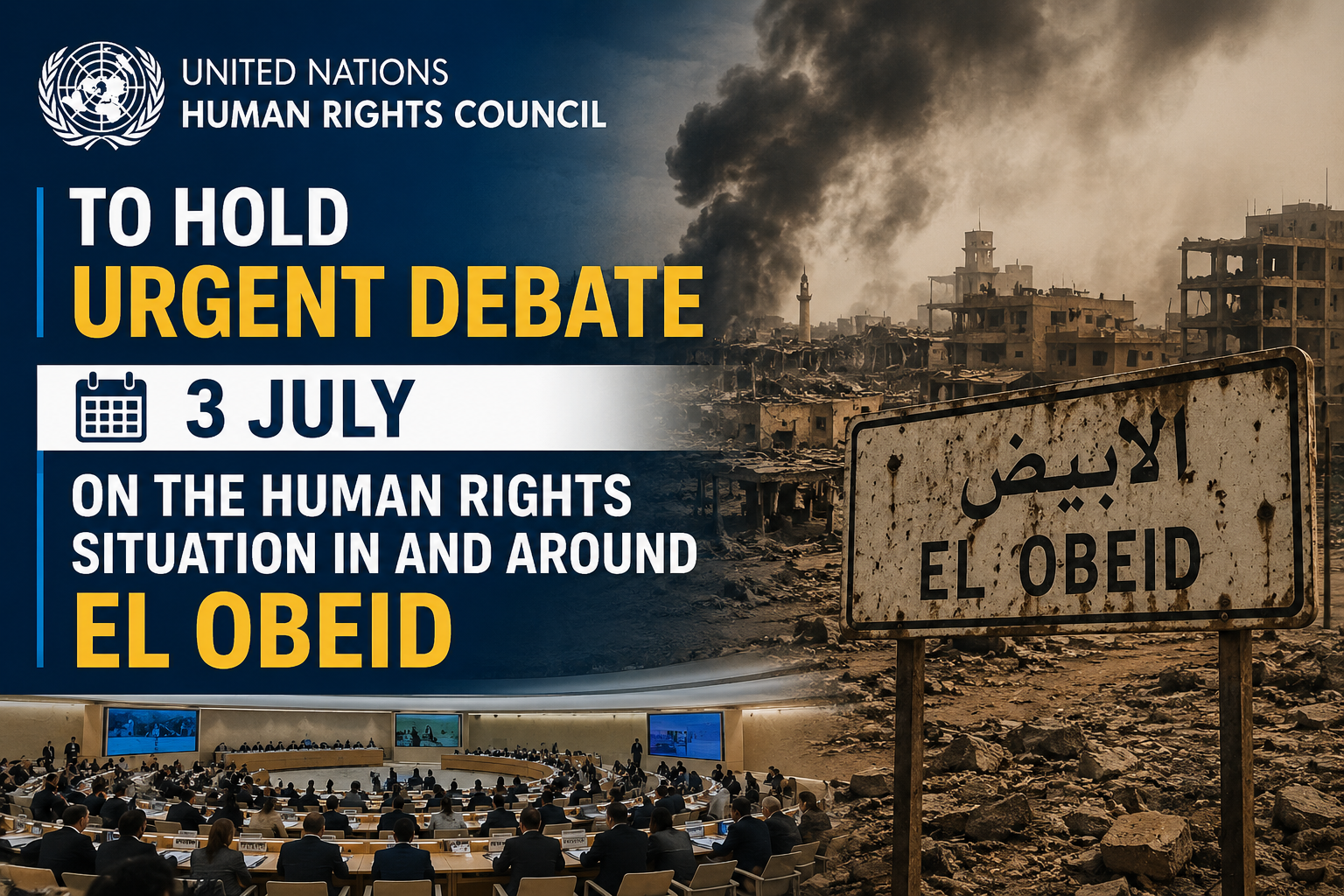
The United Nations Human Rights Council (UNHRC) will convene an urgent debate on Friday, 3 July, to address the rapidly deteriorating human rights situation in and around El Obeid, the capital of Sudan’s North Kordofan State, amid mounting concerns that hundreds of thousands of civilians face an imminent risk of large-scale atrocities.

The emergency discussion, scheduled to begin at 10:00 a.m. (CEST) at the Palais des Nations in Geneva, comes as international alarm grows over the humanitarian consequences of Sudan’s ongoing conflict. The session will be broadcast live on UN Web TV in all six official UN languages.

The debate was requested by a core group of countries—Germany, Ireland, the Netherlands, Norway, and the United Kingdom—which warned that the situation on the ground has reached a critical point.

According to the request submitted to the Human Rights Council, approximately 500,000 civilians are believed to be at risk as violence intensifies around El Obeid. The group highlighted reports of increasing drone attacks that have damaged essential civilian infrastructure, triggering severe shortages of fuel and clean water while leaving thousands of residents trapped under conditions resembling a siege.

“The threat of potential escalation on the ground requires urgent international attention,” the requesting countries stated, warning that civilians remain cut off from basic services and humanitarian assistance.

Draft Resolution Expected

As part of the urgent debate, the sponsoring countries are expected to introduce a draft resolution calling for action by the Human Rights Council. While the details of the resolution have not yet been released, it is anticipated to address civilian protection, humanitarian access, and accountability for alleged violations of international human rights and humanitarian law.

The Council adjusted the programme of work for its ongoing 62nd Regular Session to accommodate the emergency debate, underscoring the seriousness of the situation.

Unlike a Special Session, an urgent debate can be convened without requiring signatures from member states or formal notification procedures, allowing the Council to respond more rapidly to emerging crises.

Growing International Concern

Sudan has remained engulfed in conflict since fighting erupted in April 2023 between rival military factions, triggering one of the world’s largest displacement and humanitarian crises. Millions have been forced from their homes, while repeated attacks on civilians, healthcare facilities and critical infrastructure have drawn widespread condemnation from the international community.

The situation in El Obeid, a strategically important city linking western and central Sudan, has become increasingly precarious as fighting spreads across North Kordofan. Humanitarian agencies have warned that continued violence risks cutting off aid deliveries to large parts of the country.

Human Rights Council’s 13th Urgent Debate

Friday’s meeting will mark the 13th urgent debate convened by the Human Rights Council since the mechanism was established in 2006. Urgent debates are reserved for situations requiring immediate international attention and provide member states with an opportunity to examine rapidly evolving human rights crises and consider collective action.

Diplomats, UN officials, humanitarian organizations, and civil society representatives are expected to participate in the discussion, which is likely to focus on measures to protect civilians, ensure humanitarian access, and strengthen international monitoring of the conflict.

As the humanitarian crisis deepens, Friday’s debate is expected to place Sudan once again at the centre of international attention, with growing calls for stronger global action to prevent further civilian suffering and avert a wider catastrophe.

The urgent debate will be held on Friday, 3 July 2026, at 10:00 a.m. (CEST) in the Assembly Hall of the Palais des Nations, Geneva, and will be streamed live on UN Web TV.
‘Empty Rhetoric Is Not Enough’: Rights Experts Demand Action on Sudan

Millions Displaced: Human Rights Experts Sound Alarm Over Sudan Crisis at UN Geneva

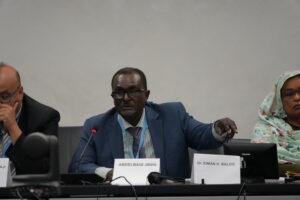
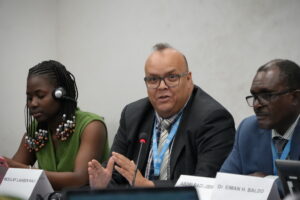
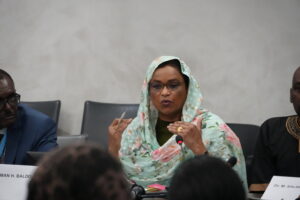
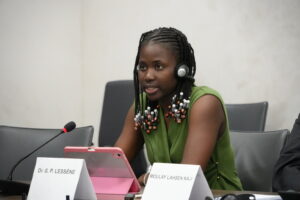
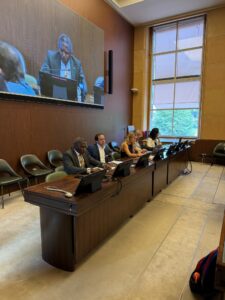
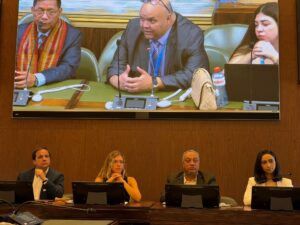
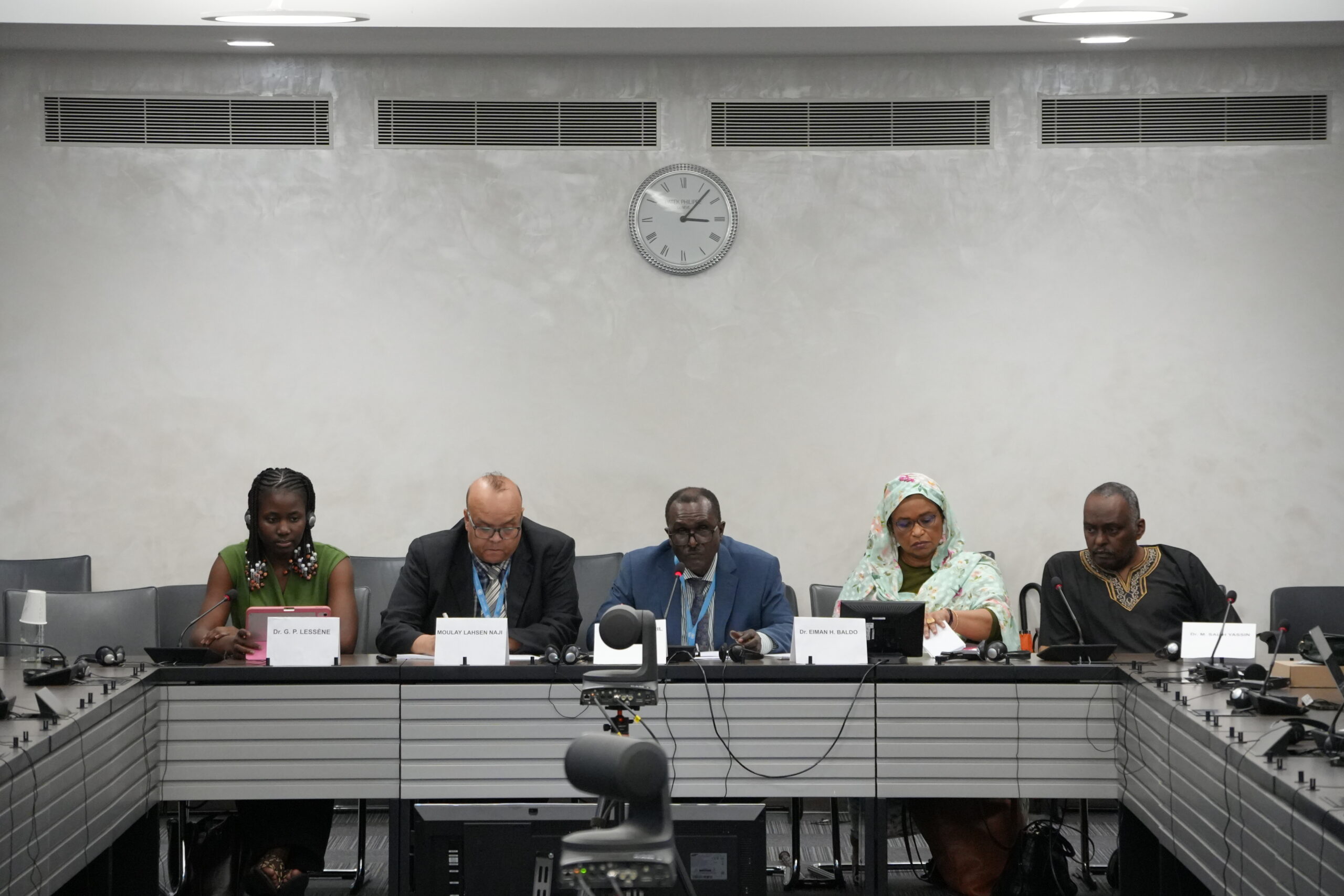
Geneva, 1 July 2026 — Human rights advocates, diplomats and civil society representatives gathered at the Palais des Nations in Geneva on Wednesday to draw renewed international attention to Sudan’s escalating humanitarian crisis, warning that millions of internally displaced people and refugees continue to face severe protection risks as conflict spreads across the country.

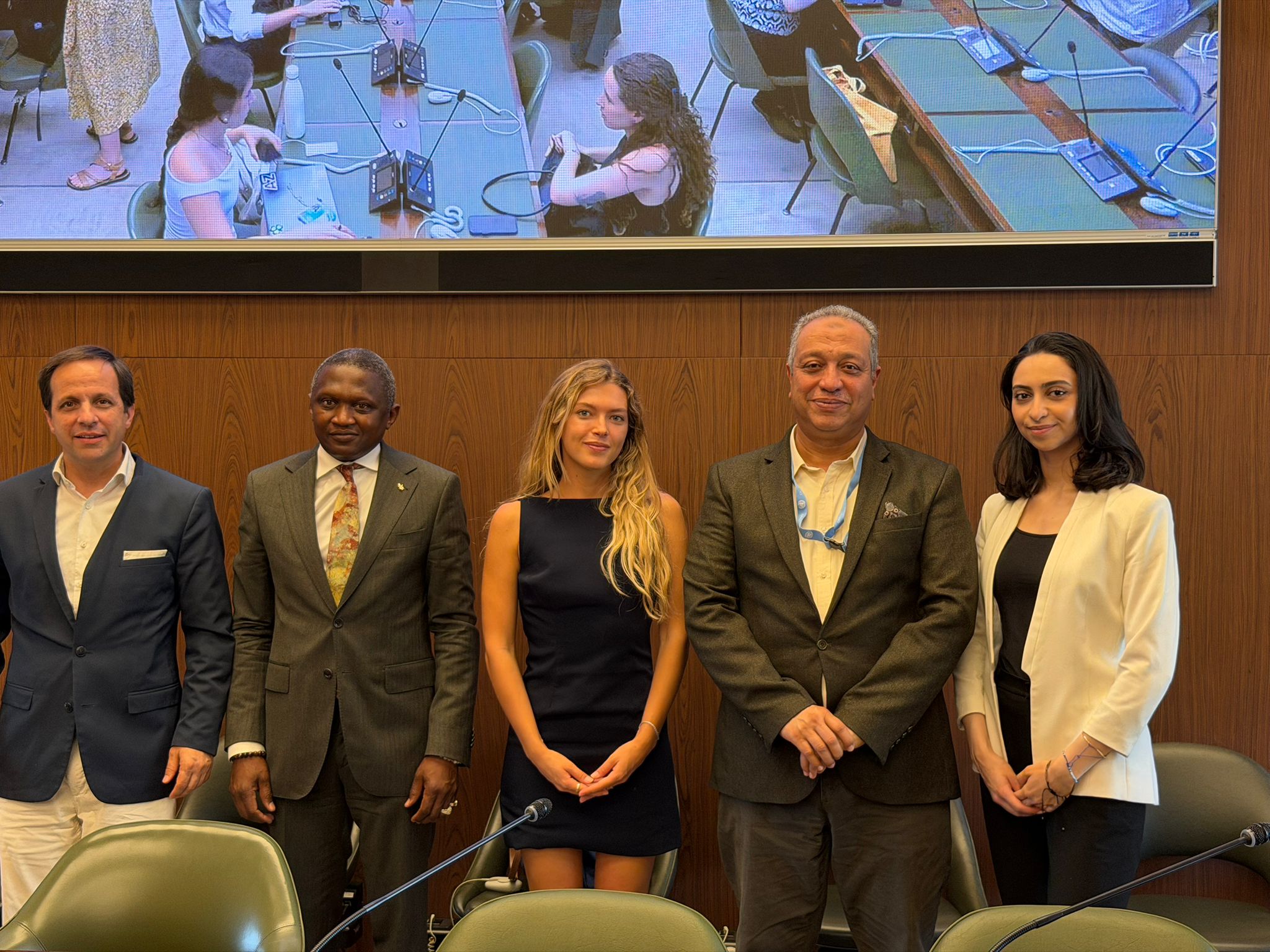
The NGO briefing, held alongside the 62nd Regular Session of the United Nations Human Rights Council (HRC), focused on the human rights situation in Africa, with particular attention to Sudanese internally displaced persons (IDPs) and refugees in Chad and the Central African Republic (CAR). The event was jointly organized by the Sudan Knowledge Centre (SKC), the African Centre for Democracy and Human Rights Studies (ACDHRS), the African Centre for Legal Studies, and partner organizations.

According to the organizers, Africa continues to face complex human rights challenges despite progress in some regions. Speakers cited armed conflicts, terrorism, and unconstitutional changes of government as major factors undermining the protection of fundamental rights across the continent.

The briefing highlighted Sudan as one of the world’s most severe humanitarian emergencies. Organizers stated that an estimated 16 million people have been forcibly displaced, both within Sudan and across its borders, amid ongoing violations of international human rights and humanitarian law. They also raised concerns over recent reports of forced evictions and demolitions of homes in Khartoum, describing them as a serious humanitarian issue with alleged ethnic implications.

Participants expressed particular concern over the deteriorating situation in El-Obeid, in Sudan’s Kordofan State, urging the international community to move beyond statements of concern and take more effective action to protect civilians.

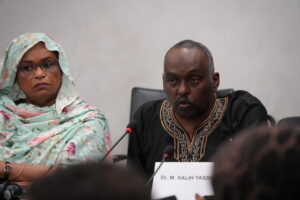
Mr. Abdelbagi Jibril, Main Representative to the UN Office and other International Organizations in Geneva (ACDHRS)

The discussion also emphasized the growing burden placed on neighboring countries. Chad and the Central African Republic were recognized for hosting large numbers of Sudanese refugees despite facing significant economic and humanitarian constraints of their own.

The event featured presentations from diplomats, human rights experts and researchers, including representatives from Chad, the African Centre for Democracy and Human Rights Studies, and Sudan Peace Tracker. Discussions examined emerging displacement trends and the wider implications for regional stability and humanitarian protection.

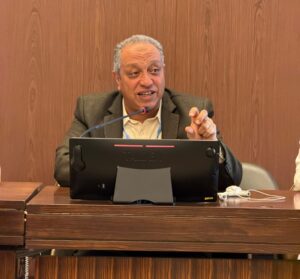
Mr. Moulay Lahsen Naji, Executive Director, Independent Commission for Human Rights in North Africa

The side event took place during the 62nd session of the UN Human Rights Council, which is being held in Geneva from 15 June to early July 2026, bringing together governments, UN experts and civil society organizations to address global human rights challenges.

Growing Regional Concern

The organizers stressed that the Sudan crisis is no longer solely a national emergency but a regional humanitarian challenge affecting neighboring countries and requiring sustained international cooperation. They called for stronger protection of civilians, greater humanitarian assistance for displaced populations, and increased international support for countries hosting Sudanese refugees.

As the Human Rights Council continues its current session in Geneva, Sudan remains one of the key country situations under discussion, reflecting mounting international concern over the conflict’s humanitarian consequences.


UN Geneva Forum Calls for Stronger South-South Cooperation to Rescue 2030 Development Goals

Geneva, 29 June 2026 — With less than five years remaining to achieve the 2030 Sustainable Development Goals (SDGs), policymakers, academics, youth representatives and civil society leaders gathered at a side event during the 62nd Session of the United Nations Human Rights Council (UNHRC) in Geneva to call for renewed South-South cooperation and a rights-based approach to sustainable development.

The high-level discussion, titled “Development in the Global South,” was jointly organized by the Youth Parliament for SDGs, the Global Institute for Water, Environment and Health (GIWEH), and RADDHO. Participants argued that developing countries are not merely recipients of international assistance but are increasingly becoming sources of innovation, practical policy solutions and development leadership.

Human Rights and Sustainable Development Must Go Hand in Hand

Speakers warned that despite progress in some areas, the world remains significantly off track in meeting the Sustainable Development Goals by 2030. They pointed to persistent inequalities, climate change, armed conflicts, debt burdens, food insecurity, technological divides and weak institutions as key obstacles slowing development, particularly across the Global South.

Participants stressed that sustainable development cannot be separated from the realization of human rights, emphasizing that development policies must place people at their centre and ensure that everyone can participate in and benefit from economic, social, cultural and political progress.

The discussion highlighted the importance of renewed multilateralism, stronger regional partnerships and increased cooperation among developing nations to accelerate implementation of the SDGs while reinforcing the internationally recognized Right to Development.

Global South as a Source of Innovation

Opening the event, Dr. Nidal Salim, Director General of GIWEH, challenged traditional perceptions of the Global South as a region defined primarily by its challenges.

Instead, he argued that countries across Asia, Africa and Latin America are increasingly demonstrating successful development models built upon local innovation, community participation, digital transformation and sustainable resource management.

Dr. Salim presented the Global South Platform Partnership as a practical framework for expanding knowledge exchange, capacity building and technological cooperation among developing countries.

Drawing from international examples, he highlighted India’s progress in digital public infrastructure, universal healthcare, renewable energy, agricultural development and climate resilience while also referencing experiences from Bangladesh, Kenya, Rwanda, Brazil and Costa Rica as evidence that successful development strategies must reflect local realities rather than follow a single global model.

Historical Importance of South-South Cooperation

Representing Interfaith International and RADDHO, Mr. Biro Diawara traced the evolution of South-South cooperation to the political solidarity established among developing nations during the 1960s and 1970s.

He highlighted the enduring significance of the Buenos Aires Plan of Action (PABA) adopted in 1978, describing it as the foundation of modern technical cooperation among developing countries.

Mr. Diawara emphasized that development should be measured not solely by economic growth but by improvements in people’s quality of life.

Quoting renowned Burkinabé historian Professor Joseph Ki-Zerbo, he reminded participants that:

“One is not developed; rather, one develops.”

He argued that globalization has often widened inequalities rather than reduced them and advocated development models rooted in local knowledge, cultural identity, human capital and inclusive governance.

Mr. Diawara also stressed the growing value of triangular cooperation involving both South-South and North-South partnerships, highlighting contributions from India, China, Brazil, Europe, the United States and Russia across sectors including healthcare, education, infrastructure, governance and agriculture.

India Presented as a Rights-Based Development Model

One of the central discussions focused on India’s Ayushman Bharat programme, which participants described as a practical example of implementing the United Nations Declaration on the Right to Development through Universal Health Coverage.

Presenting the youth perspective, Ms. Meyssan Soliman, Youth Representative at GIWEH and Sorbonne University–Paris, explained how India’s healthcare reforms demonstrate that universal access to healthcare can be achieved even in countries with large populations and limited resources.

She described Ayushman Bharat as one of the world’s largest publicly funded health protection programmes, providing financial protection for vulnerable households while expanding access to hospitals, primary healthcare centres and affordable medicines.

Ms. Soliman also highlighted India’s investment in digital health through initiatives such as the Ayushman Bharat Digital Mission, telemedicine services and electronic health records, arguing that digital innovation can strengthen transparency, improve service delivery and reduce healthcare inequalities.

She further noted India’s global contribution through affordable generic medicines and vaccine production, describing it as an example of how South-South cooperation can strengthen health systems across developing countries.

Renewed Call for Global Partnership

Throughout the discussions, speakers recalled the principles established during the historic 1955 Bandung Conference, including sovereignty, equality, solidarity, peaceful coexistence and mutual respect, describing them as increasingly relevant in today’s fragmented geopolitical environment.

Participants concluded that achieving the Sustainable Development Goals will require stronger political commitment, greater investment in resilient public institutions, expanded knowledge sharing, locally driven innovation and more effective international cooperation.

They also urged governments and international organizations to begin discussions on the global development framework beyond 2030 while accelerating implementation of existing commitments.

The side event concluded with a clear message that the Global South should no longer be viewed solely as a beneficiary of development assistance but as an increasingly influential driver of sustainable development solutions and international cooperation.


Editor’s Note: The side event was held on the margins of the 62nd Session of the United Nations Human Rights Council at the Palais des Nations in Geneva and was jointly organized by the Youth Parliament for SDGs, the Global Institute for Water, Environment and Health (GIWEH) and RADDHO.

From Cinema Icon to Chief Minister: Vijay Reshapes Tamil Nadu Politics

From Silver Screen to State Power: C. Joseph Vijay Becomes Tamil Nadu Chief Minister

The political landscape of southern India entered a historic new chapter this week as celebrated Tamil film superstar C. Joseph Vijay officially took oath as the Chief Minister of Tamil Nadu.

The actor-turned-politician, popularly known to millions of fans as “Thalapathy” Vijay, was sworn in during a high-profile ceremony in Chennai on Sunday, marking one of the most dramatic political transitions in modern Indian regional politics.

His party, Tamilaga Vettri Kazhagam, emerged as the single largest force in the 2026 Tamil Nadu Assembly elections, ending decades of dominance by the state’s traditional Dravidian political parties. Analysts describe the victory as a major political realignment in one of India’s most influential states.

In his first address as Chief Minister, Vijay promised what he called “a new era of secular and social justice governance,” pledging reforms focused on youth, welfare, employment, and public services.

The rise of Vijay reflects the long-standing intersection between cinema and politics in Tamil Nadu, a state where film stars have historically commanded massive public influence. However, observers note that Vijay’s ascent is particularly significant because it breaks the six-decade political grip of the DMK-AIADMK era that shaped Tamil Nadu politics since the late 1960s.

Thousands of supporters gathered across Chennai during the swearing-in ceremony, waving party flags, celebrating in the streets, and watching the event on giant public screens. The atmosphere resembled both a political rally and a cinematic celebration — highlighting Vijay’s unique crossover appeal from entertainment into governance.

International attention has also followed the development, with global media outlets describing Vijay’s victory as one of the most remarkable celebrity-to-politics transitions in recent Indian history.

Before entering politics, Vijay was among the highest-paid and most influential actors in South Indian cinema, starring in numerous blockbuster films with a strong youth following across India and the Tamil diaspora worldwide. C. Joseph Vijay formally launched his political movement in recent years, positioning himself as an anti-establishment alternative focused on governance reform and generational change.

His government now faces major challenges, including economic development, employment generation, welfare delivery, and balancing coalition support within a rapidly evolving political environment.

Still, for many supporters, Vijay’s victory represents more than an electoral result — it symbolizes the arrival of a new political generation in Tamil Nadu.

How to Become a Billionaire in 2026?

“Let me be brutally honest: you will NOT become a billionaire in 2026 by working harder — but you might if you think differently than 99.9% of people.”

“Here’s the truth no one on Geneva24 tells you.”

Becoming a billionaire in 2026 is not about motivation.
It’s about leverage, timing, and scale.

First — reality check.
There are fewer than 3,500 billionaires on Earth.
Most of them didn’t grind 9-to-5.
They built or controlled systems.
So how does it actually happen?

Rule Number One: Billionaires Don’t Sell Time
Employees sell hours.
Freelancers sell skills.
Billionaires build assets that work without them.

In 2026, the fastest-scaling assets are:

– Technology platforms
– AI-driven businesses
– Media and attention
– Ownership in scalable companies

Rule Number Two: Timing Beats Talent

Every generation has a wave:

– 2000s → Internet
– 2010s → Mobile & social media
– 2025–2026 → AI, automation, and digital infrastructure

AI is doing to white-collar work what machines did to factories.

The biggest money will go to people who:
– Build AI tools
– Control AI data
– Or own distribution — audience, platforms, media

Rule Number Three: Control Attention

Almost every new billionaire today either:

– Controls technology
– Controls capital
– Or controls attention

YouTube, TikTok, podcasts — attention is leverage.
Attention becomes:

– Products
– Influence
– Deals
– Equity

That’s why creators are becoming investors — and investors are becoming creators.

Final Truth

You don’t aim to be a billionaire.
You aim to:
– Build something that scales globally
– Own equity
– Ride a once-in-a-generation shift

We are in one right now.

“Most people will watch AI change the world.
A few will position themselves to own part of it.”

“Which one are you?”

New Year’s Tragedy in the Alps: Deadly Blaze Rocks Crans-Montana

A devastating incident has occurred in the Swiss Alps in the ski resort town of Crans-Montana during New Year’s celebrations.

In the early hours of January 1, 2026, at approximately 1:30 a.m. local time, a fire followed by an explosion tore through the crowded bar Le Constellation in the centre of the resort as hundreds of people were celebrating the arrival of the new year.

Swiss officials and police describe the event as a major emergency with a tragic human toll. According to police statements and media reports:

  • Several dozen people are presumed dead, with some local outlets reporting around 40 fatalities, though authorities have not confirmed a final figure.

  • About 100 people have been injured, many with serious burns and critical injuries, and are being treated in hospitals throughout Switzerland.

Emergency services responded rapidly. Firefighters, police, rescue teams and multiple helicopters were deployed to the scene. The area around the bar has been sealed off, and a no-fly zone has been imposed over Crans-Montana to facilitate rescue operations.

Authorities say the origin of the explosion and fire is still unclear, and investigators are actively working to determine how the blaze began. At this stage, officials do not believe this was a deliberate attack.

Police spokespersons have emphasised the scale of the tragedy, describing it as a serious incident affecting both locals and international visitors, and have appealed for calm as rescue efforts continue.

Hospitals in the Valais region and beyond are treating victims, with some seriously injured patients transferred to larger burn centres due to the severity of their wounds.

Support is being offered to families with missing loved ones, and helplines have been established to assist those seeking information.

This tragedy has cast a sombre start to the new year in Switzerland, as authorities continue to piece together the full circumstances of the disaster.

Sri Lankan-Born Farah Rumy Elected 2nd Vice President of Swiss National Council

“Sri Lankan-Born Leader in Swiss Parliament”

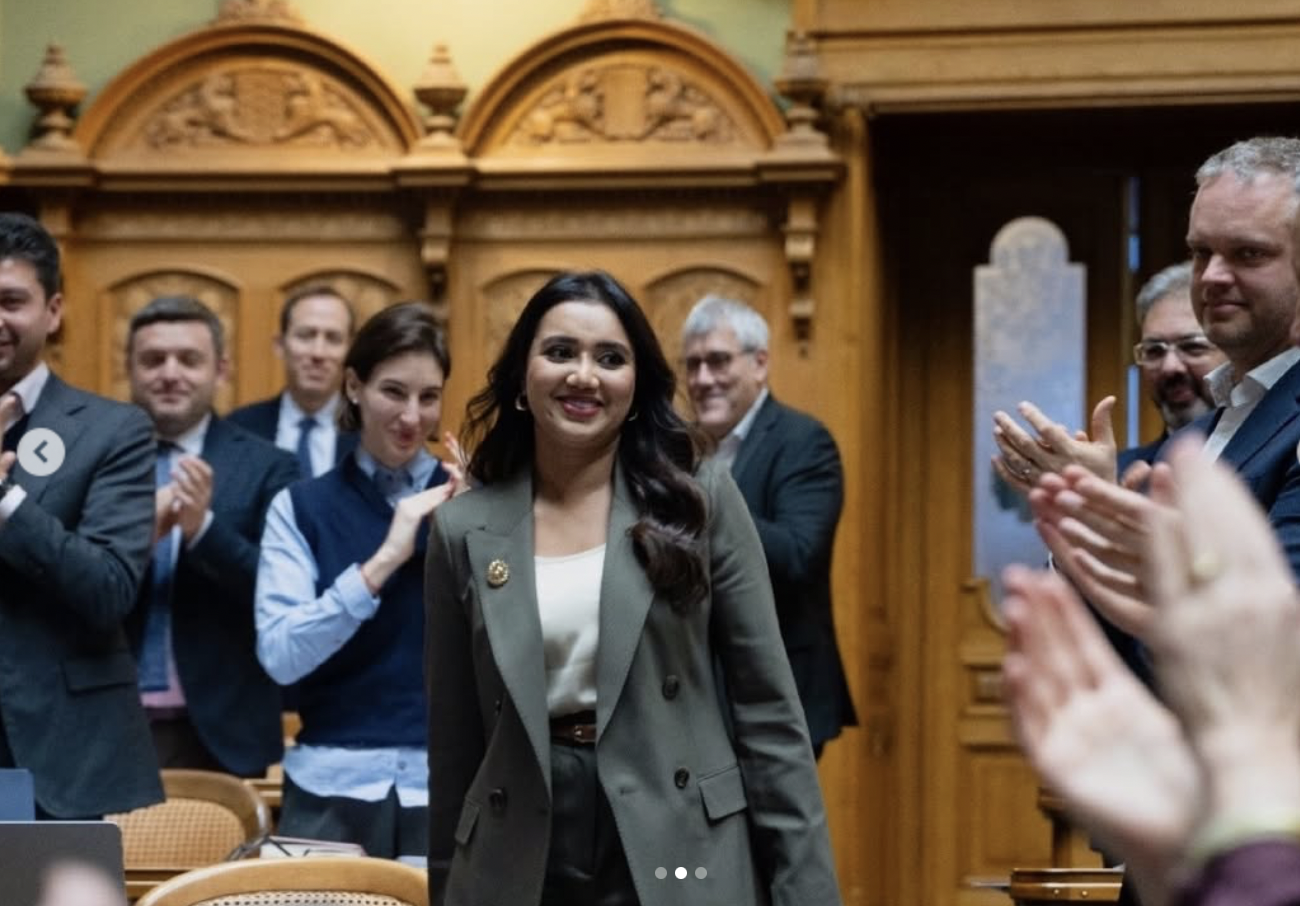
In Switzerland, history was made today at the opening of the Federal Assembly’s 2025 winter session. Sri Lankan-born Swiss parliamentarian Farah Rumy has been officially elected Second Vice-President of the National Council, becoming the first Swiss federal parliament leader of Sri Lankan heritage. The vote took place this Monday, December 1st, as the National Council elected its new presidium for the 2025/26 term.

The new Presiding College of the National Council has now been confirmed: Pierre-André Page, of the Swiss People’s Party (UDC/SVP), becomes President of the National Council for 2025/26. Katja Christ, from the Green Liberal Party, has been elected First Vice-President. And Farah Rumy, of the Social Democratic Party, will serve as Second Vice-President of the chamber. These positions are among the highest in Switzerland’s political system. Each year, the National Council and Council of States elect new leaders who preside over debates, steer parliamentary agendas, and represent Switzerland in international parliamentary diplomacy.

WHO IS FARAH RUMY?

Farah Rumy was born in Sri Lanka and moved to Switzerland as a child. A trained nurse and medical specialist, she entered politics through her work during the COVID-19 pandemic — an experience that pushed her to join the Social Democratic Party in 2020. She was first elected to the Solothurn Cantonal Council in 2021, where she focused on social policy and public health. After the 2023 federal elections, she moved up to the National Council as the first alternate when MP Franziska Roth vacated her seat. Rumy is now a member of the Foreign Affairs Committee and an alternate member of the Immunity Committee. In parliament, she has championed healthcare reforms, social equality, foreign policy, peace initiatives, and human rights. She also serves as co-president of her regional nursing union and remains active in local politics in the city of Grenchen. Rumy is the first Swiss federal parliamentarian of Sri Lankan descent, and now becomes the first to hold a leadership position within the National Council’s presidium.

On the same day, the upper chamber — the Council of States — elected Stefan Engler as its new President for the 2025/26 term. For Farah Rumy, today’s election marks a major milestone in Swiss political history — one that reflects the country’s evolving diversity and the growing influence of younger leaders in national decision-making.

By: SARIFUDEEN M Zahran (Journalist)

Sri Lanka on Alert – Sri Lanka Flood Emergency

Sri Lanka is facing a worsening monsoon emergency, with heavy rains triggering nationwide floods, landslides, and fatal accidents.

One of the most tragic incidents was reported from the eastern town of Sainthamaruthu, where three members of the same family lost their lives after their vehicle plunged into a flooded canal. As rescue operations continue and alerts remain in place, concerns are growing over the scale of the disaster across the island. In Ampara district, on the island’s eastern coast, heavy rainfall turned roads into rivers — and claimed lives. Authorities say a car carrying a grandfather, grandmother, and their young granddaughter veered off a submerged road late yesterday and slipped into the Borale Vely canal. Emergency teams rushed to the scene, but strong currents made rescue efforts extremely difficult. All three occupants were recovered without signs of life — another reminder of the deadly risks faced by families attempting to move through flood-hit regions. But this is not an isolated incident.

Sri Lanka’s Disaster Management Centre confirms that continuous rainfall over recent days has caused widespread flooding and landslides across the country. Dozens of deaths have now been reported nationwide, while thousands of homes are waterlogged or destroyed. Several major roads are impassable, railway operations have been suspended, and low-lying villages remain under evacuation alerts. Meteorologists warn that more rain is expected, with rivers and reservoirs already overflowing.

From the southern coastline to the central highlands, communities are scrambling for safety, temporary shelters are filling, and relief agencies are appealing for urgent support. Experts say Sri Lanka is now experiencing one of its most intense seasonal rainfall surges in recent years — a pattern increasingly linked to climate instability in the region. For the family lost in Sainthamaruthu, the tragedy is personal and immeasurable. For the country, it is part of a wider emergency — one that highlights fragile infrastructure, climate vulnerability, and the need for stronger preparedness systems. International agencies are monitoring the situation closely as Sri Lanka faces continuing rain in the days ahead. This is Geneva24 News, bringing global attention to Sri Lanka’s unfolding flood crisis — and the communities fighting to survive it.

By: SARIFUDEEN Zahran

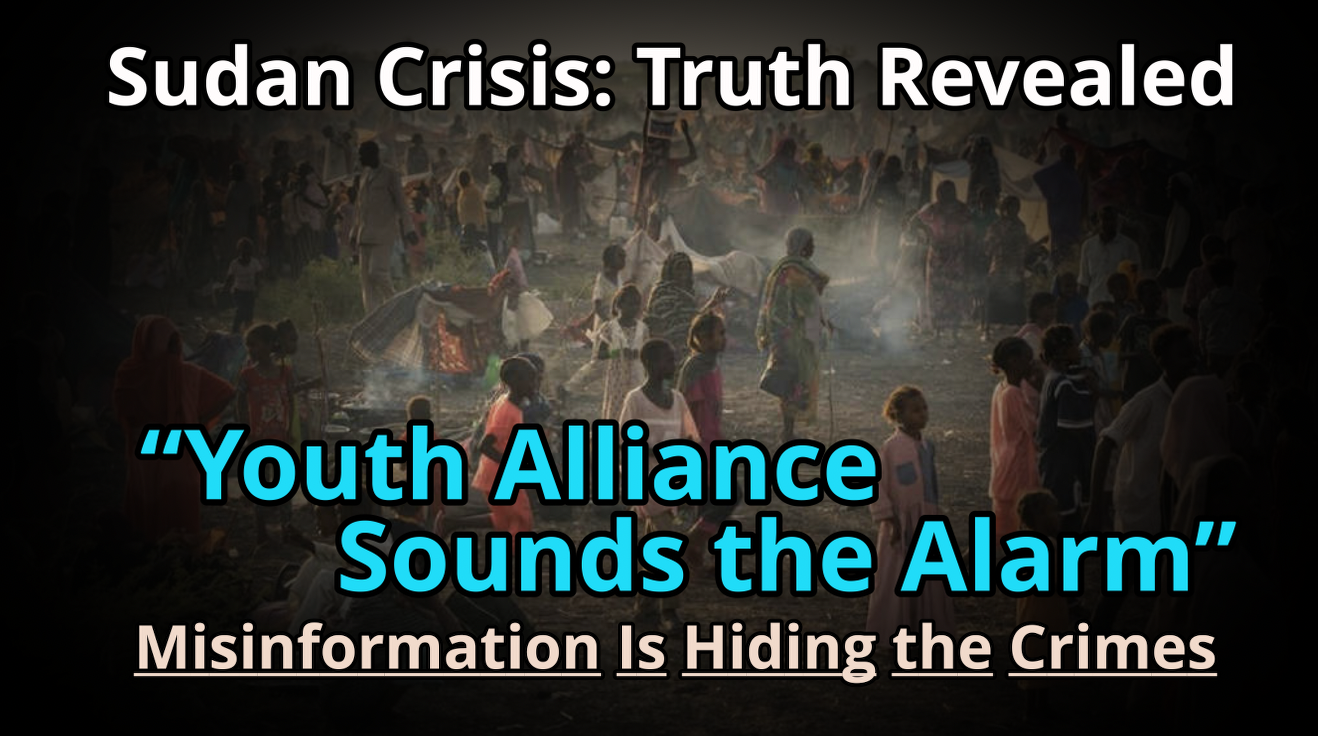
“Impunity Must End”: Youth Future Alliance Issues Powerful Statement on Sudan Crisis

The UK-based NGO The Youth Future Alliance responded to the United Nations Human Rights Council’s 38th Special Session on Sudan with a strong statement.

The organisation warns that propaganda and misinformation surrounding the fall of El-Fashir are undermining justice and obstructing accountability. It calls on the UN and member states to prioritise verified reporting and to counter disinformation campaigns. The Alliance also stresses that deflecting blame onto external actors does not advance peace. While foreign involvement should be examined, it notes that Sudan’s crisis was driven primarily by internal political decisions—including coups, the dismantling of the civilian transition, and the repeated rejection of peace proposals. The Youth Future Alliance further argues that the root cause of Sudan’s instability is the longstanding impunity of the Sudanese Armed Forces, whose repeated coups and use of militias contributed directly to today’s violence.

Finally, the organisation insists that Sudan’s future must be shaped by civilians, especially young people. It calls for the restoration of civilian rule, accountability for all violations—including those committed by the SAF—and a new political path grounded in human rights. The Youth Future Alliance is urging the international community to ensure that today’s UN resolution leads to real action: proper investigations, restored humanitarian access, and long-term support for a civilian-led, peaceful Sudan.

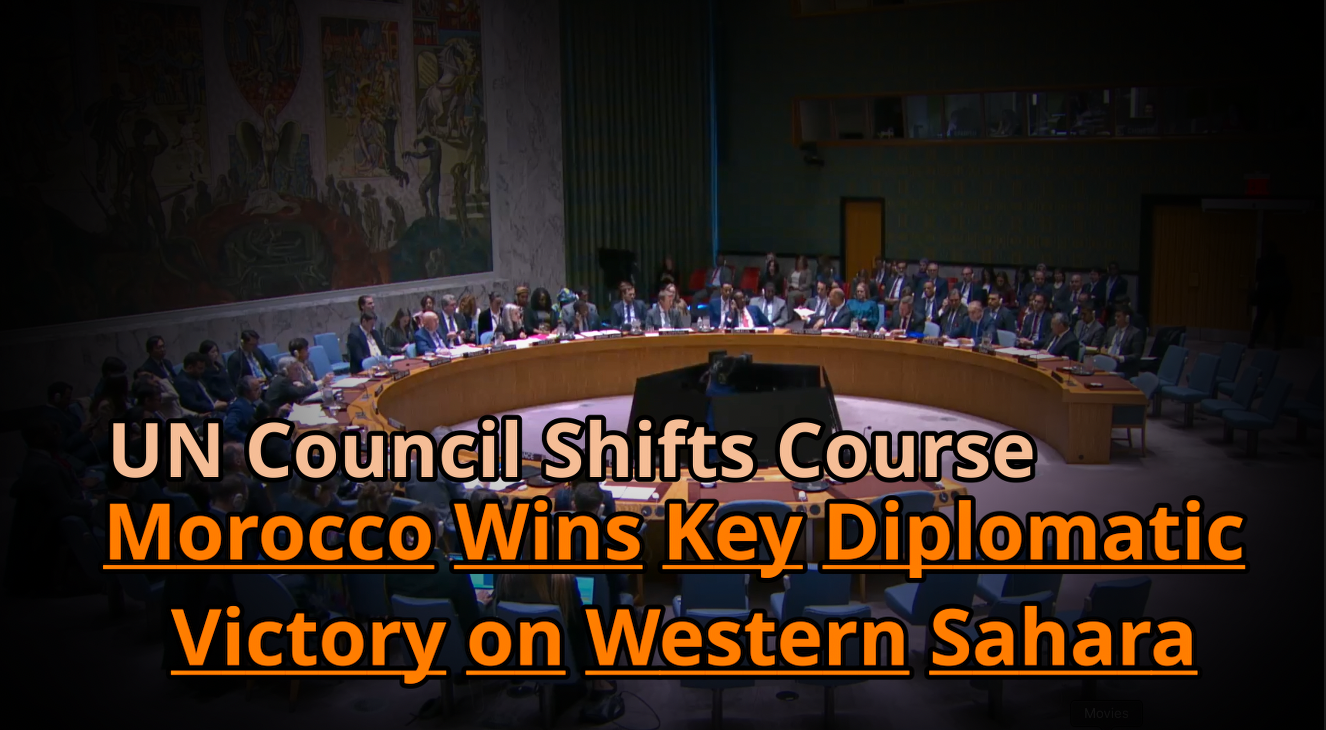
UN Council Shifts Course — Morocco Wins Key Diplomatic Victory on Western Sahara

In a significant shift in UN diplomacy, the Security Council has approved a resolution endorsing Morocco’s autonomy plan for the disputed territory of Western Sahara — a change that could redefine decades of negotiations.

On October 31, 2025, the Security Council passed a U.S.–drafted resolution with 11 votes in favor, and abstentions from Russia, China, and Pakistan — while Algeria declined to vote. The resolution affirms that Morocco’s 2007 autonomy proposal under its sovereignty may represent the “most feasible” basis for a final political solution. It also renews the mandate of the United Nations peacekeeping mission in the region, MINURSO, for another year.

Historically, the pro-independence Polisario Front has insisted on a referendum including independence as an option. But the new resolution notably omits that mention, signaling a tilt away from the referendum path. Algeria, which backs the Polisario Front, sharply criticized the move. Its ambassador argued that the text marginalizes Sahrawi proposals and compromises principles of decolonization. Meanwhile, Morocco hailed the resolution as a landmark diplomatic victory. In Rabat, the government called it a milestone toward integrating Western Sahara under its administrative framework. Supporters, including the U.S., France, and the U.K., say the resolution provides a realistic and durable foundation for negotiations, rather than open-ended referendums. The Council also instructed the UN Secretary-General to deliver a strategic review of MINURSO’s future next year, contingent on progress in dialogue.

This resolution could reshape long-standing divisions in North Africa. But as reactions from the Polisario Front and Algeria show, the road to peace remains fraught — especially when issues of sovereignty and self-determination remain on the table. We’ll continue to follow how UN diplomacy and regional politics respond to this pivotal moment.