
Sri Lanka: 20 Years Without Justice? New UN Report Renews Calls for Wartime Accountability

UN Human Rights Office highlights attacks on humanitarian workers, hospitals and relief operations, while confirming that no response was received from the Sri Lankan Government before the report’s publication.

By Geneva24 News Desk | Geneva, Switzerland | 27 November 2026

The United Nations Human Rights Office (OHCHR) has renewed its call for truth, justice and accountability in Sri Lanka, highlighting serious unresolved allegations concerning attacks on humanitarian workers and restrictions on humanitarian assistance during the country’s armed conflict.

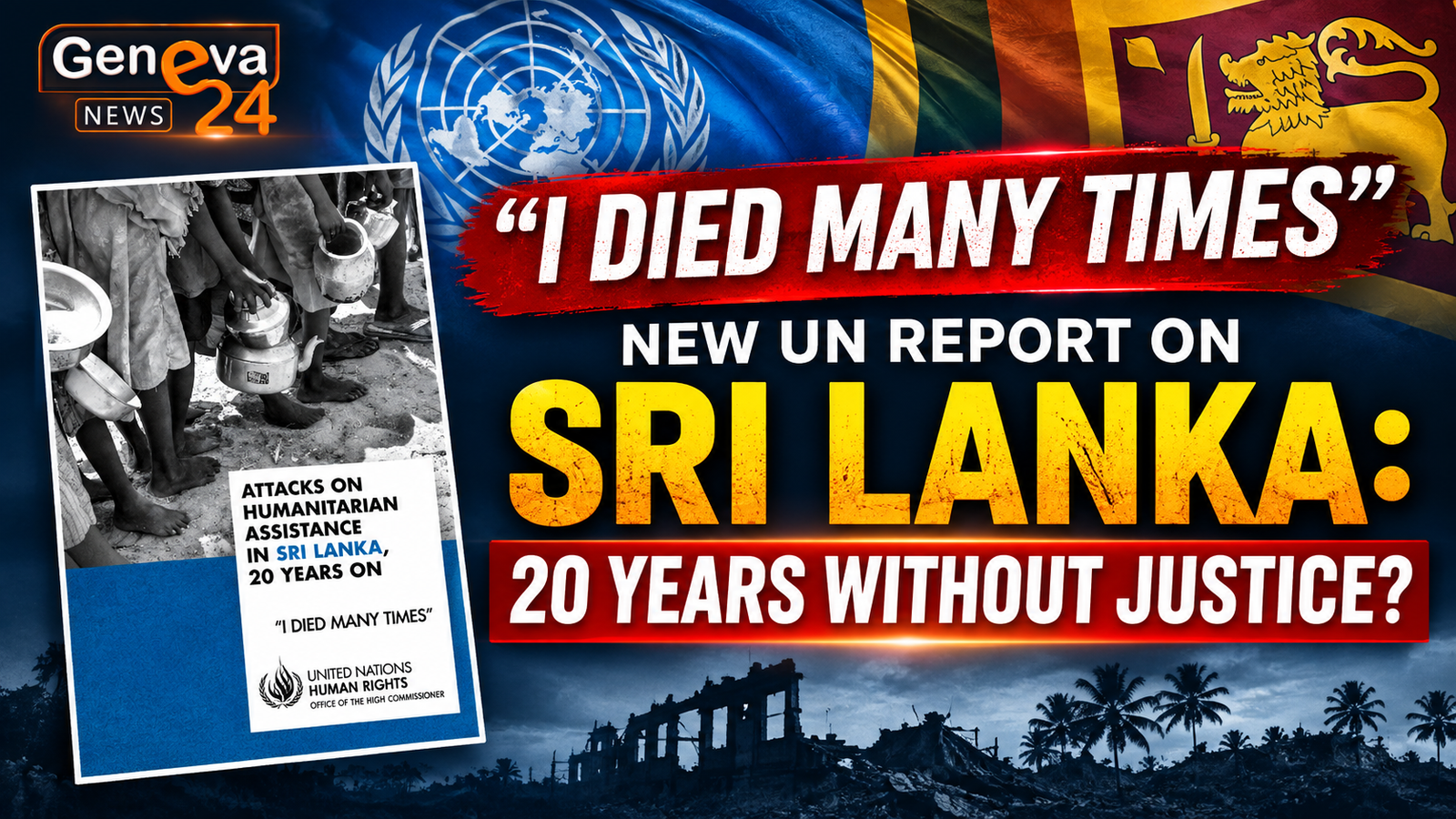
The report, released on 26 November 2026 and titled “I Died Many Times” – Attacks on Humanitarian Assistance in Sri Lanka, 20 Years On, examines violations affecting humanitarian personnel, medical facilities and relief operations, particularly between 2006 and 2009.

Two decades after some of the incidents examined in the report, affected families and surviving humanitarian workers continue to face unanswered questions over accountability and justice.

No Government Response Before Publication

In a significant disclosure, OHCHR confirmed that the report had been shared with the Government of Sri Lanka before publication, providing the authorities with an opportunity to comment on its findings.

However, according to the UN Human Rights Office, no reply had been received by the time the report was published.

The disclosure comes as international attention returns to Sri Lanka’s unresolved wartime human rights issues and the need for credible investigations into alleged violations of international humanitarian and human rights law.
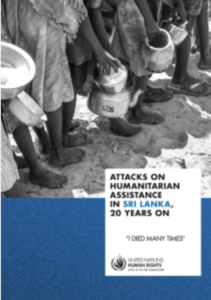
Two Decades of Unresolved Violations

Drawing on more than a decade of investigations, previous United Nations findings and consultations with humanitarian and medical personnel, the report identifies a sustained pattern of attacks and restrictions that severely undermined humanitarian operations during the conflict.

Among the cases examined is the killing of 17 humanitarian workers employed by the international humanitarian organisation Action Against Hunger (Action Contre la Faim – ACF) in Muttur in August 2006.

The report also examines the disappearance of staff members of the Tamil Rehabilitation Organisation (TRO), attacks affecting a United Nations humanitarian convoy and attacks on Puthukkudiyiruppu Hospital.

According to OHCHR, no individual has been held criminally responsible in connection with the four incidents examined.

The continuing absence of criminal accountability remains a central concern for the UN Human Rights Office.

Restrictions on Humanitarian Assistance

The report highlights the deterioration of humanitarian access during the final stages of Sri Lanka’s armed conflict.

According to OHCHR, restrictions imposed by the Government on essential supplies and humanitarian operations significantly affected the availability of food, medicines and other necessities.

The report also addresses restrictions imposed by the Liberation Tigers of Tamil Eelam (LTTE) on civilian movement.

As humanitarian operations became increasingly constrained, civilians faced severe shortages of essential supplies and limited access to medical care.

Previous United Nations investigations found reasonable grounds to believe that serious violations committed by parties to the conflict may amount to war crimes.

These findings underscore the need for independent investigations to establish individual criminal responsibility through appropriate legal processes.

UN Calls for Independent Investigations and Reparations

The United Nations Human Rights Office has urged Sri Lanka to take concrete measures to address longstanding accountability concerns and provide meaningful remedies to affected individuals and families.

Its recommendations include:

  • Conducting prompt, independent and impartial investigations into attacks on humanitarian personnel and operations.
  • Formally acknowledging violations involving members of the security forces.
  • Providing public apologies and comprehensive reparations to affected families and surviving humanitarian workers.
  • Strengthening mechanisms to ensure independent and effective prosecutions.
  • Improving protection for victims, witnesses and individuals seeking accountability.
  • Strengthening safeguards against future human rights violations.

OHCHR has also called for continued international scrutiny where domestic accountability efforts remain inadequate.

The recommendations place renewed emphasis on Sri Lanka’s responsibility to address past violations and ensure that victims have meaningful access to justice.

A Warning to the International Community

The implications of the report extend beyond Sri Lanka.

The United Nations Human Rights Office warns that the continuing absence of accountability for attacks on humanitarian personnel risks establishing a dangerous precedent for conflicts elsewhere in the world.

Protecting humanitarian workers, medical facilities and civilian access to essential assistance remains a fundamental obligation under international humanitarian law.

The Sri Lankan experience highlights the importance of effective investigations, independent accountability mechanisms and international cooperation in protecting humanitarian operations.

Families Continue to Await Justice

Although Sri Lanka’s armed conflict ended in May 2009, questions surrounding wartime violations remain unresolved.

For affected families and surviving humanitarian workers, accountability is not simply a legal or political issue. It concerns recognition, truth, justice and the right to an effective remedy.

The latest OHCHR report places these concerns back on the international human rights agenda.

Whether the renewed recommendations will lead to credible investigations, prosecutions and meaningful reparations remains to be seen.

Twenty years after the earliest incidents examined in the report, the search for truth and justice continues.

Source: United Nations Human Rights Office (OHCHR), “I Died Many Times” – Attacks on Humanitarian Assistance in Sri Lanka, 20 Years On, 26 November 2026.

Geneva24 – From Geneva to the World.
www.geneva24.com

GUTERRES URGES ASEAN TO STEP UP ACTION ON MYANMAR, PROTECT ROHINGYA AS HE ATTENDS FINAL SUMMIT

By: SARIFUDEEN Zahran

MANILA, Philippines / GENEVA — United Nations Secretary-General António Guterres has called for stronger cooperation between the United Nations and the Association of Southeast Asian Nations (ASEAN), urging regional leaders to intensify efforts to end the crisis in Myanmar and protect civilians and displaced communities.

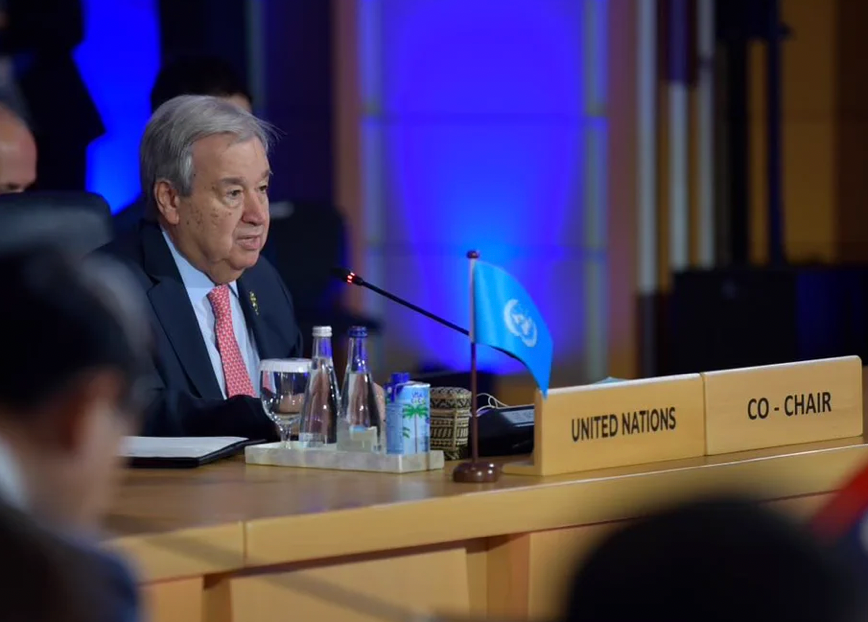
Speaking at his final ASEAN-UN Summit in Manila on Monday, 16 November 2026, Guterres stressed the importance of regional and international cooperation in addressing growing global challenges, including armed conflicts, climate change, economic instability and rising humanitarian needs.

“This is my final ASEAN-UN Summit as Secretary-General, but I will always remain inspired by, and committed to, this region’s continuing journey,” he told regional leaders.

Guterres, whose term as UN Secretary-General ends later this year, reflected on the 15-year partnership between the United Nations and ASEAN, describing the current international environment as increasingly difficult.

He highlighted the impact of conflicts, rising living costs, trade tensions, energy prices and humanitarian emergencies, warning that these challenges require stronger multilateral cooperation.

Calls for reform of global institutions

Addressing the changing international order, Guterres called for reforms to global institutions to ensure they better reflect the realities of the 21st century and the growing influence of emerging economies.

He stressed the need for a stronger global financial system and reforms to both the UN Security Council and international financial institutions to make them more representative of developing countries and rising economic powers.

The Secretary-General also urged greater international support for climate-vulnerable countries, a fair transition towards renewable energy, responsible development of artificial intelligence and efforts to close the global digital divide.

Emphasising the importance of peace, he referred to continuing conflicts and instability in Gaza, Yemen, the wider Middle East, Ukraine and Sudan.

He also reaffirmed the United Nations’ commitment to freedom of navigation, particularly amid disruptions affecting key international maritime routes, including the Strait of Hormuz, the Red Sea and the Black Sea.

Myanmar crisis remains a major concern

A central focus of Guterres’ address was the continuing political and humanitarian crisis in Myanmar, nearly six years after the military seized power from the civilian government in February 2021.

He expressed deep concern over the scale of human suffering and called on all parties to protect civilians, respect international law and ensure safe, sustained and unhindered humanitarian access.

“Human suffering has reached epic proportions,” Guterres said.

His remarks come amid continuing armed conflict, displacement and serious humanitarian challenges across Myanmar.

The Secretary-General commended ASEAN’s efforts to address regional tensions, including its engagement on a proposed Code of Conduct in the disputed South China Sea and its role in supporting the durability of the 2025 ceasefire between Cambodia and Thailand.

However, he stressed that the regional bloc must continue working towards an inclusive, Myanmar-led political solution.

The United Nations will continue supporting ASEAN’s Five-Point Consensus, adopted in response to the Myanmar military takeover, as a framework for addressing the crisis.

Rohingya refugees still await justice and safe return

Guterres also drew attention to the continuing plight of the Rohingya, a predominantly Muslim ethnic minority who have fled persecution and violence in Myanmar.

Nearly 1.2 million Rohingya refugees are currently living in Bangladesh, most of whom arrived following the military crackdown in Myanmar in August 2017.

Nearly a decade after their mass displacement, the Secretary-General said the Rohingya were still waiting for accountability for serious human rights violations and conditions that would allow them to return home safely.

“Nearly a decade after their forced mass displacement, the Rohingya still await accountability for grave violations and the conditions for safe, voluntary, dignified and sustainable return,” he said.

He emphasised that until such conditions are established, countries have a responsibility to protect people fleeing violence and persecution.

The Secretary-General’s remarks underline the continuing international responsibility towards Rohingya refugees, particularly as Bangladesh continues to host one of the world’s largest refugee populations.

Calls for release of detained Myanmar leaders

Speaking at a subsequent press conference, Guterres reiterated calls by the UN Security Council and General Assembly for the immediate and unconditional release of all individuals arbitrarily detained in Myanmar, including former State Counsellor Aung San Suu Kyi.

He confirmed that his Special Envoy for Myanmar, Julie Bishop, would continue engaging with relevant stakeholders, particularly ASEAN, to identify a pathway towards ending the violence and creating space for inclusive political dialogue.

The UN Special Envoy’s engagement will also focus on supporting the implementation of ASEAN’s Five-Point Consensus.

Renewable energy transition remains urgent

During the press conference, Guterres also addressed questions concerning the climate emergency, the transition to clean energy and developments emerging from the COP31 climate conference in Türkiye.

He called for accelerated investment in renewable energy, stressing that the global energy transition must move away from dependence on fossil fuels.

“The time of fossil fuel is coming to an end,” he said.

As he approaches the end of his tenure, Guterres’ final ASEAN-UN Summit placed renewed emphasis on multilateral cooperation, regional responsibility and the urgent need for action on some of the world’s most pressing challenges — particularly the unresolved crisis in Myanmar and the future of millions of displaced people, including the Rohingya.

‘LIVES ARE AT STAKE’: UN AND HUMANITARIAN PARTNERS URGE ISRAEL TO ALLOW WINTER AID INTO GAZA

GAZA / GENEVA — United Nations agencies and humanitarian organisations have urged Israeli authorities to urgently allow winter supplies into the Gaza Strip, warning that delays in humanitarian assistance are putting the lives of displaced Palestinians, particularly children, at risk.

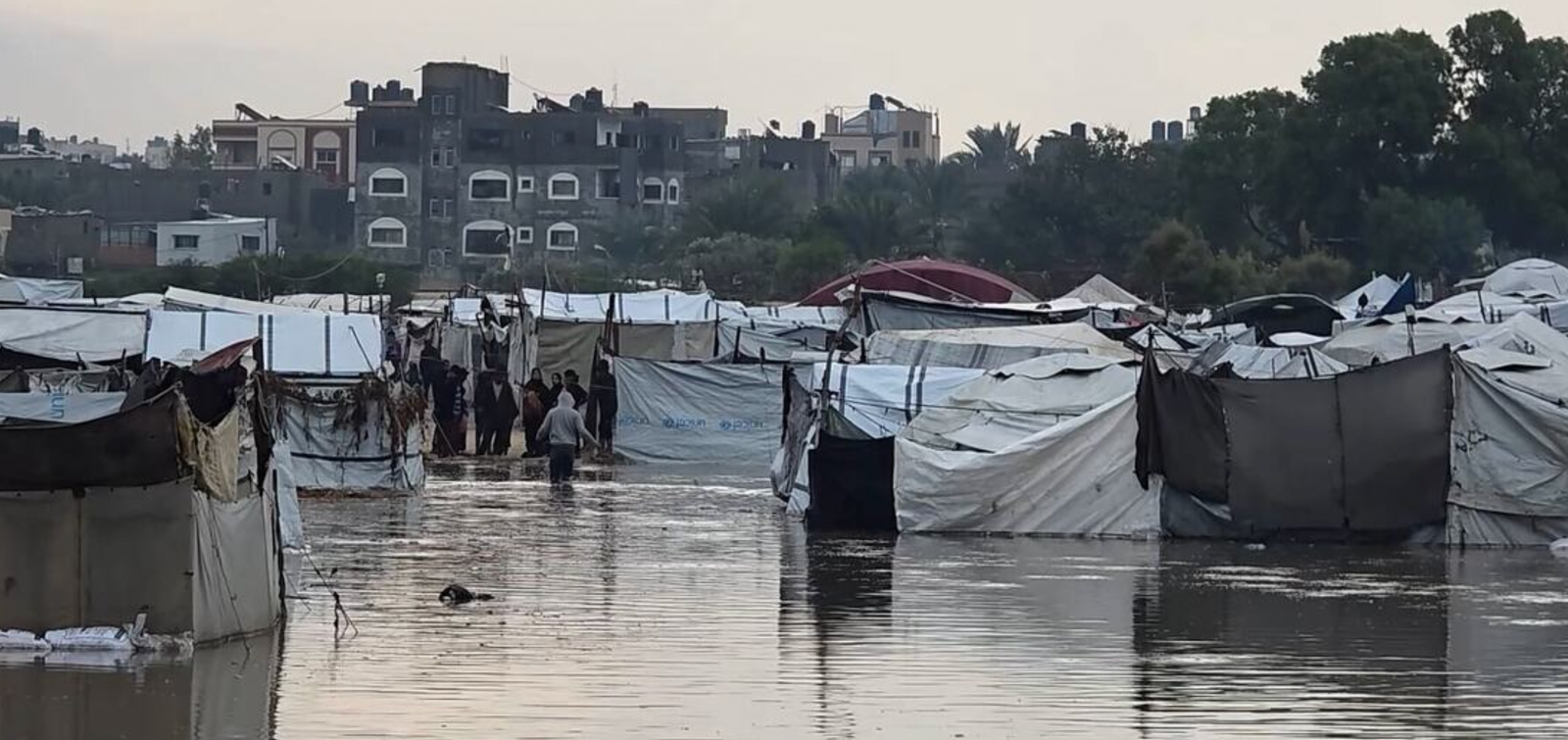
In an urgent appeal issued on Friday, the Humanitarian Country Team (HCT) in the Occupied Palestinian Territory said the latest deadly rainstorm had exposed the increasingly dangerous conditions facing families living in overcrowded shelters with inadequate protection against winter weather.

“The devastating impact of the latest rainstorm in Gaza was preventable,” the humanitarian partners said in a joint statement.

They reported that children and adults had been killed, essential services suspended and thousands of family shelters flooded, destroyed or swept away.

The organisations stressed that the consequences were not caused by the storm alone, but were also linked to policy decisions restricting humanitarian supplies and access to safer areas.

Winter preparations face major obstacles

The Humanitarian Country Team, which brings together UN agencies and international and local non-governmental organisations, said it had presented a comprehensive winter preparedness plan several months earlier to help Palestinians withstand the colder months.

The plan included emergency shelter assistance, improved healthcare and protection services, drainage systems, sandbag reinforcement and the delivery of essential winter supplies.

Among the urgently needed items are tents, warm clothing, blankets, water-pumping equipment, debris-removal machinery and equipment to clear explosive ordnance.

Humanitarian organisations also stressed the need for adequate funding, faster approval and entry of essential supplies, and access to higher ground to protect displaced families from flooding.

The partners recalled that Israel, as the occupying power, has obligations under international humanitarian law to ensure that the basic needs of Gaza’s population are met, including access to essential supplies required for survival.

However, they said restrictions on humanitarian deliveries and access to land continue to prevent assistance from reaching those who need it.

According to the statement, incoming supplies face multiple approval procedures, limited crossing capacity and unpredictable or restricted delivery windows, resulting in delays.

More than 150,000 tents await entry

Despite the urgent shelter needs inside Gaza, more than 150,000 tents are reportedly waiting outside the territory for authorisation and delivery.

Humanitarian organisations warned that the situation is becoming increasingly difficult as each new rainstorm damages or destroys additional tents, creating further demand for emergency shelter.

Although funding for the winter response remains significantly below requirements, humanitarian partners stressed that access to more durable shelter must not depend on political developments.

“Winter will last for months. Access to longer-lasting shelter must not be made conditional on political progress when people’s needs are so urgent,” the organisations said.

They called on Israeli authorities to accelerate the entry of life-saving winter supplies, remove restrictions on humanitarian assistance and allow repairs to essential water and wastewater networks.

Humanitarian access and protection urgently needed

The latest appeal comes amid worsening humanitarian conditions across Gaza, where cold and rainy weather, severe overcrowding, deteriorating shelters and inadequate water and sanitation facilities are increasing the risk of disease transmission.

Humanitarian partners warned that without immediate intervention, vulnerable families will face further exposure to extreme weather and deteriorating living conditions.

The organisations also called for all humanitarian partners to be allowed to operate without unnecessary restrictions, including UN agencies, international organisations and Palestinian non-governmental organisations.

They further urged authorities to enable meaningful commercial activity in Gaza, which they said is essential to supporting the population and meeting basic needs.

International community urged to act

The Humanitarian Country Team called on Member States to use their diplomatic influence to ensure that humanitarian supplies enter Gaza without further delay.

It also urged international partners to provide the funding necessary to support winter preparations and emergency humanitarian operations.

“Winter supplies must reach families immediately to prevent further loss of life and protect their dignity. People cannot wait,” the organisations warned.

The appeal concluded with an urgent reminder of the human cost of delays in humanitarian assistance: “Lives are at stake.”

With winter conditions continuing to threaten displaced families, humanitarian organisations are calling for immediate action to ensure that shelter, essential services and life-saving supplies reach civilians across Gaza.

From Cinema Icon to Chief Minister: Vijay Reshapes Tamil Nadu Politics

From Silver Screen to State Power: C. Joseph Vijay Becomes Tamil Nadu Chief Minister

The political landscape of southern India entered a historic new chapter this week as celebrated Tamil film superstar C. Joseph Vijay officially took oath as the Chief Minister of Tamil Nadu.

The actor-turned-politician, popularly known to millions of fans as “Thalapathy” Vijay, was sworn in during a high-profile ceremony in Chennai on Sunday, marking one of the most dramatic political transitions in modern Indian regional politics.

His party, Tamilaga Vettri Kazhagam, emerged as the single largest force in the 2026 Tamil Nadu Assembly elections, ending decades of dominance by the state’s traditional Dravidian political parties. Analysts describe the victory as a major political realignment in one of India’s most influential states.

In his first address as Chief Minister, Vijay promised what he called “a new era of secular and social justice governance,” pledging reforms focused on youth, welfare, employment, and public services.

The rise of Vijay reflects the long-standing intersection between cinema and politics in Tamil Nadu, a state where film stars have historically commanded massive public influence. However, observers note that Vijay’s ascent is particularly significant because it breaks the six-decade political grip of the DMK-AIADMK era that shaped Tamil Nadu politics since the late 1960s.

Thousands of supporters gathered across Chennai during the swearing-in ceremony, waving party flags, celebrating in the streets, and watching the event on giant public screens. The atmosphere resembled both a political rally and a cinematic celebration — highlighting Vijay’s unique crossover appeal from entertainment into governance.

International attention has also followed the development, with global media outlets describing Vijay’s victory as one of the most remarkable celebrity-to-politics transitions in recent Indian history.

Before entering politics, Vijay was among the highest-paid and most influential actors in South Indian cinema, starring in numerous blockbuster films with a strong youth following across India and the Tamil diaspora worldwide. C. Joseph Vijay formally launched his political movement in recent years, positioning himself as an anti-establishment alternative focused on governance reform and generational change.

His government now faces major challenges, including economic development, employment generation, welfare delivery, and balancing coalition support within a rapidly evolving political environment.

Still, for many supporters, Vijay’s victory represents more than an electoral result — it symbolizes the arrival of a new political generation in Tamil Nadu.

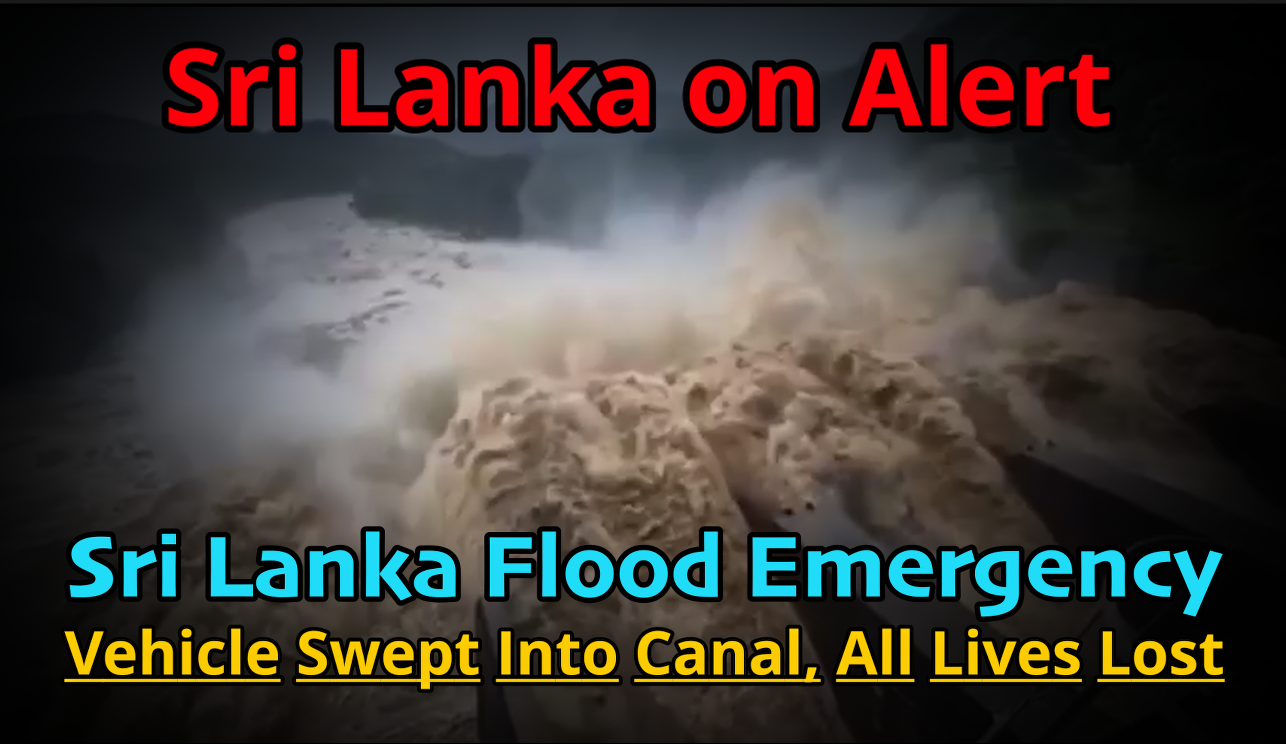
Sri Lanka on Alert – Sri Lanka Flood Emergency

Sri Lanka is facing a worsening monsoon emergency, with heavy rains triggering nationwide floods, landslides, and fatal accidents.

One of the most tragic incidents was reported from the eastern town of Sainthamaruthu, where three members of the same family lost their lives after their vehicle plunged into a flooded canal. As rescue operations continue and alerts remain in place, concerns are growing over the scale of the disaster across the island. In Ampara district, on the island’s eastern coast, heavy rainfall turned roads into rivers — and claimed lives. Authorities say a car carrying a grandfather, grandmother, and their young granddaughter veered off a submerged road late yesterday and slipped into the Borale Vely canal. Emergency teams rushed to the scene, but strong currents made rescue efforts extremely difficult. All three occupants were recovered without signs of life — another reminder of the deadly risks faced by families attempting to move through flood-hit regions. But this is not an isolated incident.

Sri Lanka’s Disaster Management Centre confirms that continuous rainfall over recent days has caused widespread flooding and landslides across the country. Dozens of deaths have now been reported nationwide, while thousands of homes are waterlogged or destroyed. Several major roads are impassable, railway operations have been suspended, and low-lying villages remain under evacuation alerts. Meteorologists warn that more rain is expected, with rivers and reservoirs already overflowing.

From the southern coastline to the central highlands, communities are scrambling for safety, temporary shelters are filling, and relief agencies are appealing for urgent support. Experts say Sri Lanka is now experiencing one of its most intense seasonal rainfall surges in recent years — a pattern increasingly linked to climate instability in the region. For the family lost in Sainthamaruthu, the tragedy is personal and immeasurable. For the country, it is part of a wider emergency — one that highlights fragile infrastructure, climate vulnerability, and the need for stronger preparedness systems. International agencies are monitoring the situation closely as Sri Lanka faces continuing rain in the days ahead. This is Geneva24 News, bringing global attention to Sri Lanka’s unfolding flood crisis — and the communities fighting to survive it.

By: SARIFUDEEN Zahran