How to Become a Billionaire in 2026?

“Let me be brutally honest: you will NOT become a billionaire in 2026 by working harder — but you might if you think differently than 99.9% of people.”

“Here’s the truth no one on Geneva24 tells you.”

Becoming a billionaire in 2026 is not about motivation.
It’s about leverage, timing, and scale.

First — reality check.
There are fewer than 3,500 billionaires on Earth.
Most of them didn’t grind 9-to-5.
They built or controlled systems.
So how does it actually happen?

Rule Number One: Billionaires Don’t Sell Time
Employees sell hours.
Freelancers sell skills.
Billionaires build assets that work without them.

In 2026, the fastest-scaling assets are:

– Technology platforms
– AI-driven businesses
– Media and attention
– Ownership in scalable companies

Rule Number Two: Timing Beats Talent

Every generation has a wave:

– 2000s → Internet
– 2010s → Mobile & social media
– 2025–2026 → AI, automation, and digital infrastructure

AI is doing to white-collar work what machines did to factories.

The biggest money will go to people who:
– Build AI tools
– Control AI data
– Or own distribution — audience, platforms, media

Rule Number Three: Control Attention

Almost every new billionaire today either:

– Controls technology
– Controls capital
– Or controls attention

YouTube, TikTok, podcasts — attention is leverage.
Attention becomes:

– Products
– Influence
– Deals
– Equity

That’s why creators are becoming investors — and investors are becoming creators.

Final Truth

You don’t aim to be a billionaire.
You aim to:
– Build something that scales globally
– Own equity
– Ride a once-in-a-generation shift

We are in one right now.

“Most people will watch AI change the world.
A few will position themselves to own part of it.”

“Which one are you?”

Gig Economy Unpacked: Who Wins, Who Loses in 2026?

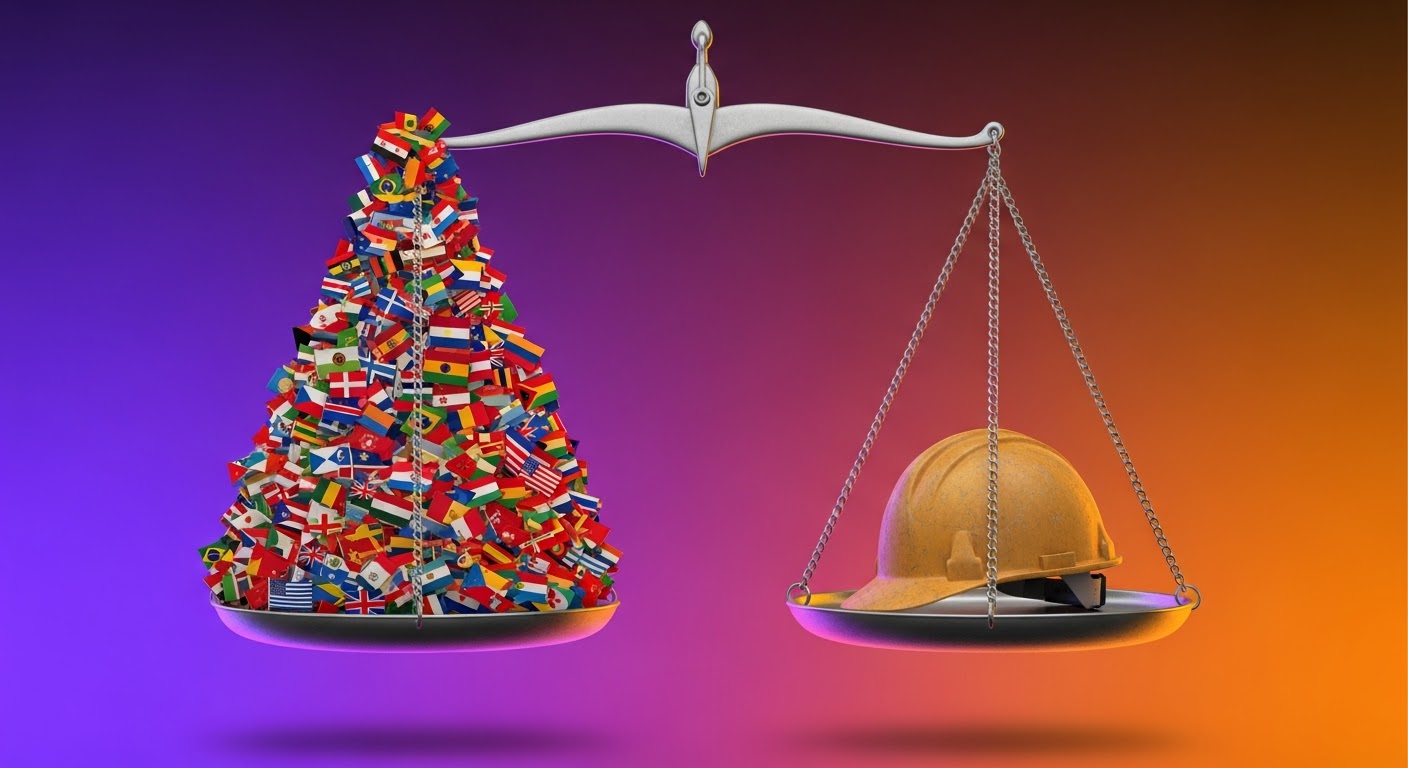
The Gig Economy’s Global Divide: Unpacking Regulation and Worker Rights Worldwide

By SARIFUDEEN M Zahran

The so-called gig economy — digital platforms that connect independent workers with short-term tasks — has reshaped labour markets across the globe. Promising flexibility, low barriers to entry and instant earnings, companies like Uber, Deliveroo, DoorDash and numerous task-based apps have become fixtures of modern life. Yet beneath the veneer of autonomy lies a fragmented global landscape where worker rights, protections and economic stability vary dramatically from one region to another.

This divergence highlights a fundamental tension in today’s world of work: how to preserve flexibility without sacrificing basic labour protections.

A World of Contrasts: Regulatory Approaches Across Continents

In Europe, policymakers have taken one of the most ambitious legislative approaches to gig work. The European Union has moved to introduce a Platform Workers Directive designed to increase transparency, prevent misclassification of workers, and limit the unchecked use of algorithmic management. Under this framework, if a platform exercises de facto control over a worker’s hours or pay, that person could be presumed to have an employment relationship — opening the door to protections like sick pay, predictable wages and human oversight of automated decisions.

However, the road to reform hasn’t been smooth. Some member states have diluted draft rules, leaving significant discretion to national law and court interpretations that may preserve the status quo in many markets. Meanwhile, debates in national legislatures — such as in France — reflect deep divisions over how best to balance platform growth with worker security.

In stark contrast, the United States lacks a unified federal gig work standard. Although some cities and states have passed targeted measures — and California’s AB5 law aimed to reclassify many gig workers as employees — federal labour policy has remained fragmented. Human Rights Watch has documented how this regulatory patchwork can lead to workers earning as little as the effective equivalent of US$5.12 per hour once expenses are factored in.

Meanwhile, parts of Latin America and Asia are emerging as important case studies in blended regulatory innovation. In Mexico, a new regime grants platform workers access to social security benefits traditionally reserved for employees — from healthcare to retirement plans — while preserving some flexibility.Singapore’s Platform Workers Act, effective from January 2025, similarly requires platforms to contribute to national social security systems and extends workers’ compensation and medical insurance protections. Malaysia’s Gig Workers Bill 2025further signals the region’s growing appetite for ensuring minimum protections in this expanding labour sector.

The Human Cost of Fragmented Policy

These divergent regulatory paths have real consequences for gig workers. Across regions, companies often classify their workforce as independent contractors; a classification that limits access to benefits such as paid leave, minimum wage protections, health insurance and collective bargaining rights.

The International Labour Organization (ILO) — based in Geneva — has underscored the urgency of action. In 2025, the ILO advanced efforts to develop binding global labour standards for platform work, aiming to address misclassification, wage insecurity, safety risks and algorithmic control mechanisms that evade traditional employer accountability.

The economic realities underscored by these debates reveal a complex picture: while gig work can offer a crucial income stream for millions, it often does so without the social safety nets that protect traditional employees. The World Bank estimates that up to 400 million people worldwide now earn income through platform work, yet many remain vulnerable to market volatility, algorithmic surveillance and income uncertainty.

Balancing Flexibility with Fundamental Rights

Proponents of a robust regulatory framework argue that establishing clear worker classifications and protections will improve economic stability without undermining innovation. Strong rules on algorithmic transparency, worker representation and social benefits could help ensure that gig work isn’t a race to the bottom, but rather a viable, dignified form of employment in the digital age.

Critics, including some business groups, warn that too heavy a hand could stifle growth, increase costs and reduce opportunities — especially in markets where platforms provide essential services and supplemental income. The debate comes down to a central question: how can governments craft policies that protect workers while preserving the flexibility that makes the gig economy attractive?

Towards a Global Consensus?

As gig work continues its rapid expansion, the need for coherent global standards has never been more apparent. The contrasting regulatory frameworks — from Europe’s evolving protections to North America’s patchwork policies and Asia’s emerging legislative experiments — underscore the absence of a universal model.

The world stands at an inflection point: without coordinated policies that recognize both the opportunities and risks of digital labour, disparities between regions are likely to widen. Geneva, as a hub for international labour governance, remains central to these global discussions — where the future of work is being reshaped, one regulation at a time.


UN’s AI Ethics Push: How Global Governance Shapes Tech’s Future

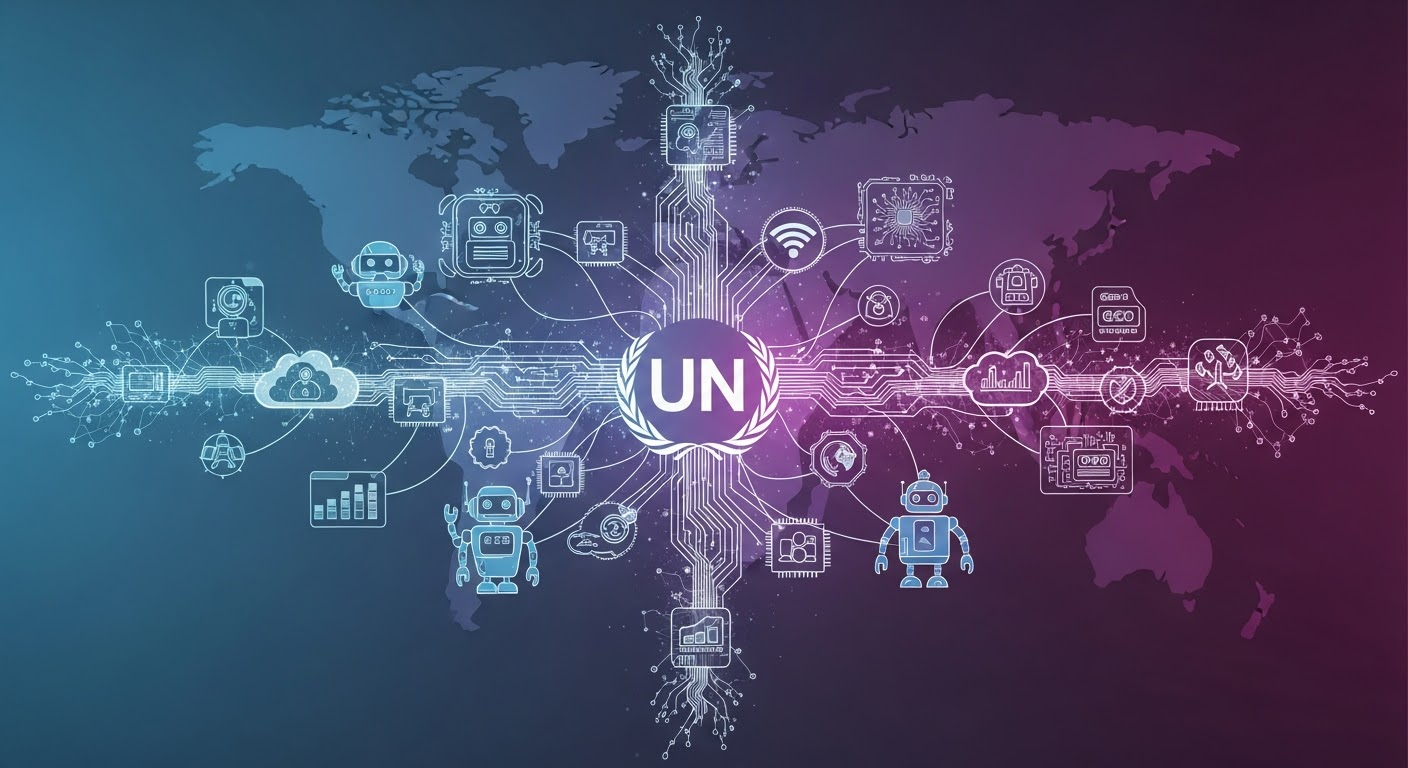
As artificial intelligence spreads into every corner of global life — from healthcare and education to defence and digital communication — the United Nations is intensifying efforts to shape a global ethical framework for its development and deployment. Far beyond technical standards, this push reflects a deeper debate about values, equity, and human rights in the digital age.

From Innovation to Governance

AI technologies promise remarkable benefits: early disease detection, improved disaster response, optimized transport systems and new tools for sustainable development. Yet these same technologies carry risks — from discrimination baked into algorithms to threats to privacy, social trust and democratic institutions.

Recognizing this dual potential, the United Nations has moved to establish multilateral mechanisms and normative guidance aimed at responsible and inclusive AI governance. In 2025, the UN General Assembly adopted a resolution to create two new bodies: a Global Dialogue on AI Governance and an Independent International Scientific Panel on AI. The former brings together governments, civil society and private sector actors to discuss policy and cooperation. The latter, composed of experts from across all regions, will produce impartial scientific assessments on the opportunities and dangers of AI, shaping global policy discourse.

Shaping Global Standards, Not Just National Rules

Unlike national regulations that reflect individual legal systems, the UN’s initiatives aim for international consensus and cooperation. This is crucial because AI systems operate across borders: an algorithm trained in one country can influence elections, financial markets and public discourse halfway around the world. Uncoordinated rules risk creating a fragmented global landscape where ethical standards and protections vary widely — or where major technological powers set the norms by default.

In parallel, UNESCO’s Global AI Ethics and Governance Observatory offers a resource for countries to assess readiness and adopt ethical AI practices. Built on principles adopted by 193 UN Member States, it brings together research, toolkits and best practices to help governments implement policies that respect human rights, fairness, transparency and sustainability.

A Broader Coalition for the Future

The UN’s AI governance efforts are not happening in isolation. Collaborations with the Organisation for Economic Co-operation and Development (OECD) are strengthening policy responses across countries, helping to align AI ethics with existing economic and social frameworks.

Regional leadership also contributes to this evolving agenda. For example, initiatives in Africa emphasize locally relevant AI that reflects linguistic, cultural and developmental priorities, rather than imported standards that don’t fit local contexts.

The Stakes: Equitable, Responsible AI or Fragmented Governance?

Global governance of AI is not just technical; it is fundamentally political and ethical. It involves questions of who benefits from AI, who is protected from harm, and how technologies can be shaped to support global development goals rather than exacerbate inequality or disrupt democratic processes.

At the same time, geopolitical competition — especially between major powers like the United States and China — introduces complexity. Competing visions for AI governance raise the risk of inconsistent regulatory landscapes and pressure on international institutions to mediate these differences.

Conclusion: A New Era of Digital Diplomacy

The nature of global governance itself is evolving. As technologies like AI grow more powerful and pervasive, the frameworks that once governed trade, health or security must adapt. The UN’s AI ethics initiatives — including global dialogues, scientific assessments and normative observatories — represent a significant effort to ensure that the future of AI aligns with human rights, equity and shared prosperity.

In an increasingly interconnected digital world, the question is no longer whether we govern AI — but how we do so in ways that reflect shared values while embracing innovation.

New Year’s Tragedy in the Alps: Deadly Blaze Rocks Crans-Montana

A devastating incident has occurred in the Swiss Alps in the ski resort town of Crans-Montana during New Year’s celebrations.

In the early hours of January 1, 2026, at approximately 1:30 a.m. local time, a fire followed by an explosion tore through the crowded bar Le Constellation in the centre of the resort as hundreds of people were celebrating the arrival of the new year.

Swiss officials and police describe the event as a major emergency with a tragic human toll. According to police statements and media reports:

  • Several dozen people are presumed dead, with some local outlets reporting around 40 fatalities, though authorities have not confirmed a final figure.

  • About 100 people have been injured, many with serious burns and critical injuries, and are being treated in hospitals throughout Switzerland.

Emergency services responded rapidly. Firefighters, police, rescue teams and multiple helicopters were deployed to the scene. The area around the bar has been sealed off, and a no-fly zone has been imposed over Crans-Montana to facilitate rescue operations.

Authorities say the origin of the explosion and fire is still unclear, and investigators are actively working to determine how the blaze began. At this stage, officials do not believe this was a deliberate attack.

Police spokespersons have emphasised the scale of the tragedy, describing it as a serious incident affecting both locals and international visitors, and have appealed for calm as rescue efforts continue.

Hospitals in the Valais region and beyond are treating victims, with some seriously injured patients transferred to larger burn centres due to the severity of their wounds.

Support is being offered to families with missing loved ones, and helplines have been established to assist those seeking information.

This tragedy has cast a sombre start to the new year in Switzerland, as authorities continue to piece together the full circumstances of the disaster.