

GUTERRES URGES ASEAN TO STEP UP ACTION ON MYANMAR, PROTECT ROHINGYA AS HE ATTENDS FINAL SUMMIT
By: SARIFUDEEN Zahran
MANILA, Philippines / GENEVA — United Nations Secretary-General António Guterres has called for stronger cooperation between the United Nations and the Association of Southeast Asian Nations (ASEAN), urging regional leaders to intensify efforts to end the crisis in Myanmar and protect civilians and displaced communities.
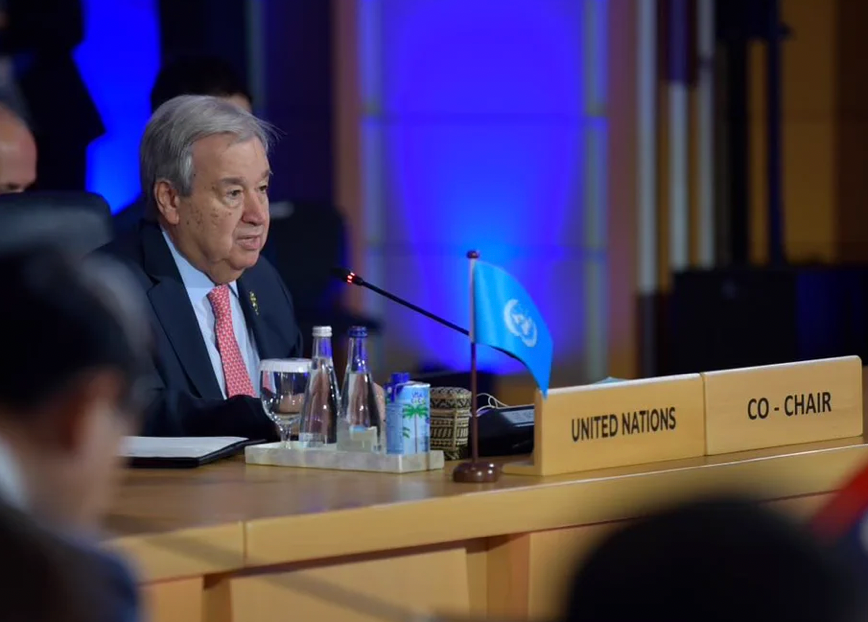
Speaking at his final ASEAN-UN Summit in Manila on Monday, 16 November 2026, Guterres stressed the importance of regional and international cooperation in addressing growing global challenges, including armed conflicts, climate change, economic instability and rising humanitarian needs.
“This is my final ASEAN-UN Summit as Secretary-General, but I will always remain inspired by, and committed to, this region’s continuing journey,” he told regional leaders.
Guterres, whose term as UN Secretary-General ends later this year, reflected on the 15-year partnership between the United Nations and ASEAN, describing the current international environment as increasingly difficult.
He highlighted the impact of conflicts, rising living costs, trade tensions, energy prices and humanitarian emergencies, warning that these challenges require stronger multilateral cooperation.
Calls for reform of global institutions
Addressing the changing international order, Guterres called for reforms to global institutions to ensure they better reflect the realities of the 21st century and the growing influence of emerging economies.
He stressed the need for a stronger global financial system and reforms to both the UN Security Council and international financial institutions to make them more representative of developing countries and rising economic powers.
The Secretary-General also urged greater international support for climate-vulnerable countries, a fair transition towards renewable energy, responsible development of artificial intelligence and efforts to close the global digital divide.
Emphasising the importance of peace, he referred to continuing conflicts and instability in Gaza, Yemen, the wider Middle East, Ukraine and Sudan.
He also reaffirmed the United Nations’ commitment to freedom of navigation, particularly amid disruptions affecting key international maritime routes, including the Strait of Hormuz, the Red Sea and the Black Sea.
Myanmar crisis remains a major concern
A central focus of Guterres’ address was the continuing political and humanitarian crisis in Myanmar, nearly six years after the military seized power from the civilian government in February 2021.
He expressed deep concern over the scale of human suffering and called on all parties to protect civilians, respect international law and ensure safe, sustained and unhindered humanitarian access.
“Human suffering has reached epic proportions,” Guterres said.
His remarks come amid continuing armed conflict, displacement and serious humanitarian challenges across Myanmar.
The Secretary-General commended ASEAN’s efforts to address regional tensions, including its engagement on a proposed Code of Conduct in the disputed South China Sea and its role in supporting the durability of the 2025 ceasefire between Cambodia and Thailand.
However, he stressed that the regional bloc must continue working towards an inclusive, Myanmar-led political solution.
The United Nations will continue supporting ASEAN’s Five-Point Consensus, adopted in response to the Myanmar military takeover, as a framework for addressing the crisis.
Rohingya refugees still await justice and safe return
Guterres also drew attention to the continuing plight of the Rohingya, a predominantly Muslim ethnic minority who have fled persecution and violence in Myanmar.
Nearly 1.2 million Rohingya refugees are currently living in Bangladesh, most of whom arrived following the military crackdown in Myanmar in August 2017.
Nearly a decade after their mass displacement, the Secretary-General said the Rohingya were still waiting for accountability for serious human rights violations and conditions that would allow them to return home safely.
“Nearly a decade after their forced mass displacement, the Rohingya still await accountability for grave violations and the conditions for safe, voluntary, dignified and sustainable return,” he said.
He emphasised that until such conditions are established, countries have a responsibility to protect people fleeing violence and persecution.
The Secretary-General’s remarks underline the continuing international responsibility towards Rohingya refugees, particularly as Bangladesh continues to host one of the world’s largest refugee populations.
Calls for release of detained Myanmar leaders
Speaking at a subsequent press conference, Guterres reiterated calls by the UN Security Council and General Assembly for the immediate and unconditional release of all individuals arbitrarily detained in Myanmar, including former State Counsellor Aung San Suu Kyi.
He confirmed that his Special Envoy for Myanmar, Julie Bishop, would continue engaging with relevant stakeholders, particularly ASEAN, to identify a pathway towards ending the violence and creating space for inclusive political dialogue.
The UN Special Envoy’s engagement will also focus on supporting the implementation of ASEAN’s Five-Point Consensus.
Renewable energy transition remains urgent
During the press conference, Guterres also addressed questions concerning the climate emergency, the transition to clean energy and developments emerging from the COP31 climate conference in Türkiye.
He called for accelerated investment in renewable energy, stressing that the global energy transition must move away from dependence on fossil fuels.
“The time of fossil fuel is coming to an end,” he said.
As he approaches the end of his tenure, Guterres’ final ASEAN-UN Summit placed renewed emphasis on multilateral cooperation, regional responsibility and the urgent need for action on some of the world’s most pressing challenges — particularly the unresolved crisis in Myanmar and the future of millions of displaced people, including the Rohingya.
About The Author
