
18th UN Minority Forum Begins
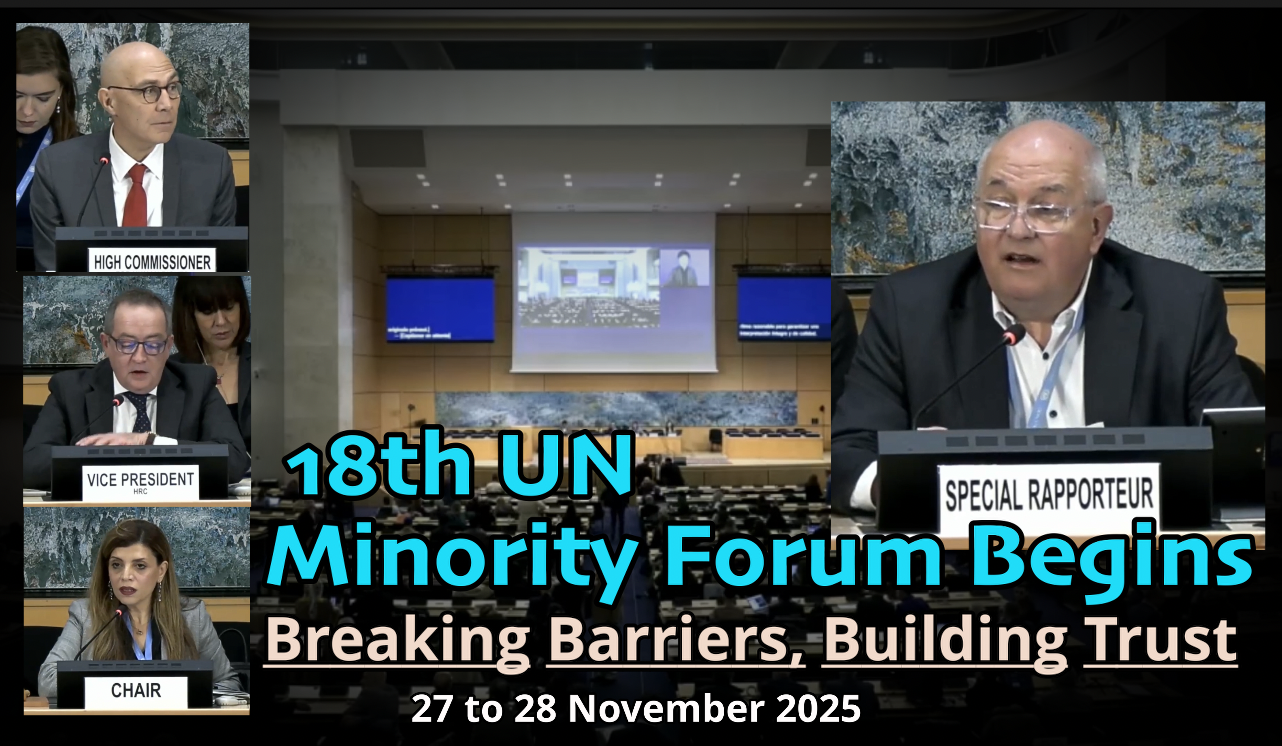
Geneva — The United Nations today opened the 18th Session of the UN Forum on Minority Issues, meeting here in the historic Assembly Hall in Geneva. This year’s theme — “The contribution of minorities to diverse, resilient, and peaceful societies” — sets the stage for two days of high-level dialogue, taking place from 27 to 28 November 2025.
The opening session began with remarks from senior UN officials. The Vice-President of the Human Rights Council, H.E. Ambassador Razvan Rusu, addressed the assembly, followed by a statement from the UN High Commissioner for Human Rights, Mr. Volker Türk. Also speaking was the UN Special Rapporteur on Minority Issues, Mr. Nicolas Levrat, along with the Chairperson of this year’s forum, who officially launched the 18th session.
The first agenda discussion — Item 1: Building trust and social cohesion — focused on barriers faced by minority communities around the world. Delegates and speakers highlighted challenges such as discrimination, structural inequality, marginalization, and social invisibility, which continue to fuel mistrust and conflict in many societies. Experts emphasized that peace and harmony depend on addressing the root causes of exclusion. They stressed the importance of education, intercultural dialogue, media responsibility, and creative expression in reducing stigma and building inclusive, unified communities. Among today’s panelists were: Mr. Christophe Kamp, OSCE High Commissioner on National Minorities Ms. Diane Ala’i, human rights and international affairs expert, and former UN representative of the Bahá’í International Community Mr. Rup Sunar, Chairperson of the Dignity Initiative and former OHCHR Senior Minority Fellow They shared examples of successful models — from mediation programs to multilingual education — showing how inclusion policies can resolve tension, empower minorities, and strengthen social cohesion.
A full summary of the discussions from this 18th session will be prepared by the Forum’s Chair, while the Special Rapporteur on Minority Issues will deliver an official recommendations report to the Human Rights Council at its 61st session.
By: SARIFUDEEN Zahran