

How to Become a Billionaire in 2026?

“Let me be brutally honest: you will NOT become a billionaire in 2026 by working harder — but you might if you think differently than 99.9% of people.”

“Here’s the truth no one on Geneva24 tells you.”

Becoming a billionaire in 2026 is not about motivation.
It’s about leverage, timing, and scale.

First — reality check.
There are fewer than 3,500 billionaires on Earth.
Most of them didn’t grind 9-to-5.
They built or controlled systems.
So how does it actually happen?

Rule Number One: Billionaires Don’t Sell Time
Employees sell hours.
Freelancers sell skills.
Billionaires build assets that work without them.

In 2026, the fastest-scaling assets are:

– Technology platforms
– AI-driven businesses
– Media and attention
– Ownership in scalable companies

Rule Number Two: Timing Beats Talent

Every generation has a wave:

– 2000s → Internet
– 2010s → Mobile & social media
– 2025–2026 → AI, automation, and digital infrastructure

AI is doing to white-collar work what machines did to factories.

The biggest money will go to people who:
– Build AI tools
– Control AI data
– Or own distribution — audience, platforms, media

Rule Number Three: Control Attention

Almost every new billionaire today either:

– Controls technology
– Controls capital
– Or controls attention

YouTube, TikTok, podcasts — attention is leverage.
Attention becomes:

– Products
– Influence
– Deals
– Equity

That’s why creators are becoming investors — and investors are becoming creators.

Final Truth

You don’t aim to be a billionaire.
You aim to:
– Build something that scales globally
– Own equity
– Ride a once-in-a-generation shift

We are in one right now.

“Most people will watch AI change the world.
A few will position themselves to own part of it.”

“Which one are you?”
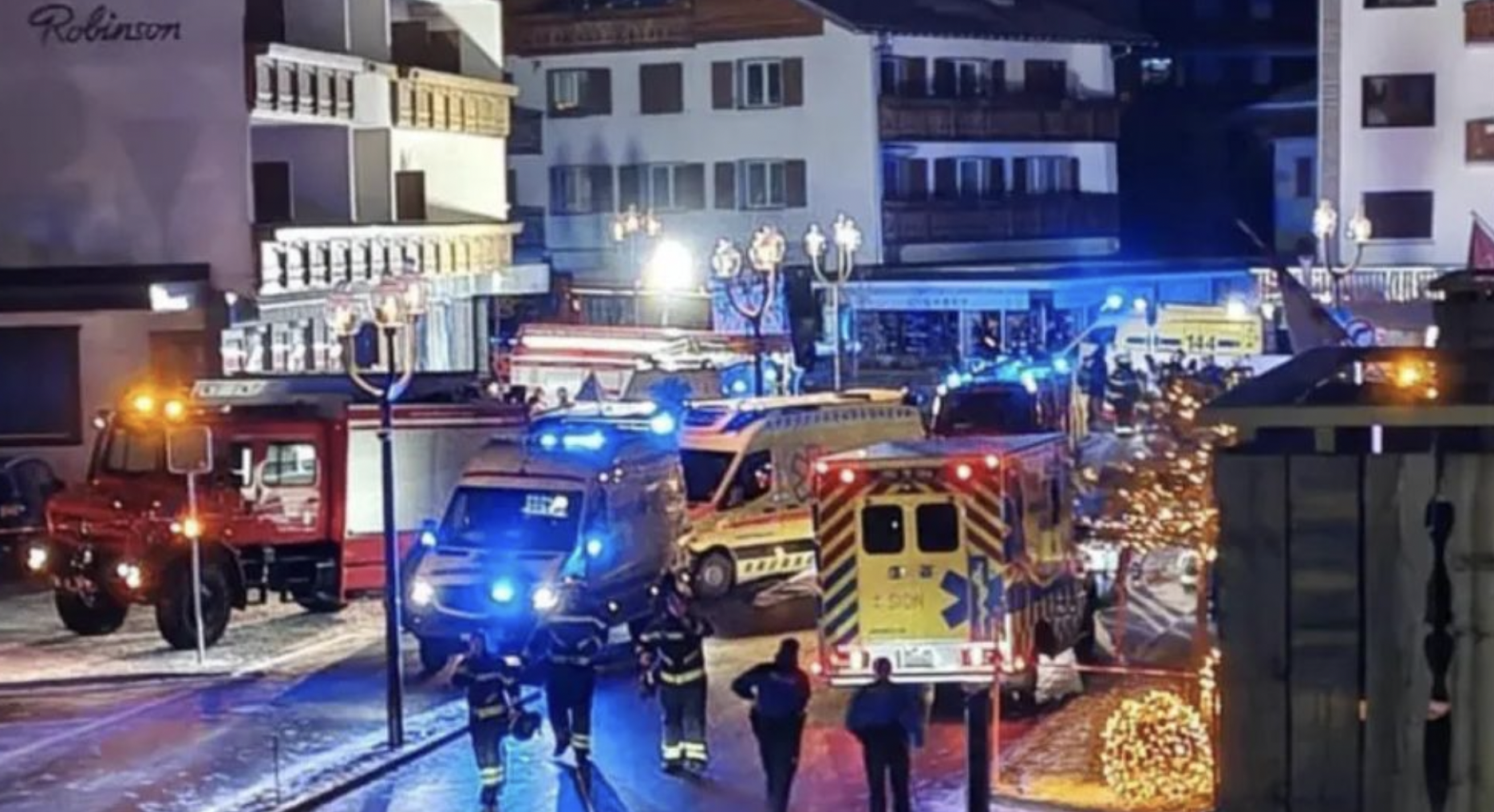
New Year’s Tragedy in the Alps: Deadly Blaze Rocks Crans-Montana

A devastating incident has occurred in the Swiss Alps in the ski resort town of Crans-Montana during New Year’s celebrations.

In the early hours of January 1, 2026, at approximately 1:30 a.m. local time, a fire followed by an explosion tore through the crowded bar Le Constellation in the centre of the resort as hundreds of people were celebrating the arrival of the new year.

Swiss officials and police describe the event as a major emergency with a tragic human toll. According to police statements and media reports:

  • Several dozen people are presumed dead, with some local outlets reporting around 40 fatalities, though authorities have not confirmed a final figure.

  • About 100 people have been injured, many with serious burns and critical injuries, and are being treated in hospitals throughout Switzerland.

Emergency services responded rapidly. Firefighters, police, rescue teams and multiple helicopters were deployed to the scene. The area around the bar has been sealed off, and a no-fly zone has been imposed over Crans-Montana to facilitate rescue operations.

Authorities say the origin of the explosion and fire is still unclear, and investigators are actively working to determine how the blaze began. At this stage, officials do not believe this was a deliberate attack.

Police spokespersons have emphasised the scale of the tragedy, describing it as a serious incident affecting both locals and international visitors, and have appealed for calm as rescue efforts continue.

Hospitals in the Valais region and beyond are treating victims, with some seriously injured patients transferred to larger burn centres due to the severity of their wounds.

Support is being offered to families with missing loved ones, and helplines have been established to assist those seeking information.

This tragedy has cast a sombre start to the new year in Switzerland, as authorities continue to piece together the full circumstances of the disaster.

Sri Lankan-Born Farah Rumy Elected 2nd Vice President of Swiss National Council

“Sri Lankan-Born Leader in Swiss Parliament”

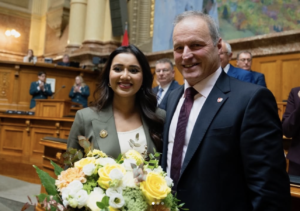
In Switzerland, history was made today at the opening of the Federal Assembly’s 2025 winter session. Sri Lankan-born Swiss parliamentarian Farah Rumy has been officially elected Second Vice-President of the National Council, becoming the first Swiss federal parliament leader of Sri Lankan heritage. The vote took place this Monday, December 1st, as the National Council elected its new presidium for the 2025/26 term.

The new Presiding College of the National Council has now been confirmed: Pierre-André Page, of the Swiss People’s Party (UDC/SVP), becomes President of the National Council for 2025/26. Katja Christ, from the Green Liberal Party, has been elected First Vice-President. And Farah Rumy, of the Social Democratic Party, will serve as Second Vice-President of the chamber. These positions are among the highest in Switzerland’s political system. Each year, the National Council and Council of States elect new leaders who preside over debates, steer parliamentary agendas, and represent Switzerland in international parliamentary diplomacy.

WHO IS FARAH RUMY?

Farah Rumy was born in Sri Lanka and moved to Switzerland as a child. A trained nurse and medical specialist, she entered politics through her work during the COVID-19 pandemic — an experience that pushed her to join the Social Democratic Party in 2020. She was first elected to the Solothurn Cantonal Council in 2021, where she focused on social policy and public health. After the 2023 federal elections, she moved up to the National Council as the first alternate when MP Franziska Roth vacated her seat. Rumy is now a member of the Foreign Affairs Committee and an alternate member of the Immunity Committee. In parliament, she has championed healthcare reforms, social equality, foreign policy, peace initiatives, and human rights. She also serves as co-president of her regional nursing union and remains active in local politics in the city of Grenchen. Rumy is the first Swiss federal parliamentarian of Sri Lankan descent, and now becomes the first to hold a leadership position within the National Council’s presidium.

On the same day, the upper chamber — the Council of States — elected Stefan Engler as its new President for the 2025/26 term. For Farah Rumy, today’s election marks a major milestone in Swiss political history — one that reflects the country’s evolving diversity and the growing influence of younger leaders in national decision-making.

By: SARIFUDEEN M Zahran (Journalist)

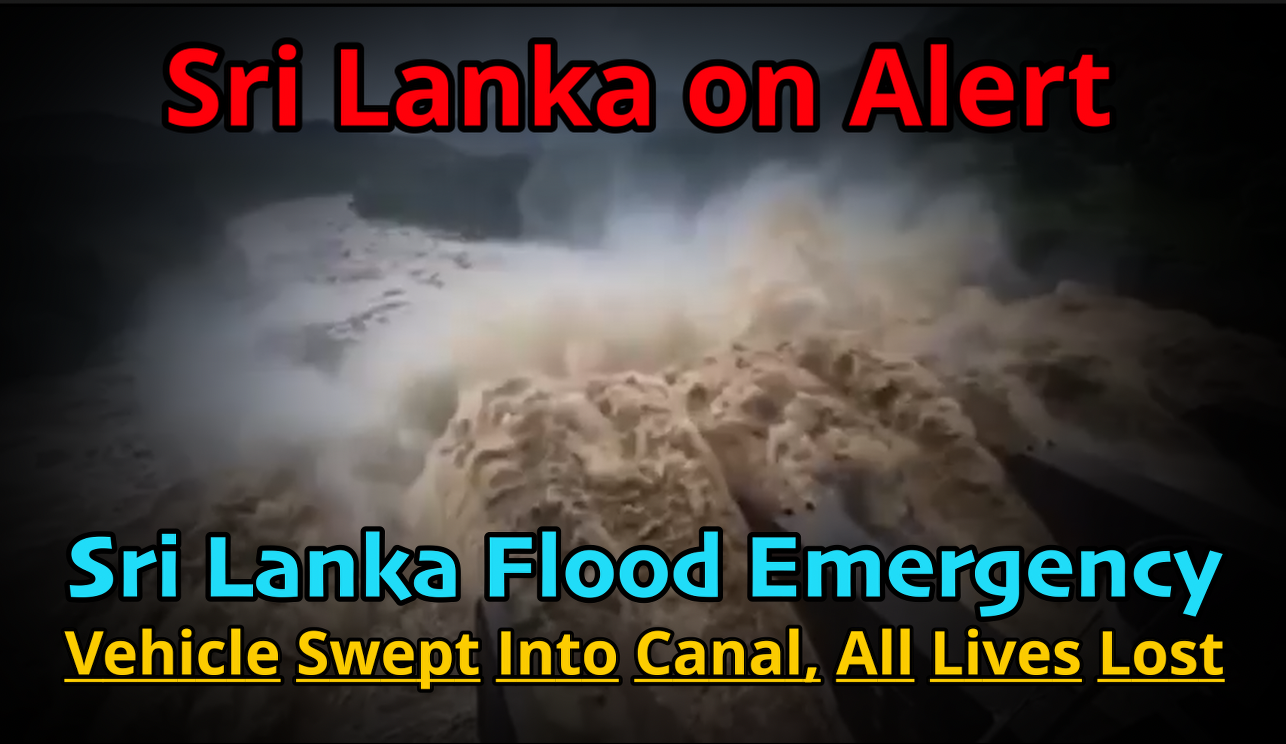
Sri Lanka on Alert – Sri Lanka Flood Emergency

Sri Lanka is facing a worsening monsoon emergency, with heavy rains triggering nationwide floods, landslides, and fatal accidents.

One of the most tragic incidents was reported from the eastern town of Sainthamaruthu, where three members of the same family lost their lives after their vehicle plunged into a flooded canal. As rescue operations continue and alerts remain in place, concerns are growing over the scale of the disaster across the island. In Ampara district, on the island’s eastern coast, heavy rainfall turned roads into rivers — and claimed lives. Authorities say a car carrying a grandfather, grandmother, and their young granddaughter veered off a submerged road late yesterday and slipped into the Borale Vely canal. Emergency teams rushed to the scene, but strong currents made rescue efforts extremely difficult. All three occupants were recovered without signs of life — another reminder of the deadly risks faced by families attempting to move through flood-hit regions. But this is not an isolated incident.

Sri Lanka’s Disaster Management Centre confirms that continuous rainfall over recent days has caused widespread flooding and landslides across the country. Dozens of deaths have now been reported nationwide, while thousands of homes are waterlogged or destroyed. Several major roads are impassable, railway operations have been suspended, and low-lying villages remain under evacuation alerts. Meteorologists warn that more rain is expected, with rivers and reservoirs already overflowing.

From the southern coastline to the central highlands, communities are scrambling for safety, temporary shelters are filling, and relief agencies are appealing for urgent support. Experts say Sri Lanka is now experiencing one of its most intense seasonal rainfall surges in recent years — a pattern increasingly linked to climate instability in the region. For the family lost in Sainthamaruthu, the tragedy is personal and immeasurable. For the country, it is part of a wider emergency — one that highlights fragile infrastructure, climate vulnerability, and the need for stronger preparedness systems. International agencies are monitoring the situation closely as Sri Lanka faces continuing rain in the days ahead. This is Geneva24 News, bringing global attention to Sri Lanka’s unfolding flood crisis — and the communities fighting to survive it.

By: SARIFUDEEN Zahran

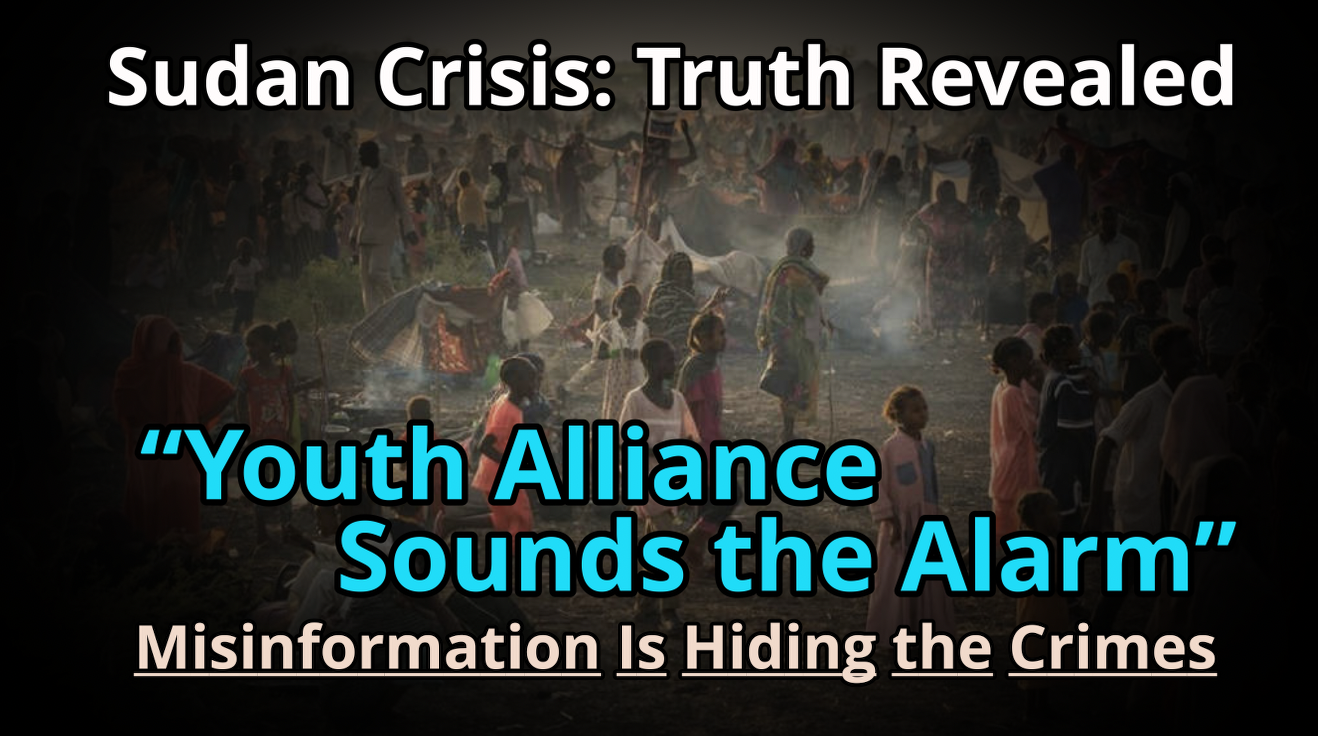
“Impunity Must End”: Youth Future Alliance Issues Powerful Statement on Sudan Crisis

The UK-based NGO The Youth Future Alliance responded to the United Nations Human Rights Council’s 38th Special Session on Sudan with a strong statement.

The organisation warns that propaganda and misinformation surrounding the fall of El-Fashir are undermining justice and obstructing accountability. It calls on the UN and member states to prioritise verified reporting and to counter disinformation campaigns. The Alliance also stresses that deflecting blame onto external actors does not advance peace. While foreign involvement should be examined, it notes that Sudan’s crisis was driven primarily by internal political decisions—including coups, the dismantling of the civilian transition, and the repeated rejection of peace proposals. The Youth Future Alliance further argues that the root cause of Sudan’s instability is the longstanding impunity of the Sudanese Armed Forces, whose repeated coups and use of militias contributed directly to today’s violence.

Finally, the organisation insists that Sudan’s future must be shaped by civilians, especially young people. It calls for the restoration of civilian rule, accountability for all violations—including those committed by the SAF—and a new political path grounded in human rights. The Youth Future Alliance is urging the international community to ensure that today’s UN resolution leads to real action: proper investigations, restored humanitarian access, and long-term support for a civilian-led, peaceful Sudan.

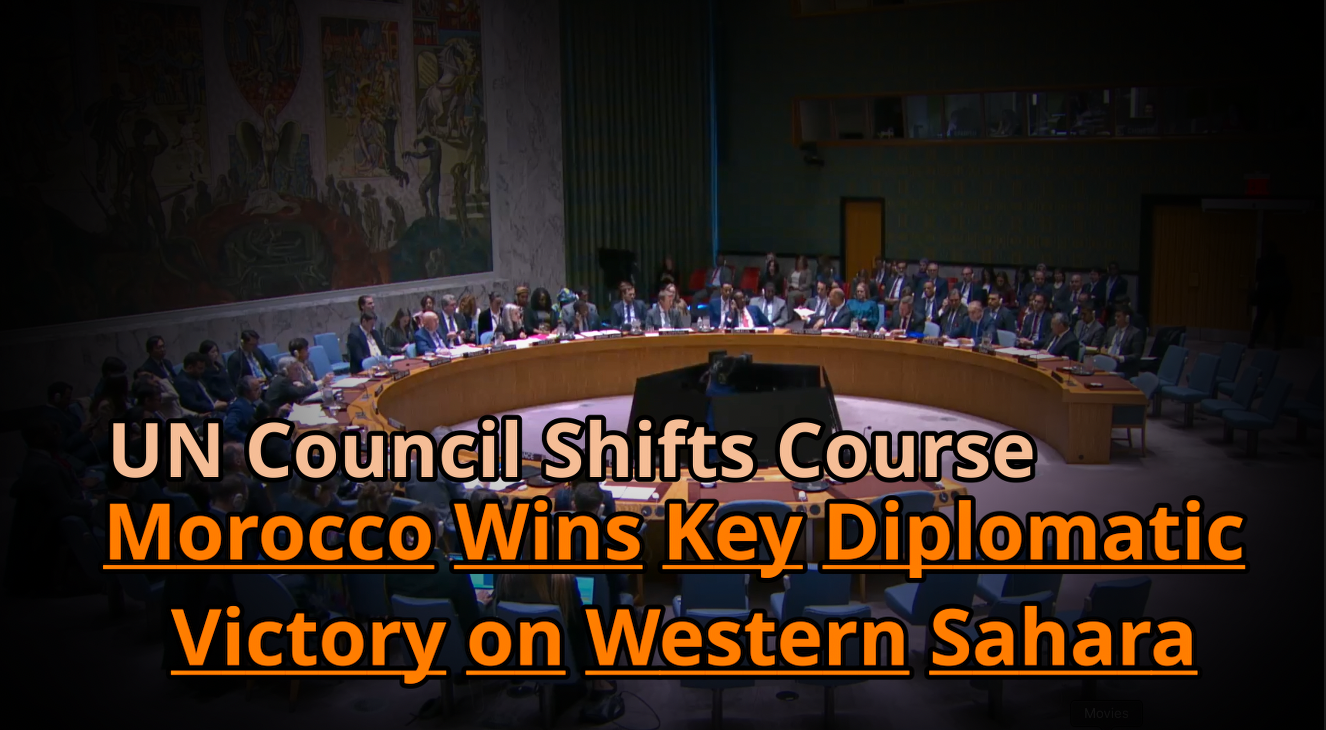
UN Council Shifts Course — Morocco Wins Key Diplomatic Victory on Western Sahara

In a significant shift in UN diplomacy, the Security Council has approved a resolution endorsing Morocco’s autonomy plan for the disputed territory of Western Sahara — a change that could redefine decades of negotiations.

On October 31, 2025, the Security Council passed a U.S.–drafted resolution with 11 votes in favor, and abstentions from Russia, China, and Pakistan — while Algeria declined to vote. The resolution affirms that Morocco’s 2007 autonomy proposal under its sovereignty may represent the “most feasible” basis for a final political solution. It also renews the mandate of the United Nations peacekeeping mission in the region, MINURSO, for another year.

Historically, the pro-independence Polisario Front has insisted on a referendum including independence as an option. But the new resolution notably omits that mention, signaling a tilt away from the referendum path. Algeria, which backs the Polisario Front, sharply criticized the move. Its ambassador argued that the text marginalizes Sahrawi proposals and compromises principles of decolonization. Meanwhile, Morocco hailed the resolution as a landmark diplomatic victory. In Rabat, the government called it a milestone toward integrating Western Sahara under its administrative framework. Supporters, including the U.S., France, and the U.K., say the resolution provides a realistic and durable foundation for negotiations, rather than open-ended referendums. The Council also instructed the UN Secretary-General to deliver a strategic review of MINURSO’s future next year, contingent on progress in dialogue.

This resolution could reshape long-standing divisions in North Africa. But as reactions from the Polisario Front and Algeria show, the road to peace remains fraught — especially when issues of sovereignty and self-determination remain on the table. We’ll continue to follow how UN diplomacy and regional politics respond to this pivotal moment.