The Gig Economy’s Global Divide: Unpacking Regulation and Worker Rights Worldwide
 By SARIFUDEEN M Zahran
The so-called gig economy — digital platforms that connect independent workers with short-term tasks — has reshaped labour markets across the globe. Promising flexibility, low barriers to entry and instant earnings, companies like Uber, Deliveroo, DoorDash and numerous task-based apps have become fixtures of modern life. Yet beneath the veneer of autonomy lies a fragmented global landscape where worker rights, protections and economic stability vary dramatically from one region to another.
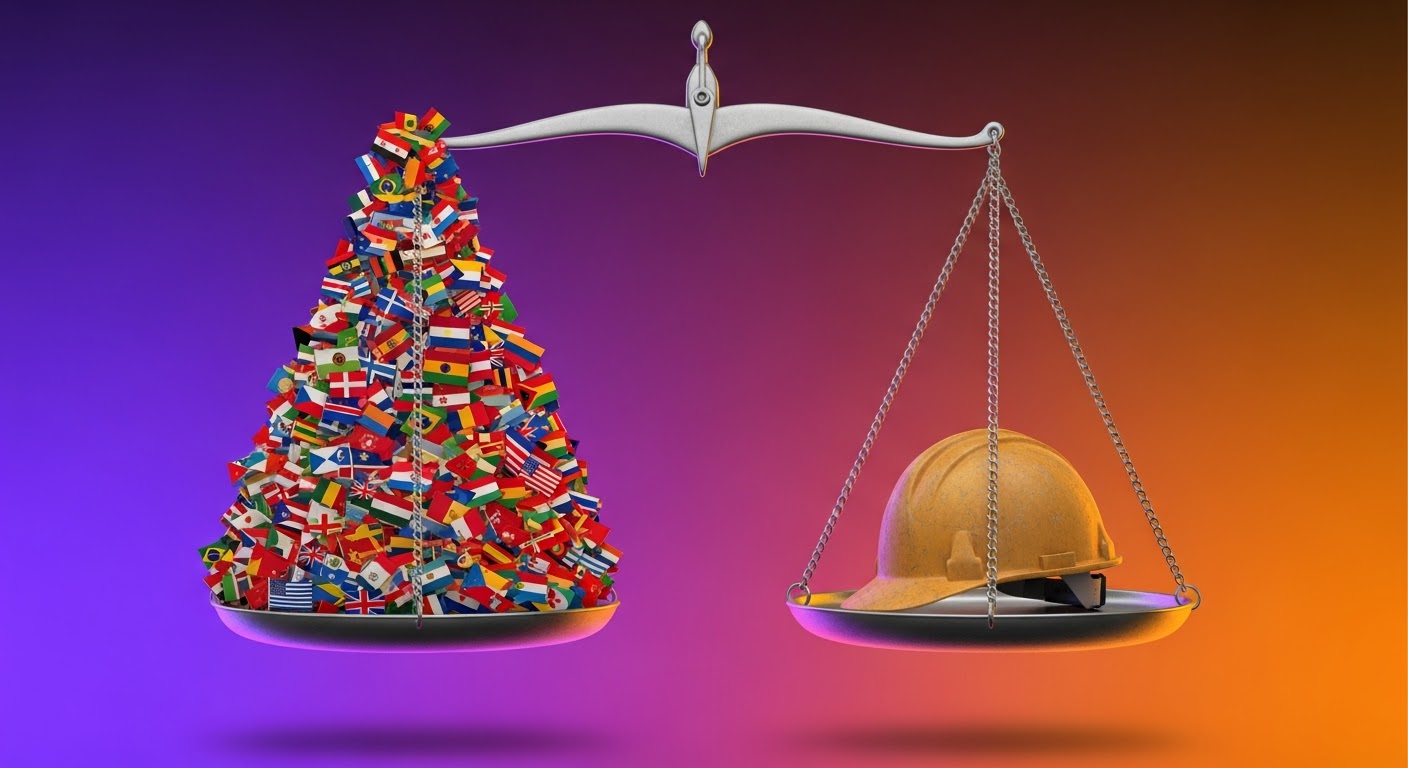
This divergence highlights a fundamental tension in today’s world of work: how to preserve flexibility without sacrificing basic labour protections.
A World of Contrasts: Regulatory Approaches Across Continents
In Europe, policymakers have taken one of the most ambitious legislative approaches to gig work. The European Union has moved to introduce a Platform Workers Directive designed to increase transparency, prevent misclassification of workers, and limit the unchecked use of algorithmic management. Under this framework, if a platform exercises de facto control over a worker’s hours or pay, that person could be presumed to have an employment relationship — opening the door to protections like sick pay, predictable wages and human oversight of automated decisions.
However, the road to reform hasn’t been smooth. Some member states have diluted draft rules, leaving significant discretion to national law and court interpretations that may preserve the status quo in many markets. Meanwhile, debates in national legislatures — such as in France — reflect deep divisions over how best to balance platform growth with worker security.
In stark contrast, the United States lacks a unified federal gig work standard. Although some cities and states have passed targeted measures — and California’s AB5 law aimed to reclassify many gig workers as employees — federal labour policy has remained fragmented. Human Rights Watch has documented how this regulatory patchwork can lead to workers earning as little as the effective equivalent of US$5.12 per hour once expenses are factored in.
Meanwhile, parts of Latin America and Asia are emerging as important case studies in blended regulatory innovation. In Mexico, a new regime grants platform workers access to social security benefits traditionally reserved for employees — from healthcare to retirement plans — while preserving some flexibility.Singapore’s Platform Workers Act, effective from January 2025, similarly requires platforms to contribute to national social security systems and extends workers’ compensation and medical insurance protections. Malaysia’s Gig Workers Bill 2025further signals the region’s growing appetite for ensuring minimum protections in this expanding labour sector.
The Human Cost of Fragmented Policy
These divergent regulatory paths have real consequences for gig workers. Across regions, companies often classify their workforce as independent contractors; a classification that limits access to benefits such as paid leave, minimum wage protections, health insurance and collective bargaining rights.
The International Labour Organization (ILO) — based in Geneva — has underscored the urgency of action. In 2025, the ILO advanced efforts to develop binding global labour standards for platform work, aiming to address misclassification, wage insecurity, safety risks and algorithmic control mechanisms that evade traditional employer accountability.
The economic realities underscored by these debates reveal a complex picture: while gig work can offer a crucial income stream for millions, it often does so without the social safety nets that protect traditional employees. The World Bank estimates that up to 400 million people worldwide now earn income through platform work, yet many remain vulnerable to market volatility, algorithmic surveillance and income uncertainty.
Balancing Flexibility with Fundamental Rights
Proponents of a robust regulatory framework argue that establishing clear worker classifications and protections will improve economic stability without undermining innovation. Strong rules on algorithmic transparency, worker representation and social benefits could help ensure that gig work isn’t a race to the bottom, but rather a viable, dignified form of employment in the digital age.
Critics, including some business groups, warn that too heavy a hand could stifle growth, increase costs and reduce opportunities — especially in markets where platforms provide essential services and supplemental income. The debate comes down to a central question: how can governments craft policies that protect workers while preserving the flexibility that makes the gig economy attractive?
Towards a Global Consensus?
As gig work continues its rapid expansion, the need for coherent global standards has never been more apparent. The contrasting regulatory frameworks — from Europe’s evolving protections to North America’s patchwork policies and Asia’s emerging legislative experiments — underscore the absence of a universal model.
The world stands at an inflection point: without coordinated policies that recognize both the opportunities and risks of digital labour, disparities between regions are likely to widen. Geneva, as a hub for international labour governance, remains central to these global discussions — where the future of work is being reshaped, one regulation at a time.














 By: SARIFUDEEN Zahran