

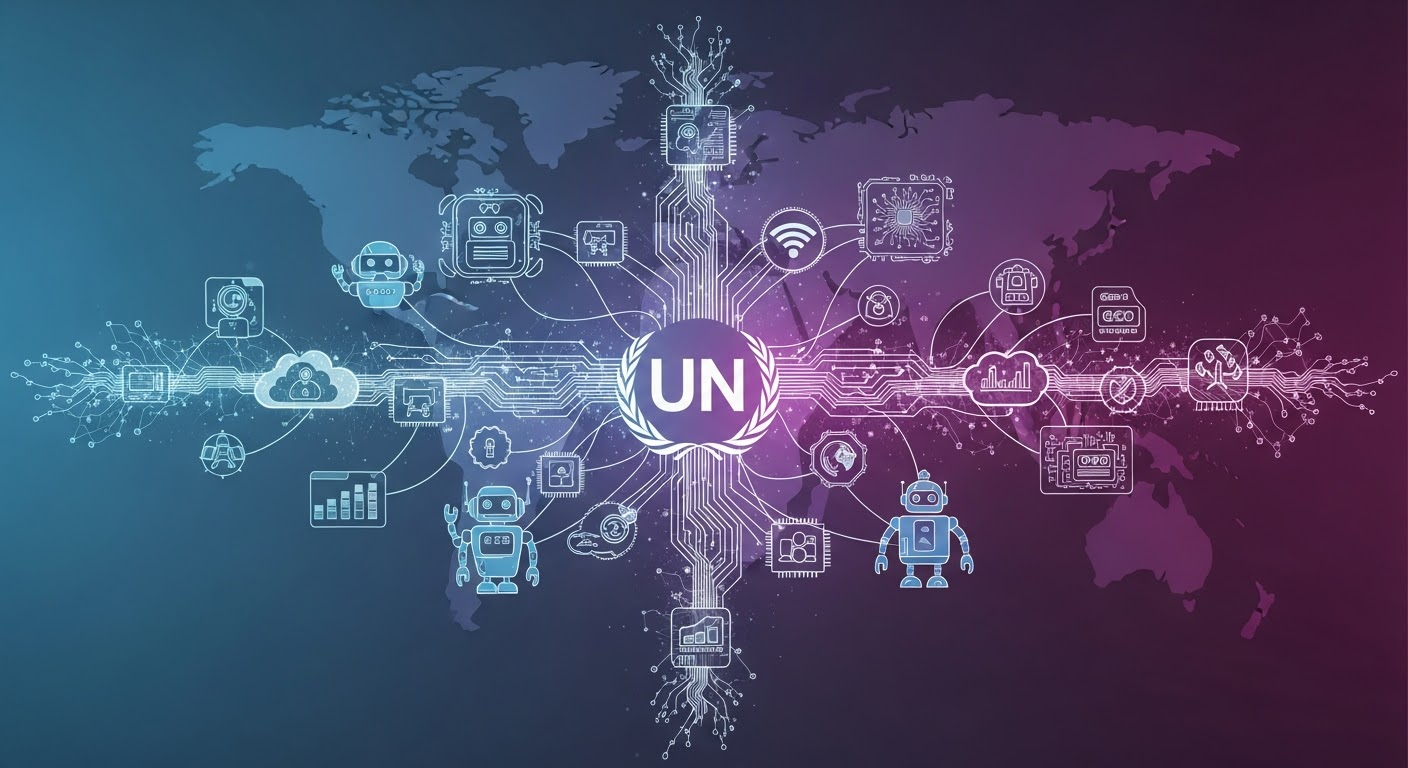
UN’s AI Ethics Push: How Global Governance Shapes Tech’s Future
As artificial intelligence spreads into every corner of global life — from healthcare and education to defence and digital communication — the United Nations is intensifying efforts to shape a global ethical framework for its development and deployment. Far beyond technical standards, this push reflects a deeper debate about values, equity, and human rights in the digital age.
From Innovation to Governance
AI technologies promise remarkable benefits: early disease detection, improved disaster response, optimized transport systems and new tools for sustainable development. Yet these same technologies carry risks — from discrimination baked into algorithms to threats to privacy, social trust and democratic institutions.
Recognizing this dual potential, the United Nations has moved to establish multilateral mechanisms and normative guidance aimed at responsible and inclusive AI governance. In 2025, the UN General Assembly adopted a resolution to create two new bodies: a Global Dialogue on AI Governance and an Independent International Scientific Panel on AI. The former brings together governments, civil society and private sector actors to discuss policy and cooperation. The latter, composed of experts from across all regions, will produce impartial scientific assessments on the opportunities and dangers of AI, shaping global policy discourse.
Shaping Global Standards, Not Just National Rules
Unlike national regulations that reflect individual legal systems, the UN’s initiatives aim for international consensus and cooperation. This is crucial because AI systems operate across borders: an algorithm trained in one country can influence elections, financial markets and public discourse halfway around the world. Uncoordinated rules risk creating a fragmented global landscape where ethical standards and protections vary widely — or where major technological powers set the norms by default.
In parallel, UNESCO’s Global AI Ethics and Governance Observatory offers a resource for countries to assess readiness and adopt ethical AI practices. Built on principles adopted by 193 UN Member States, it brings together research, toolkits and best practices to help governments implement policies that respect human rights, fairness, transparency and sustainability.
A Broader Coalition for the Future
The UN’s AI governance efforts are not happening in isolation. Collaborations with the Organisation for Economic Co-operation and Development (OECD) are strengthening policy responses across countries, helping to align AI ethics with existing economic and social frameworks.
Regional leadership also contributes to this evolving agenda. For example, initiatives in Africa emphasize locally relevant AI that reflects linguistic, cultural and developmental priorities, rather than imported standards that don’t fit local contexts.
The Stakes: Equitable, Responsible AI or Fragmented Governance?
Global governance of AI is not just technical; it is fundamentally political and ethical. It involves questions of who benefits from AI, who is protected from harm, and how technologies can be shaped to support global development goals rather than exacerbate inequality or disrupt democratic processes.
At the same time, geopolitical competition — especially between major powers like the United States and China — introduces complexity. Competing visions for AI governance raise the risk of inconsistent regulatory landscapes and pressure on international institutions to mediate these differences.
Conclusion: A New Era of Digital Diplomacy
The nature of global governance itself is evolving. As technologies like AI grow more powerful and pervasive, the frameworks that once governed trade, health or security must adapt. The UN’s AI ethics initiatives — including global dialogues, scientific assessments and normative observatories — represent a significant effort to ensure that the future of AI aligns with human rights, equity and shared prosperity.
In an increasingly interconnected digital world, the question is no longer whether we govern AI — but how we do so in ways that reflect shared values while embracing innovation.
About The Author
